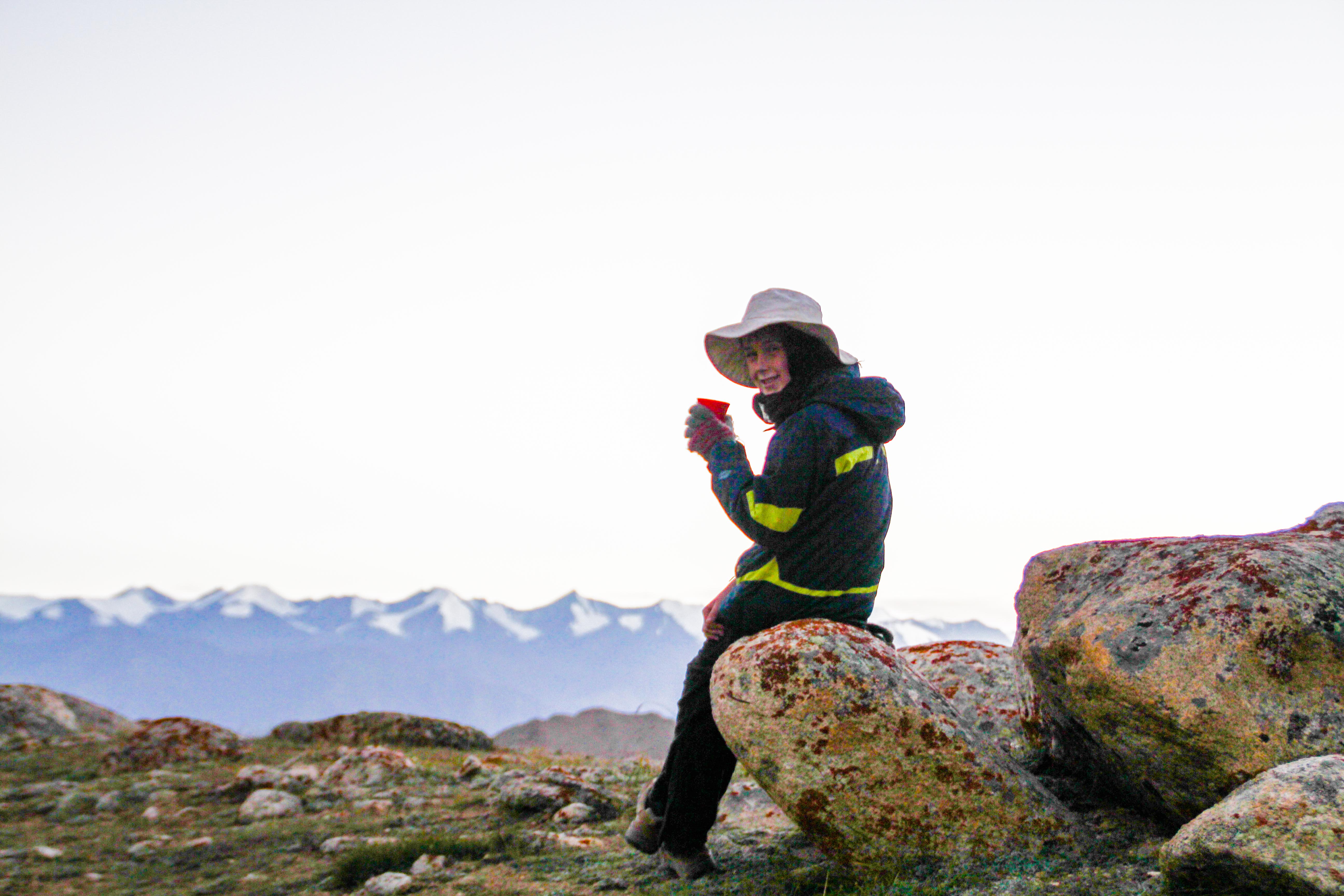
Xavier [5000M]
This shot was taken at our first camp site on the way to the Diga La (La=’pass’). Things were about to freeze … like the creek running past out tent ,,, and our fingers and feet, The Stok ranges can be seen on the horizon.
The next day we finally made it over the ‘Diga’ and then got caught in poor weather and snow falls, but that is another story.
Gompas?
Thankyou Amanda and Angela! I have just discovered that Josie was actually stepping into a temple … not a ‘Gompa’ … the Hundar Gompa was actually a hundred metres below us. Sorry! It was the 14th century Lachung Temple, one of the oldest temples in the Nubra, the temple has a huge idol of Tsong-kha-pa, crowned with a Gelugpa yellow hat – it took our breathe away,
A Gompa (Tibetan: དགོན་པ།) might best be understood as a conflation of a fortification, a monastery or nunnery, and a university located in Tibet, India, Nepal, and Bhutan. Their design and interior details vary from region to region, however, all follow a general sacred geometrical mandala design of a central prayer hall containing a representation of Buddha or thangka, benches for the monks or nuns to engage in prayer or meditation and attached living accommodation. The siting and aspect of the Gompa, satellite buildings and grounds are founded on ancient principles of geodesic lore and environmental metaphysics. A gompa can also be just a meditation room or hall, without the attached living quarters. Meditation rooms in urban Buddhist centres are often referred to as gompas. They are a tradition in Ladakh. [this is mainly from Wiki].
A major part of travel and tourism here is visiting the different Gompas that sit along the valleys. Often they contain extraordinarily beautiful art: statues, wall paintings or thangkas – paintings on silk. They are remarkable in the way they stand high above the valley floors. From the roof of one you can usually see another up the valley.
I suppose they are a little like churches, or monasteries. They often contain displays of artefacts as well … there are always surprises! Snow Leopard skin masks … the odd human skull bowl … etc
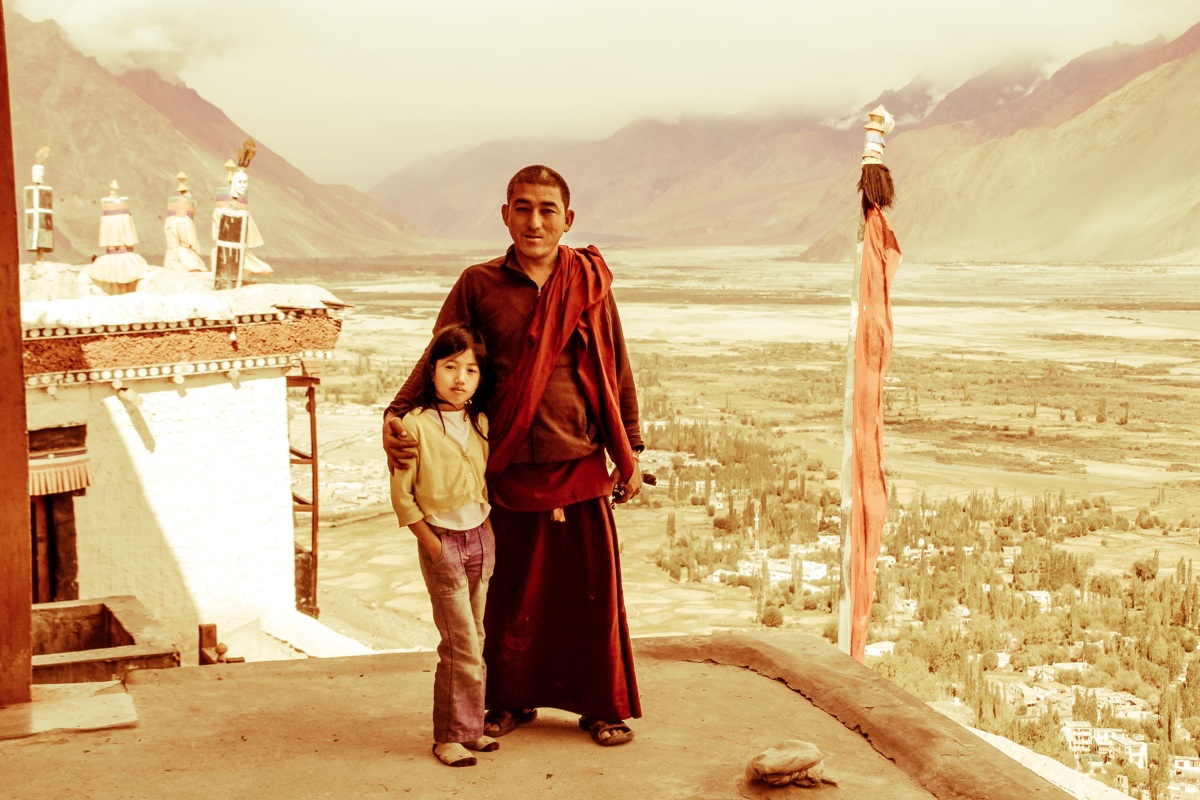
We were seduced by Diskit Gompa in the Nubra Valley and visited it for ‘prayers’ one early morning. The Lamas (monks) were particularly welcoming and we will be supporting a young lama at the Gompa’s school.
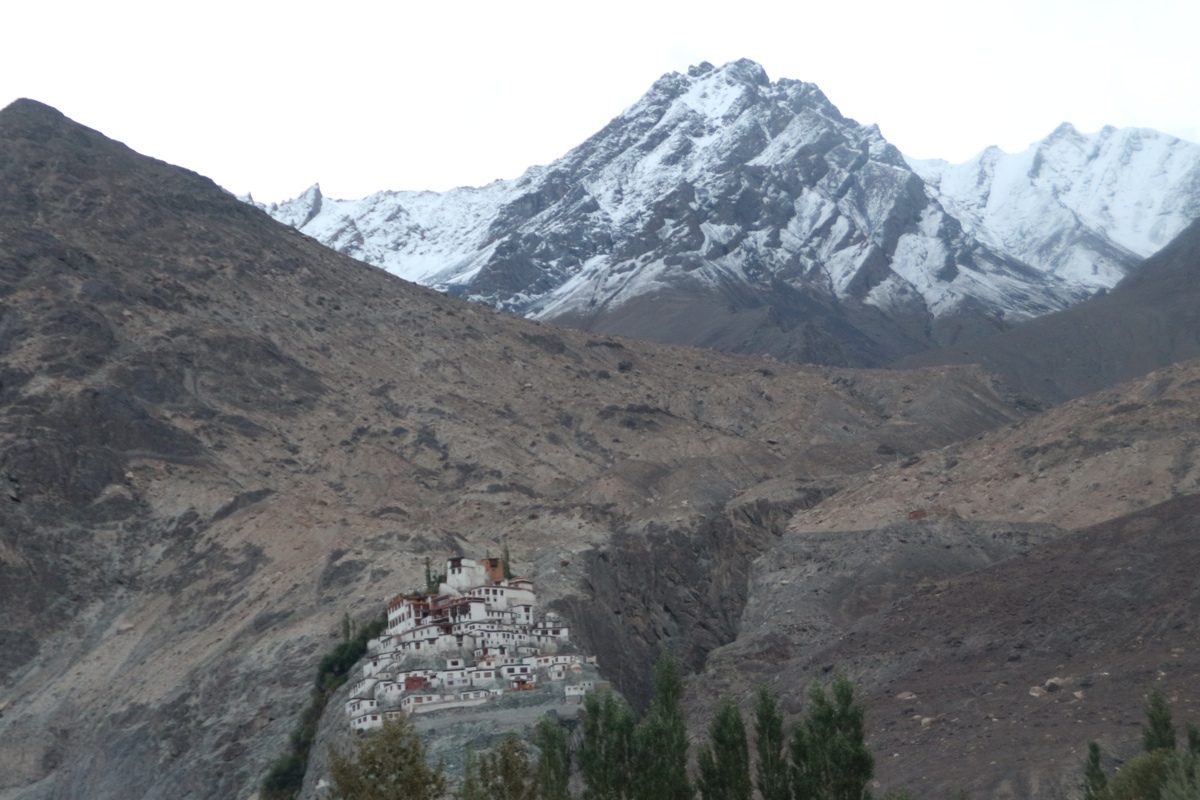
Josie Steps In
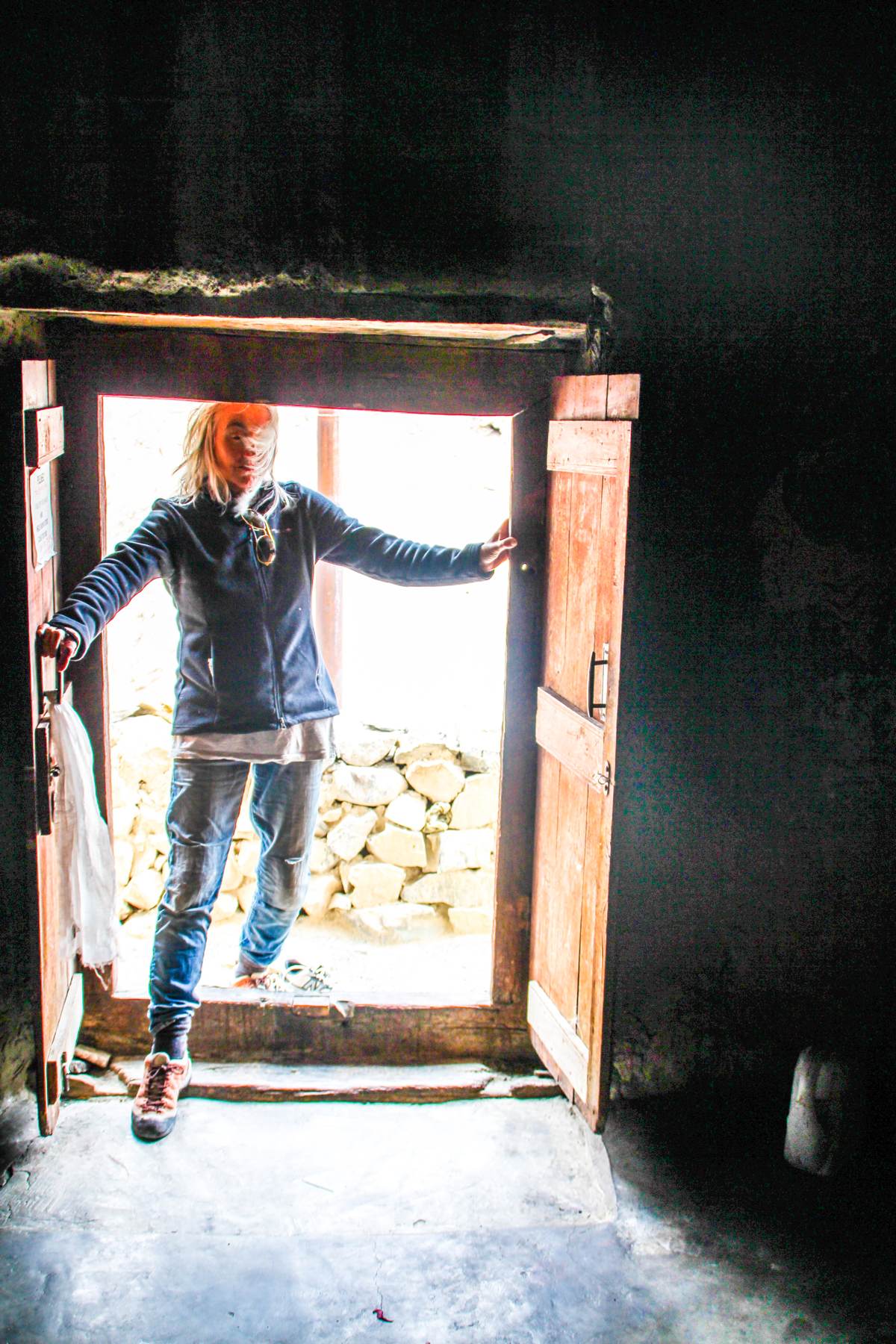
Josie steps into the 500 year old Hundar Gompa.
Rare (Very)

We had just crossed the Khardung La and were beginning to relax again.
Lopsang was opening up on the accelerator as we hit some newish bitumen. At one stage we stopped to survey the terrain above after hearing a charge go off: the road workers were blowing up cliffs above and they can sometimes cause rock fall. On these roads, you occasionally need to drive around a boulder that has fallen from above and embedded itself in the road surface like some fallen meteorite.
As we approached a tight bend on one of the innumerable zig-zags I was able to get a clear view of the road 20 metres below and caught a glimpse of what was obviously a large cat – easily the size of a solid domestic dog, say a labrador, loping along the road. I told Lopsang to watch out (excitedly, would be an understatement), and as we turned the tight bend, there it was. I had initially thought ‘snow leopard’, but it was unmistakably a lynx, the black tuffs at its ear tips easy to see.
Ahh, no camera. Our first battery on the EOS had prematurely died after a freeze moment on the Diga La, and the second battery had died on the way up the Khardung La. Only the iPhone was functioning, and in the fairly bright light, and with a wild cat running away, not easy to get a shot in. The image above is a screenshot from a four second movie … any way we have the memories. We all had a clear view of the magnificent animal … as Lopsang made meow noises and laughed. He has seen snow leopard … but never a Lynx, and some people believe they are rarer, and more difficult to sight. The team of wildlife photographers from our Diskit hotel would have done a better job with their rather LONG lenses!
Look closely!
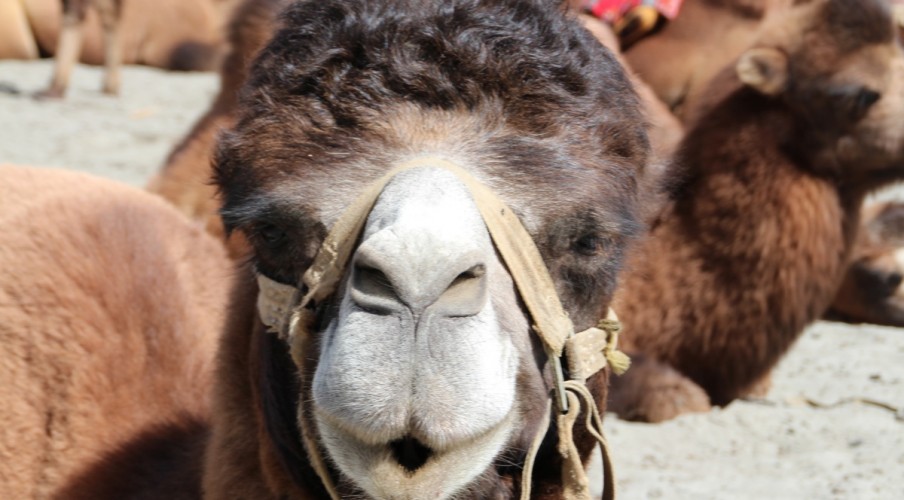
Camel Cheese [Bactrian, of course]
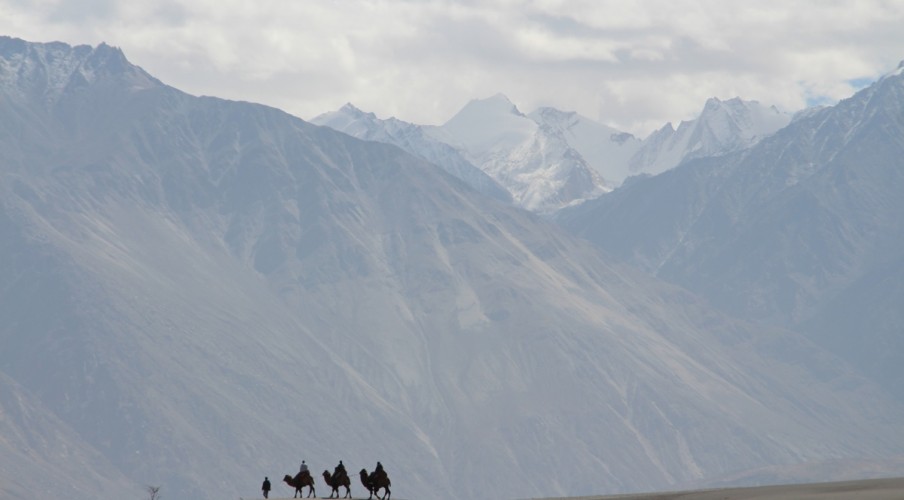
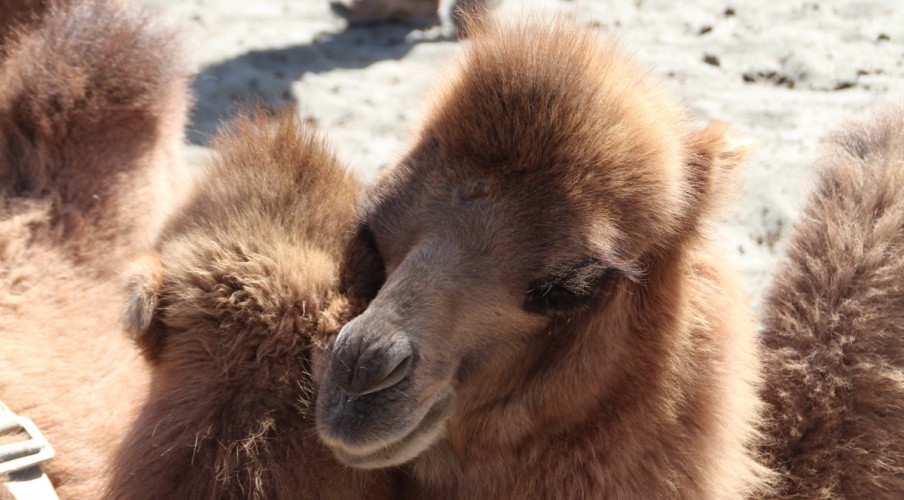
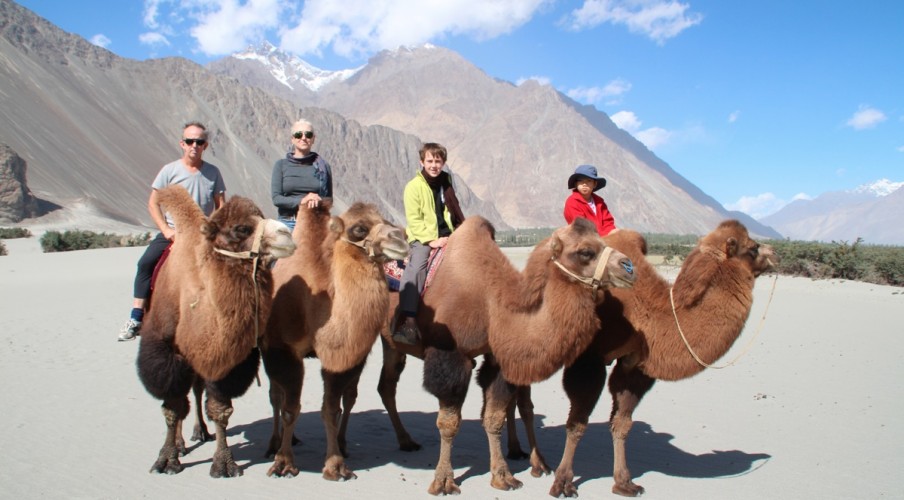
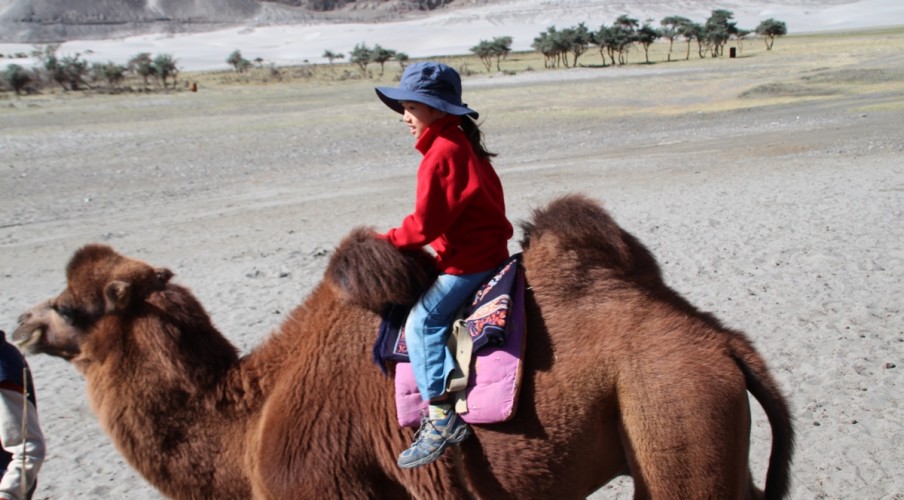
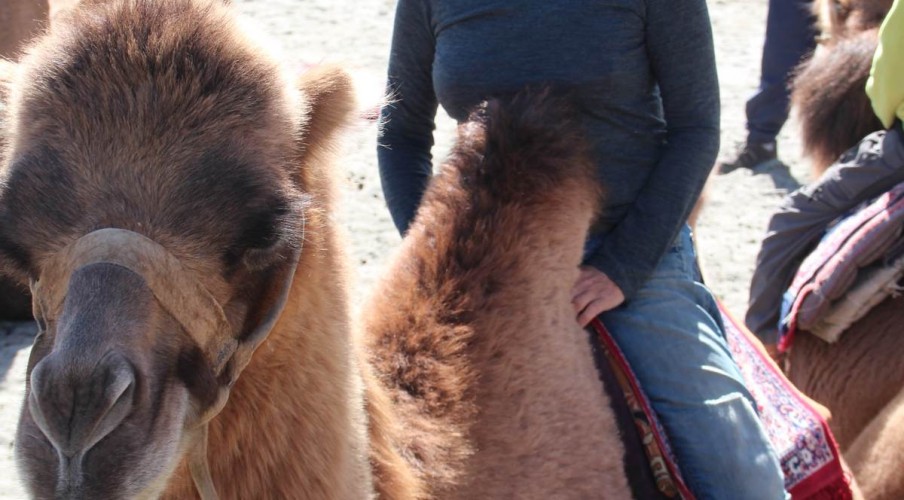
We are not beyond the rare cheesey moment on our travels. So between visiting schools and fortress gompas and walking high passes, and having our back wheels slide at 5200M at 30cm from a 500M drop … we just had to visit a little colony of central asian camels. They are reputedly the off-spring of animals that plied the Ladakh–Xinjiang caravans up until the closure of the India-China border in the 1940s.
They are incredibly cute beats, with incredibly bad breathe. Very polite. This is major quiz night general knowledge, so read carefully: the Bactrian camel has two humps on its back, in contrast to the single-humped dromedary camel. Bactrian camels belong to a fairly small group of animals that regularly eat snow to provide their water needs. Any animals living above the snowline are obliged to do this as snow and ice are the only forms of water during winter, and by doing so their range is greatly enlarged. The latent heat of snow and ice is enormous compared with the heat capacity of water, demanding a large sacrifice in heat energy and forcing animals to eat only small amounts at a time.
In Leh there is a small supply of Nubra valley camel hair made into fabric … there is a very nice piece that may need to go into a suitcase ….
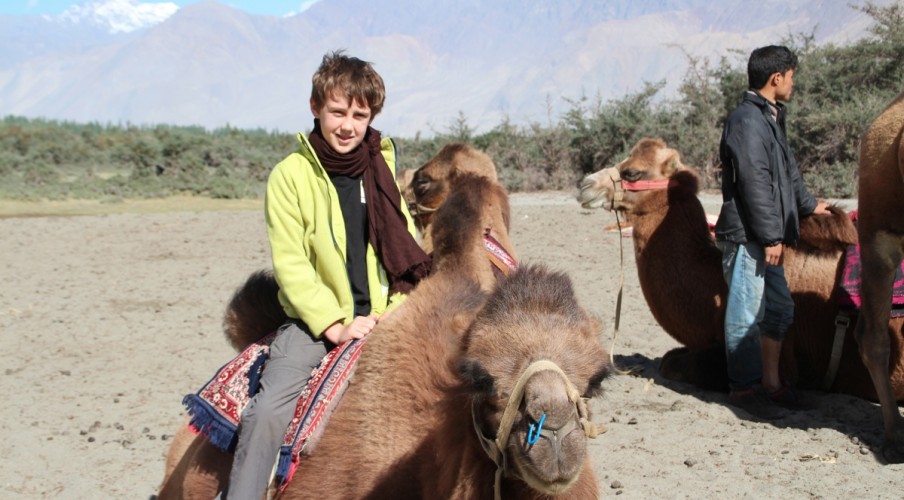
Xavier with Lama, one of our guides at Diskit Gompa
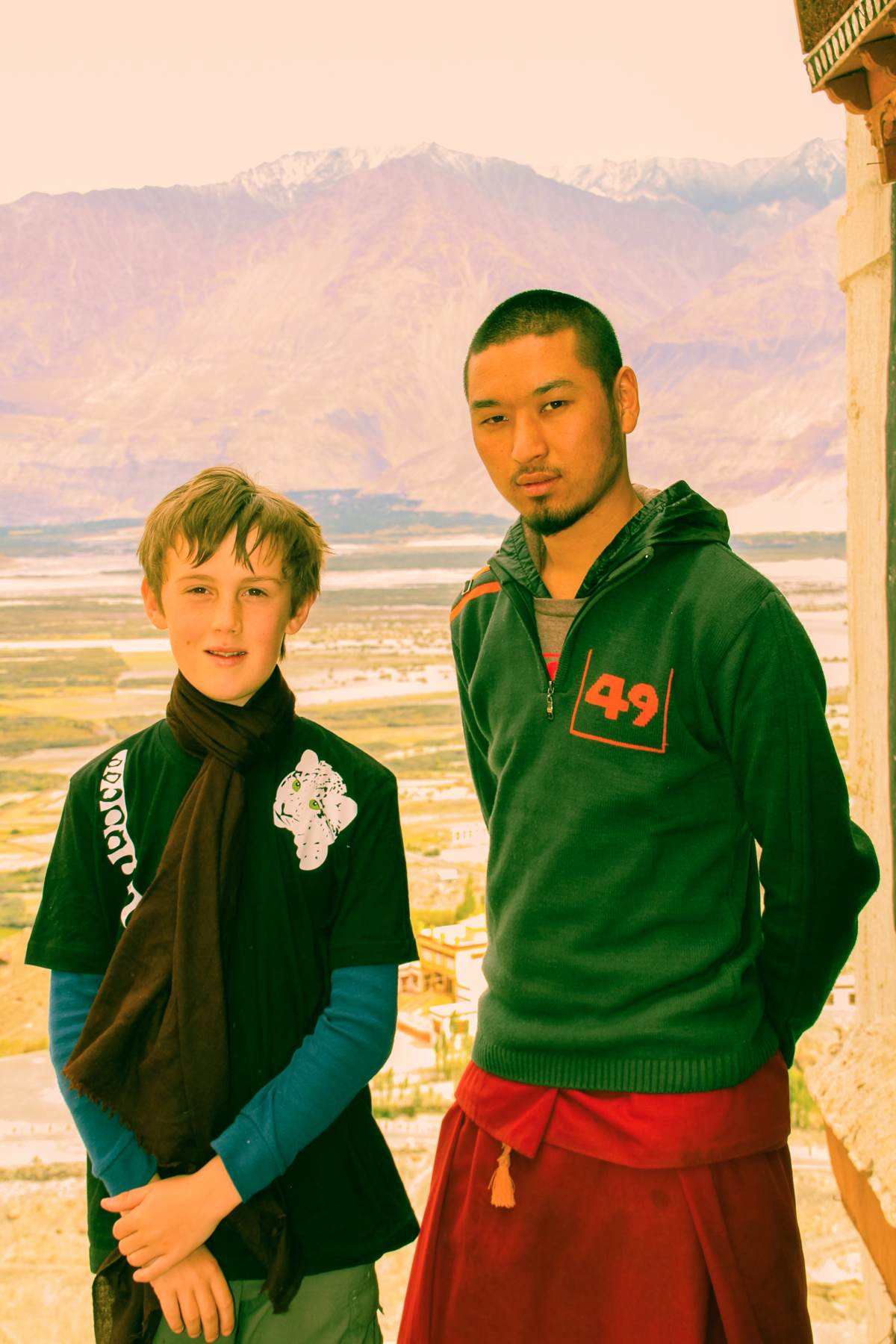
Mei with new friend at Diskit Gompa
We have just returned from a wonderful trip to the Nubra Valley and a very eventful few days that we will write on in coming days … if the electricity and internet gods allow. Xavier and Chris crossed the Diga La (on their second attempt) to make it into Nubra. Just over the epic 5400M pass it started snowing heavily and they were forced to bivvy in an old shepherd’s stone hut at 5000M for the night. Nothing like the high Himalaya for drama. A few days in Diskit were wonderful, particularly at the 17th century Gompa, where we were again seduced by the gentle kindness of the attending Lama’s. Our trip back over the Khardung La (at 5600M+ some suggest it the world’s highest motorable road) was at times terrifying, as the snow fall had made the road just a little ‘slippery’ (with drops of several hundred metres standard fare). We did manage to see a very rare Himalayan Lynx – a big cat, as well as take a ride on some central asian camels (two humps not one, and very cute).
To Tso Moriri
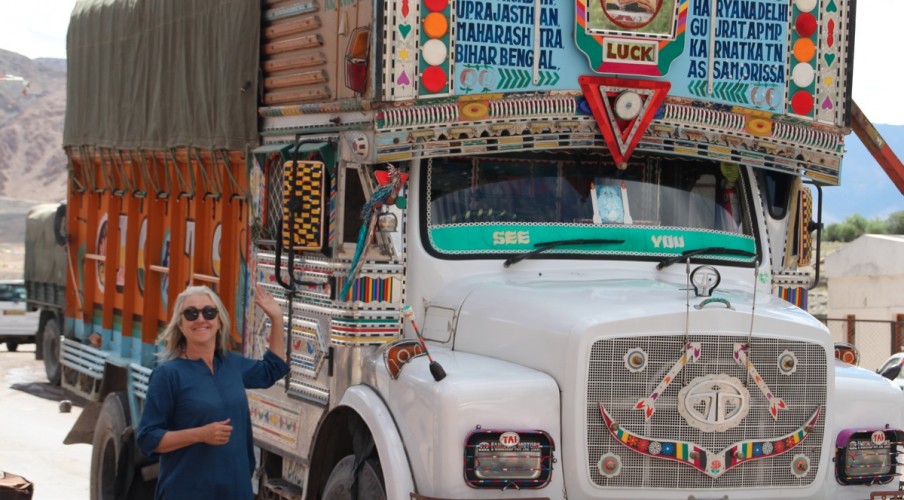
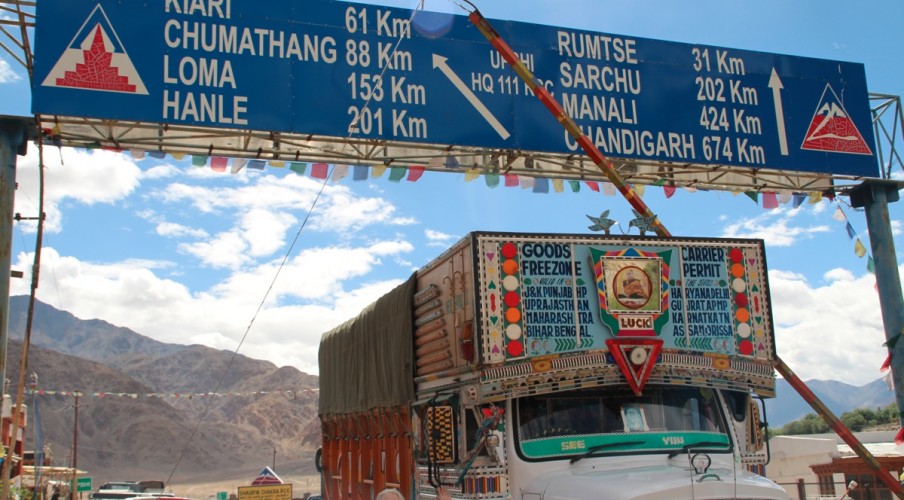
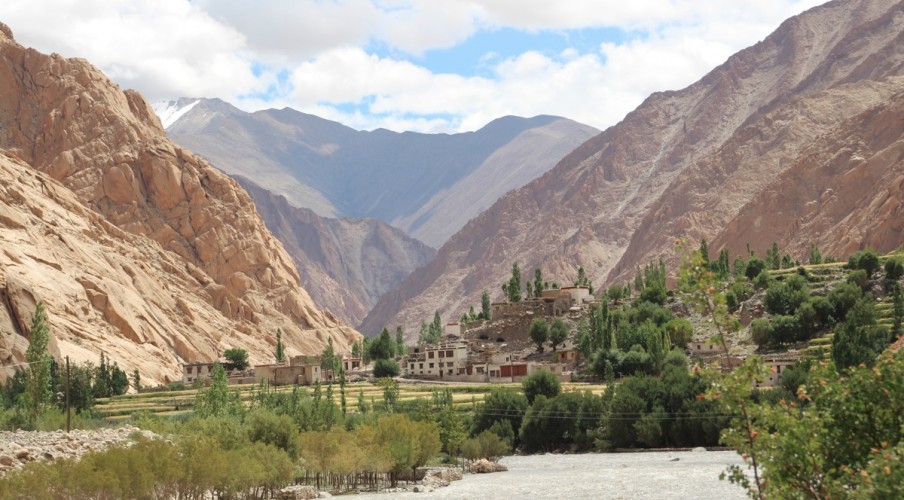
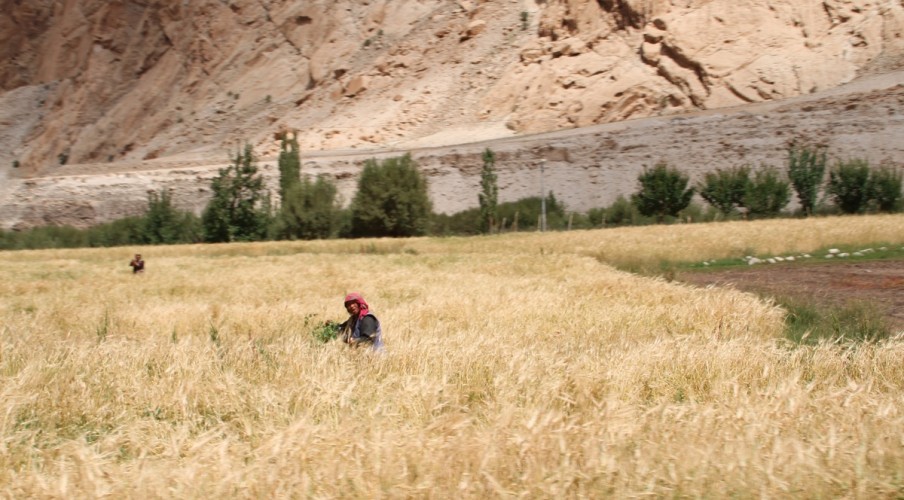
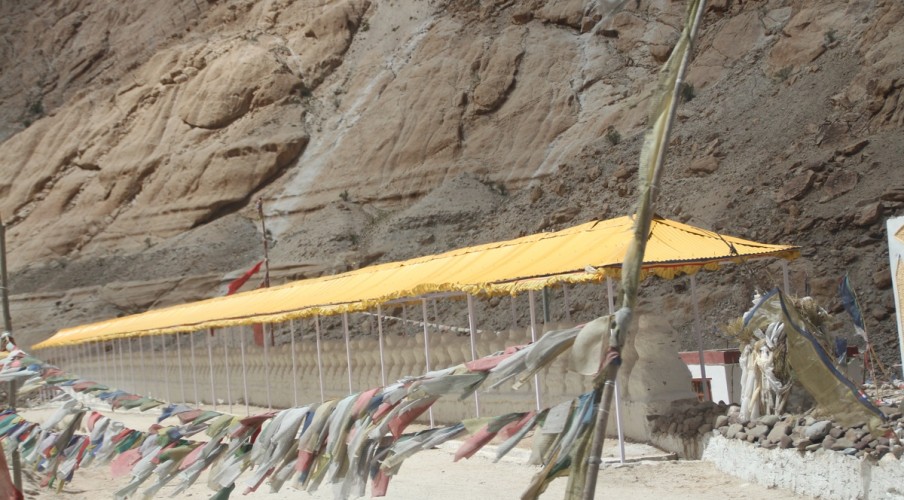
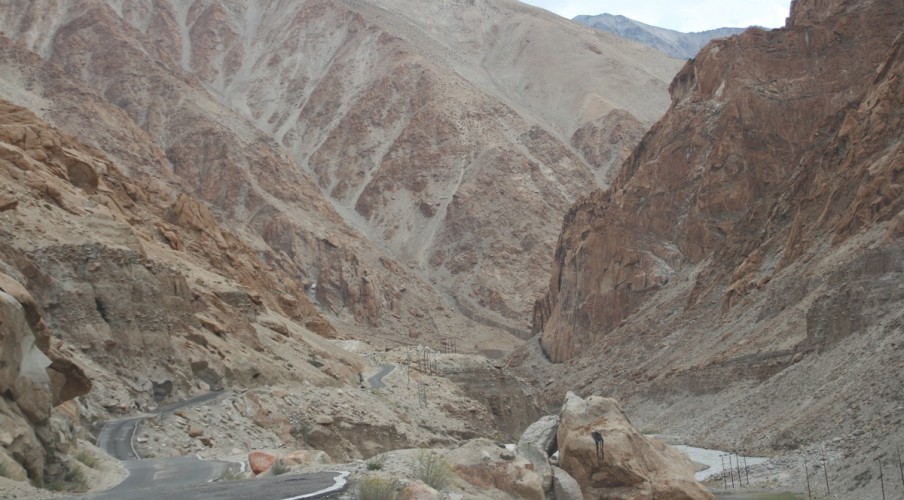
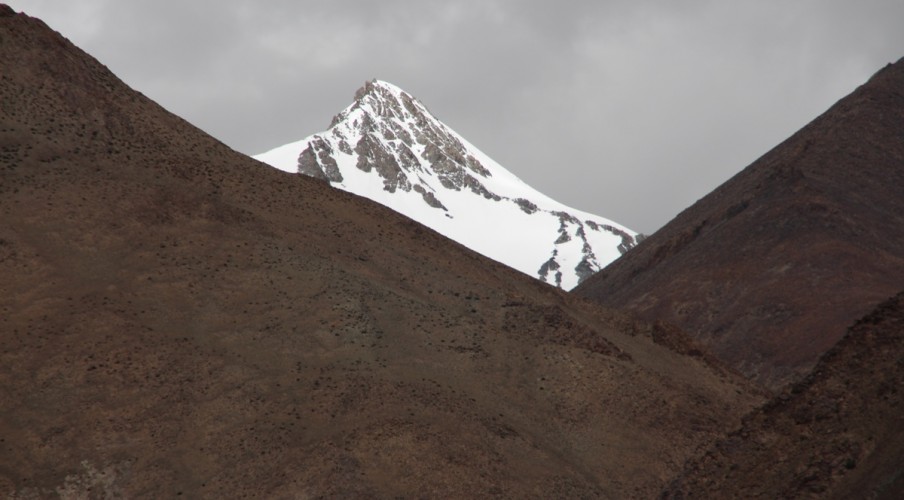
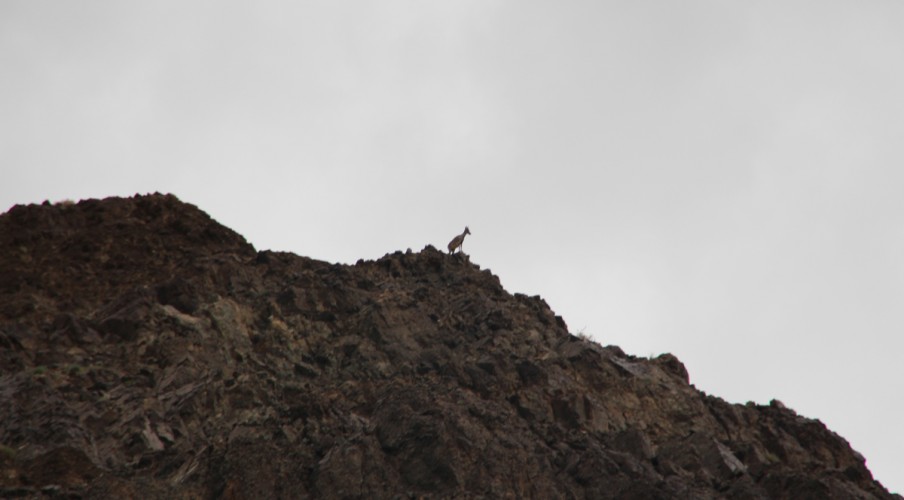
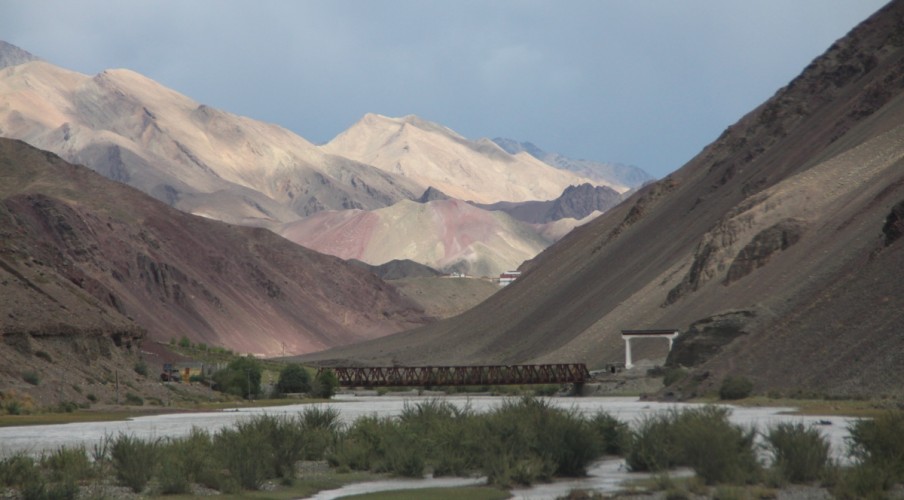
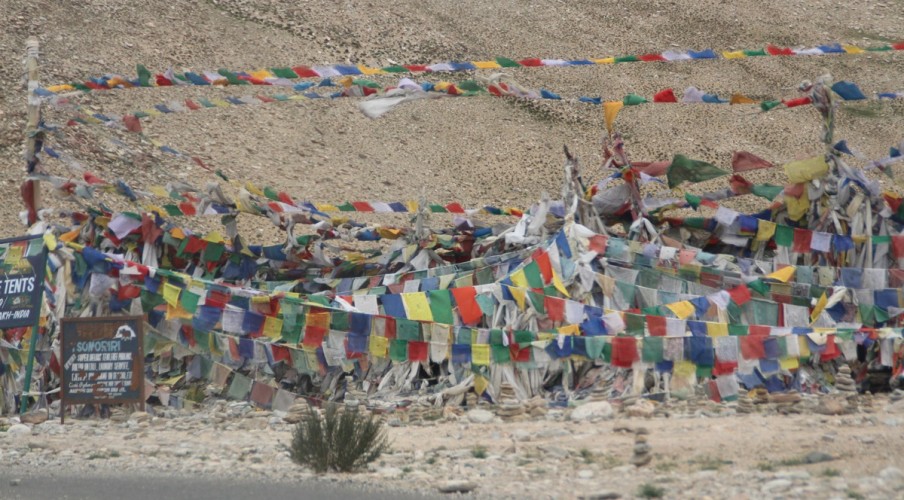
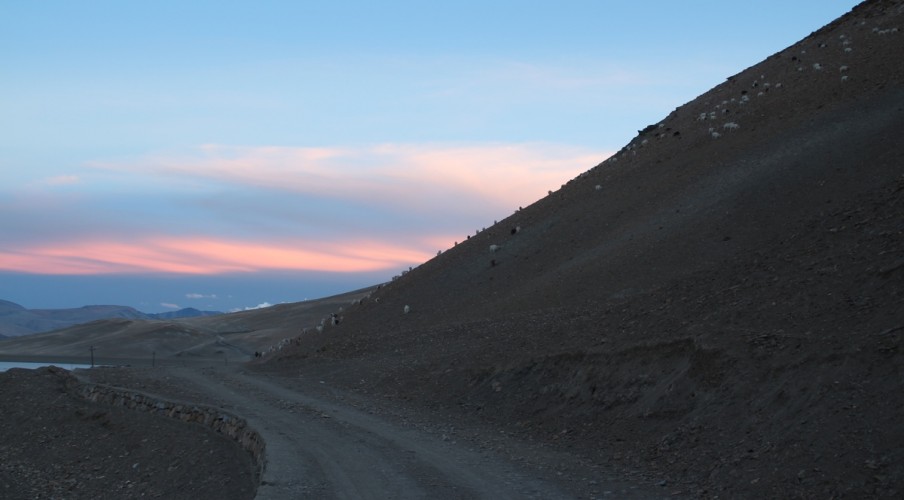
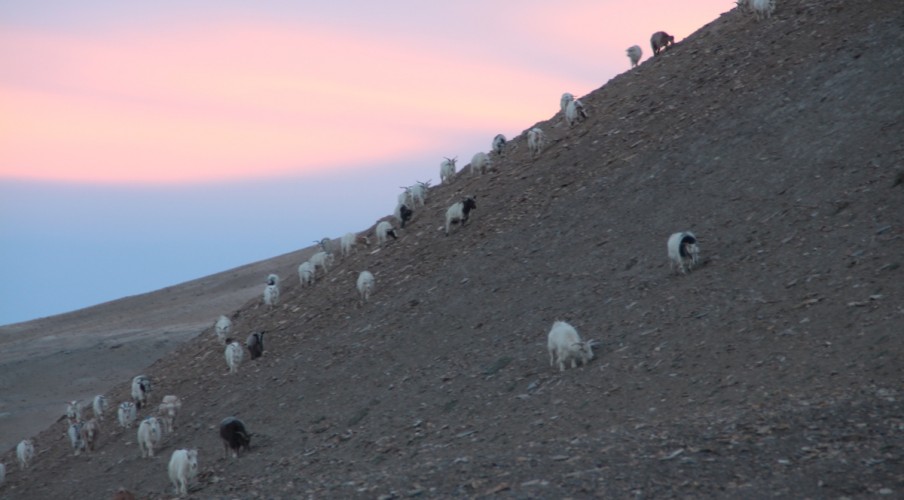
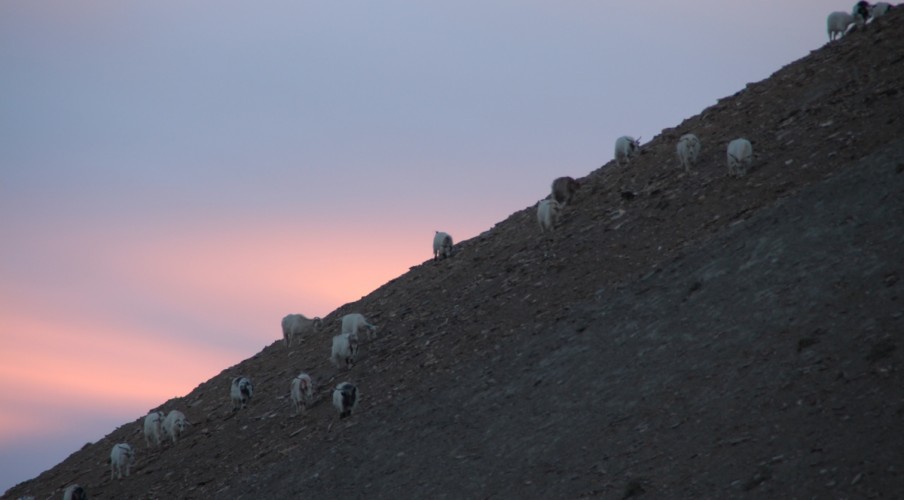
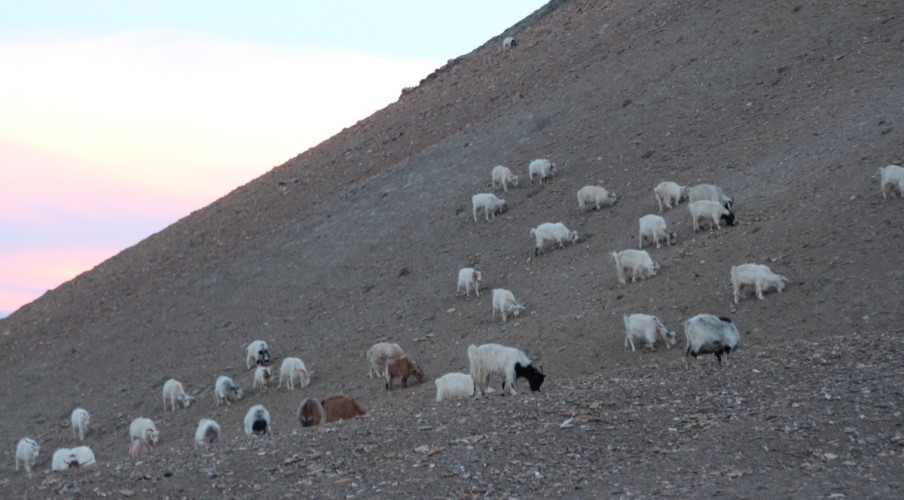
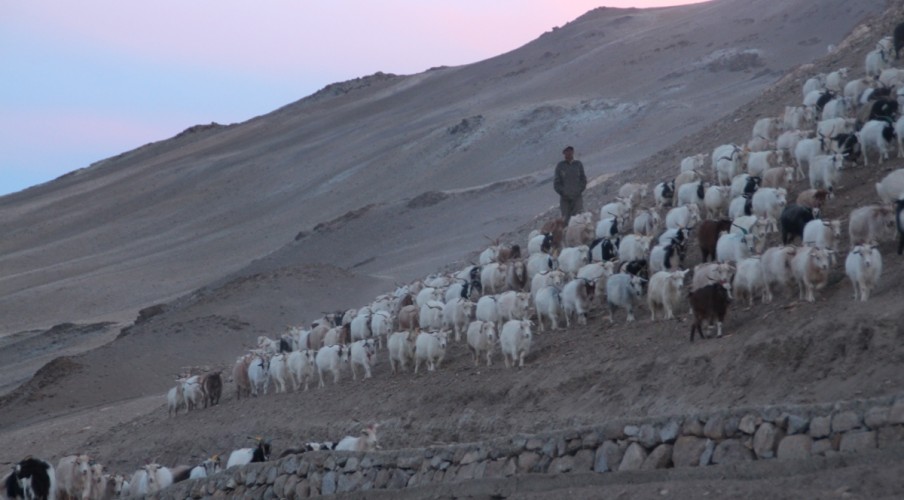
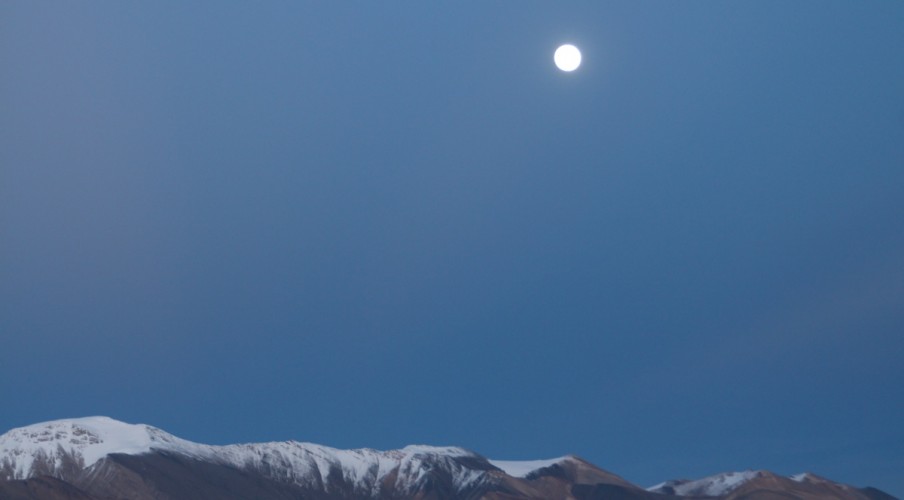
Well, we are back in Shey after three days at Tso Moriri, a remote high altitude lake set amongst 6000M snow capped peaks. There were no real time reports from Moriri as there were no phone or internet services for us, and only brief periods of power in the evening.
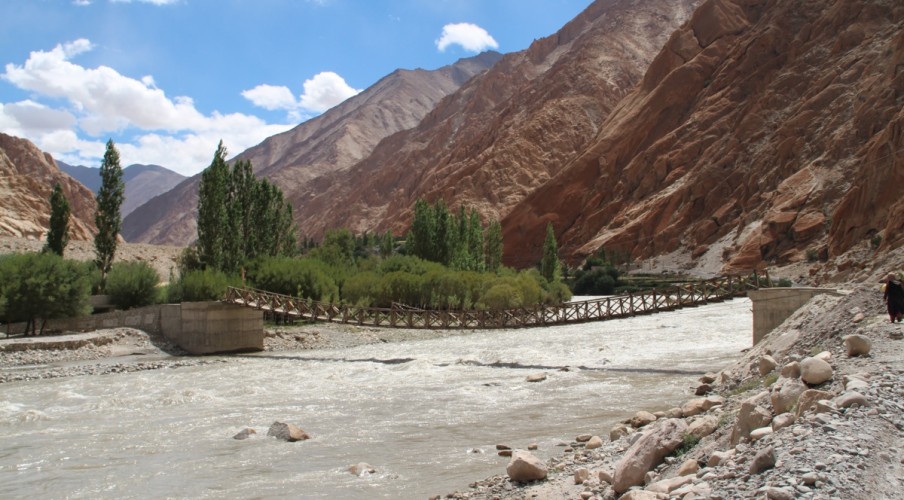
Moriri is a six hour drive from our home and we think it might take the bill as the most epic ‘drive’ yet. The road follows the Indus higher and higher until eventually it delivers you to the lake at 4600M. It travels through deep ravines cut into the rock, and passes small villages, patches of green and gold against a rocky geological riot as two tectonic plates collide: on the right side of the valley, the sedimentary rock of the India Plate, up against ‘our’ side, the torched Igneous of Asia.
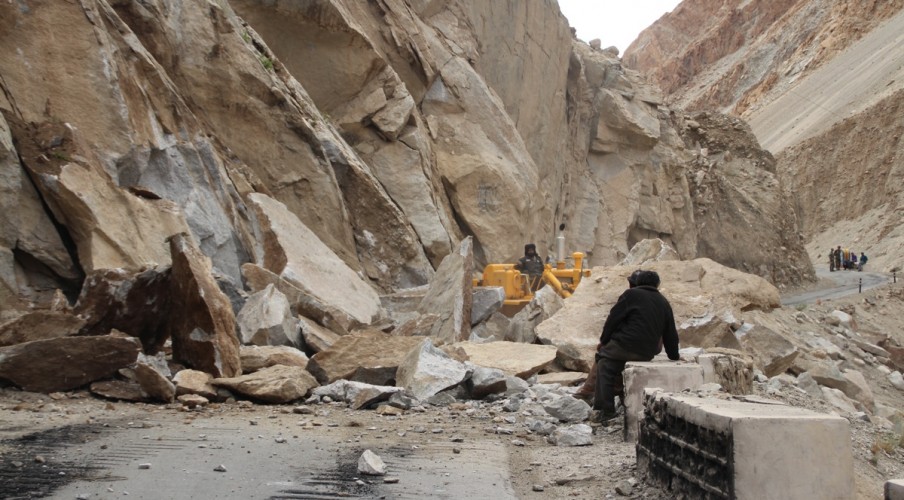
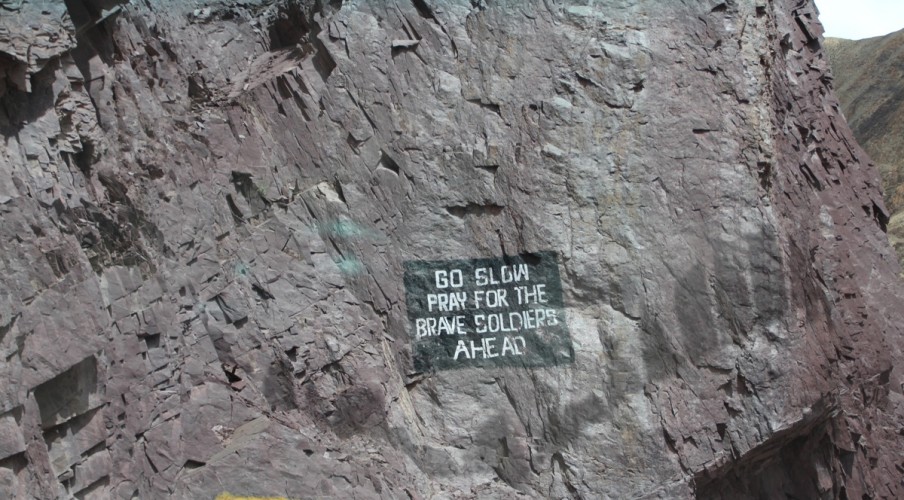
All through the rocky chasms on the way to Moriri are garrisons of Tigers and Brave Lions; the army in India is ubiquitous. The families live in ugly compounds or colonies, with their own schools and shops and homes, built on the dry desert rubble that sits above the river. It is hard to imagine it is a welcome posting for these families, but there is plenty of evidence they are very proud of their work. Each new bridge, or road section cut from the cliff is marked by signage recognising the brave soldiers responsible for it, and not infrequently, there are marked graves. Making roads here is a dangerous business.
Mind you, the men of the Indian army do not always physically DO the labour – this is often the responsibility of migrant men and women from the south who live in plastic tents or sometimes parachute tents, and wash in the river and chip and lift blocks of stone for months on end, presumably earning more than is possible in their home states far away. It is not an easy sight to see them lift large pieces of granite and toss them into the back of truck, for hours on end, or seeing them squatting in their underwear in freezing melt water.
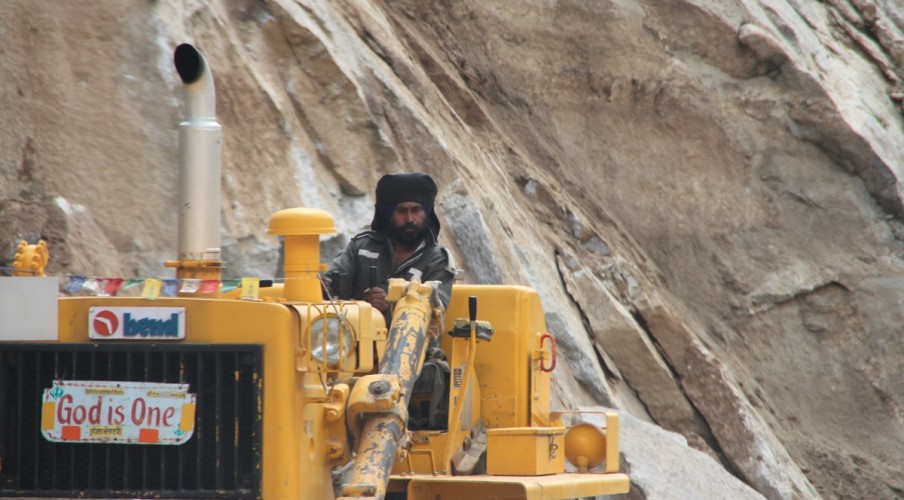
The army brings money to the area, and while it flies helicopters to and fro through the valleys in rehearsals or enactments of surveillance, or marches into the stark peaks for training in High Altitude Warfare, the army is responsible for the welcome maintenance of roads and bridges. On the route over the Zoji La from Srinagar to Leh we were stopped while the army cleared a small avalanche of rock, which halted all traffic for about an hour. On our drive to Zo Moriri we waited while a grader pushed huge shanks of granite off the road and over the precipice after the army had dynamited a dodgy looking outcrop of rock on the cliff above the road.
After about five hours of slow ascent we turned right, across an army-made bridge, to follow a tributary river even higher, to Tso Moriri. After climbing steeply for about an hour the dirt road plateaus onto green pasture and we are amidst horses and yaks and dzo (a cross between a cow and a yak). Small groups of locals are making short, wonderfully crafted stone walls, for reasons that are opaque to us. Why have a wall in this vast pasture?
On and on you go, and it is possible to imagine this is Tibet, or Mongolia, that you are connected once more to the routes of trade that have cut across these regions for centuries, except that you are in a nice Toyota car looking through a window. And the Chinese army is just over the mountains, in occupied Tibet.
We arrive at the town of Korzok through impossibly beautiful high altitude pastured plains and streams and finally we glimpse the lake. I am already breathless, but I attribute this more to the altitude rather than the effects of the sublime. We are at nearly 5000 metres, higher than the top of Mont Blanc. It is a poor place, very harsh and mud-coloured. There are no whitewashed homes as we see in the valleys of Leh, just ramshackle mud brick squares and muddy lanes. No fields of grain. Pads of cow and yak dung are carefully stacked against the outer walls of the houses to serve as fuel in winter. There is construction, no doubt to accommodate the tourists, fuelled by cheap human labour and not by any technological advances. As with the rest of Ladakh, there is no power during the day, but it seems doubtful that most village people would be able to take advantage of power, were it even available. There are a few makeshift canteens and shops mainly selling the local Tibetan mo mo’s – steamed dumplings – and the every-present Maggi instant noodles. A non-veg town.
We end up staying at the Super Deluxe Nomadic Life Tent Camp. There are a number of these ‘permanent’ camps dotted haphazardly across the base of the town. Ours has a large tent with a bed big enough for three, so we grab an extra mattress and move in.
There is an outdoor throne (our word for a western toilet), which makes Mei (and me) happy!
Everyday life at Yangdol’s Place, Shey, Ladakh
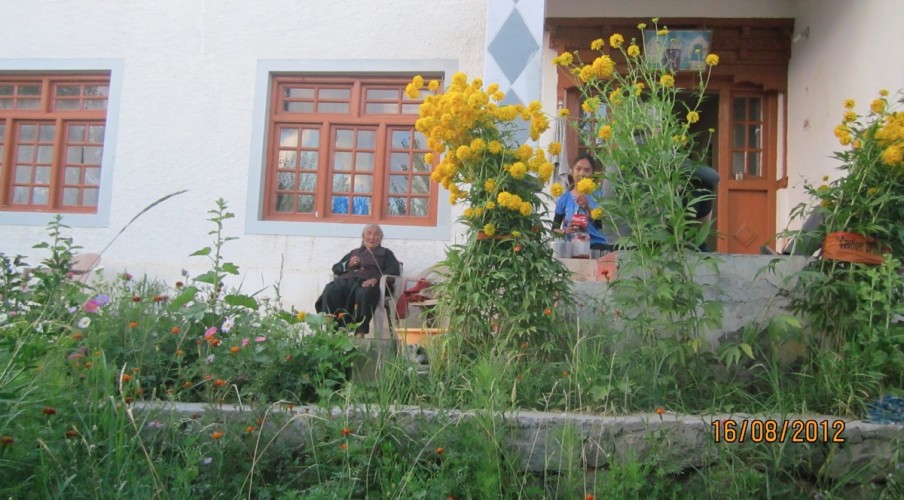
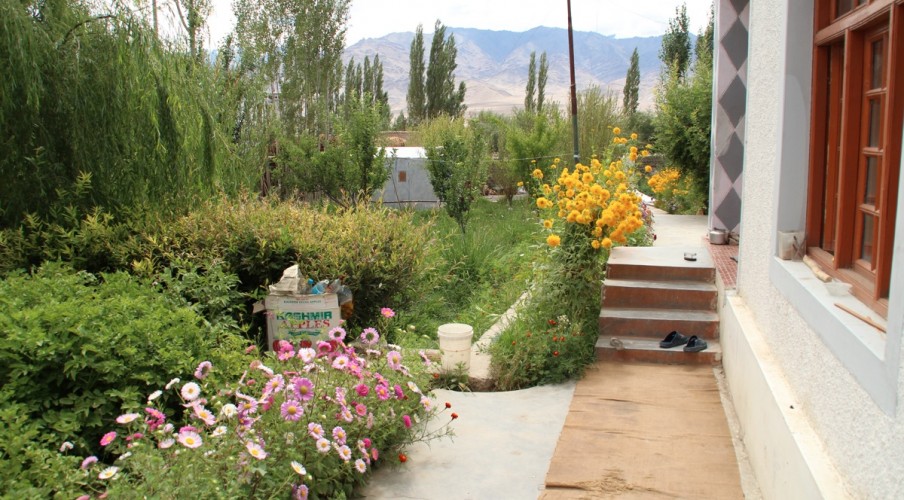
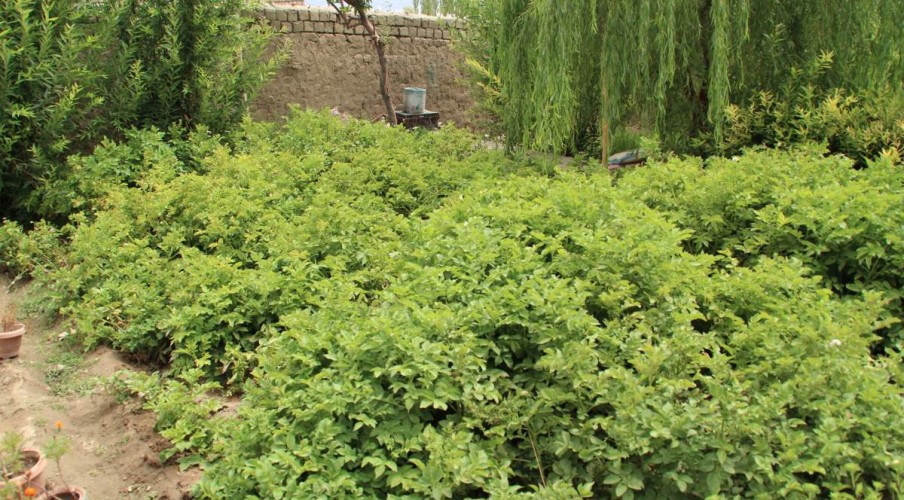
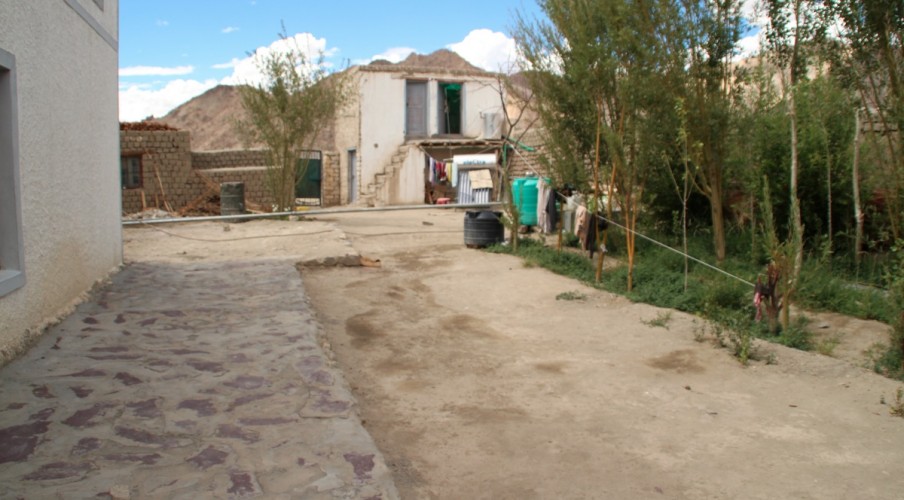
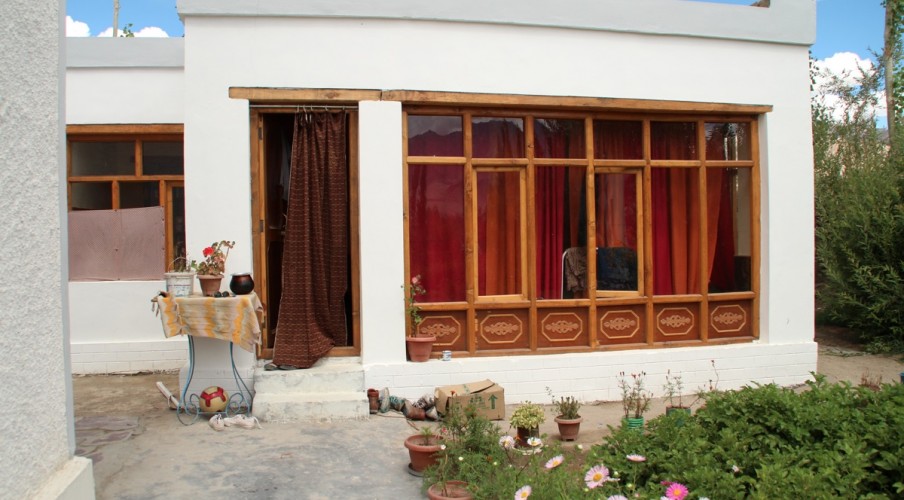
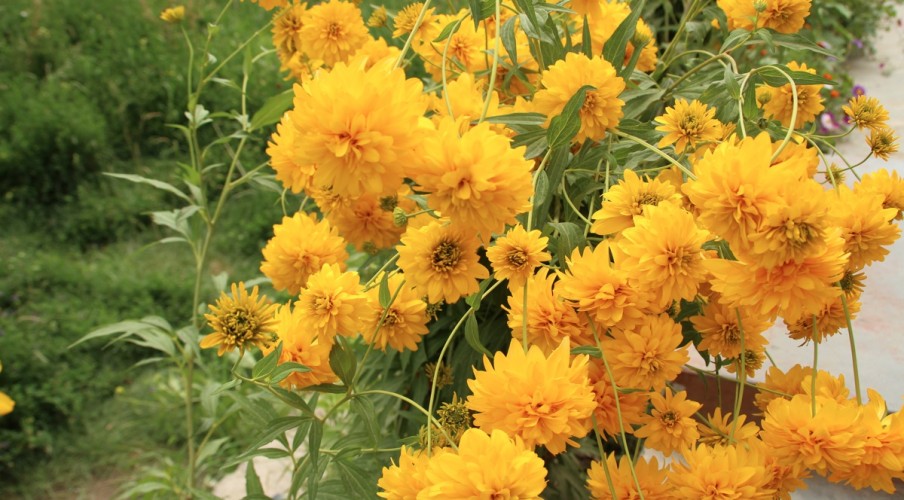
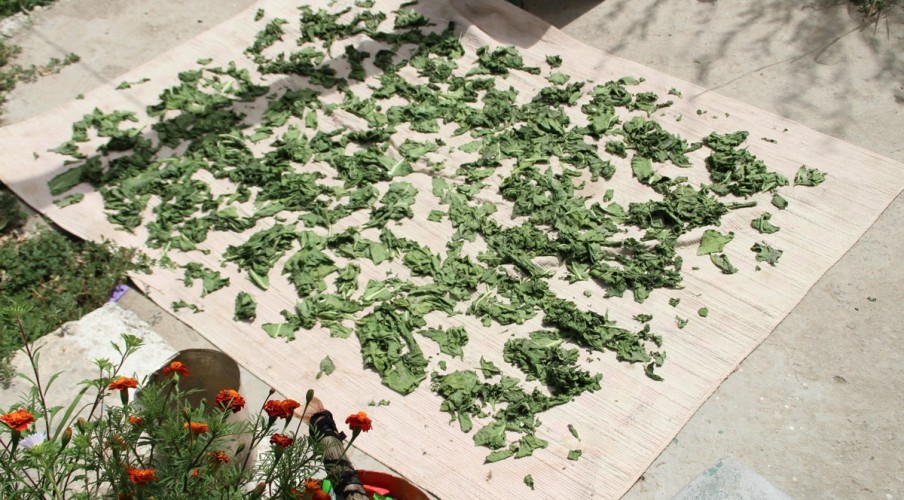
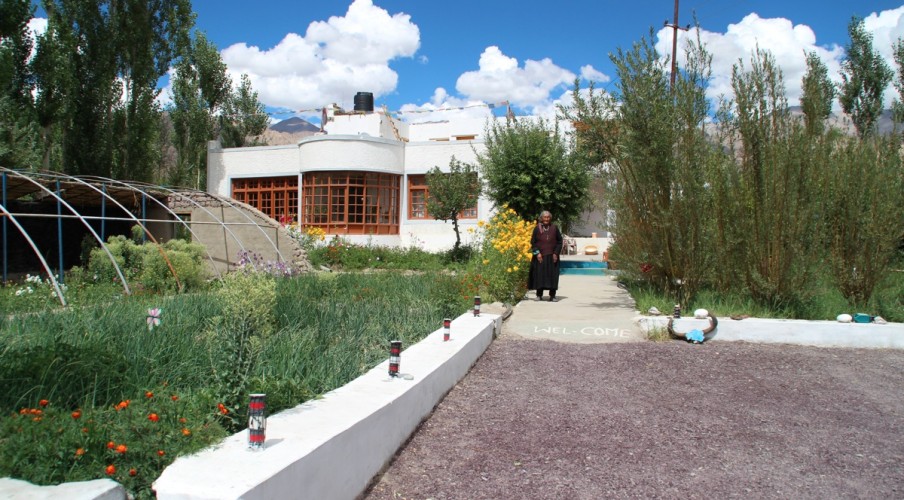
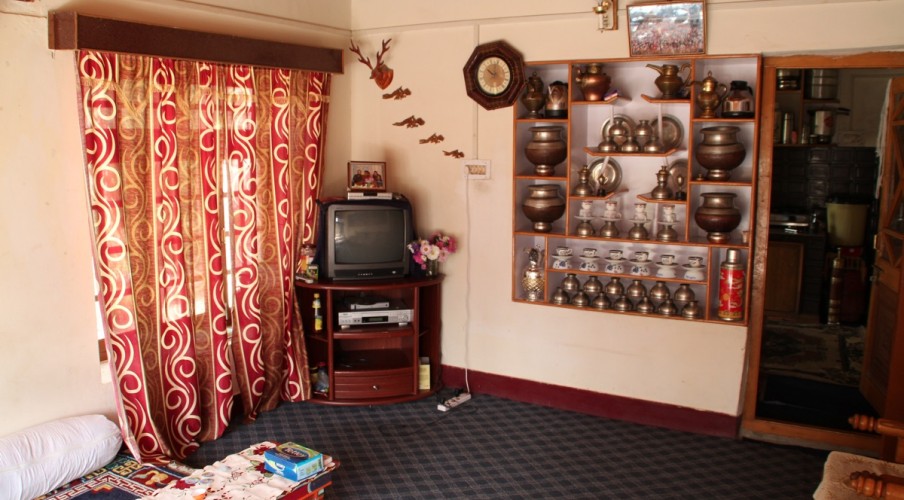
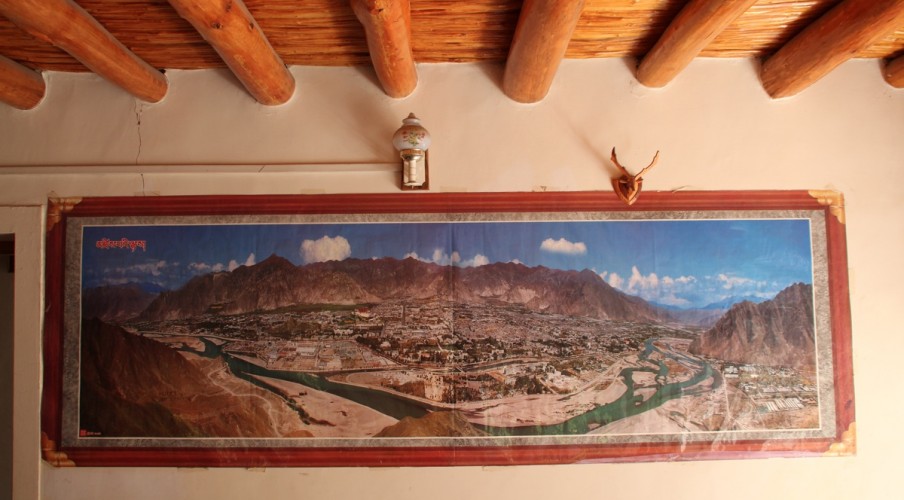
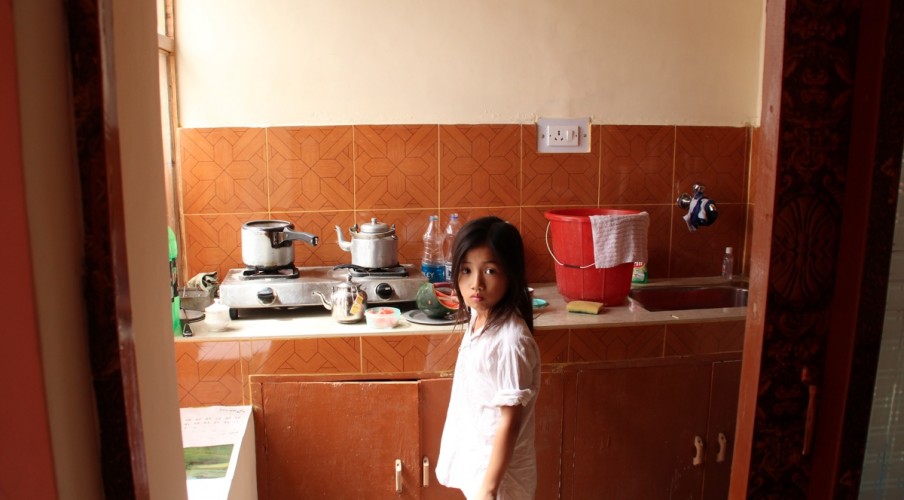
We’ve now been living in Shey for over a month with a lovely family: Yangdol, her husband Phuntsog, and their 13 year old daughter Nilsa and the ever present, always smiling, often coughing, ‘Grandma’.
Like the great majority of people in Ladakh, our host family are devout Buddhists. There are thriving Shia Muslim and Christian communities in Ladakh, but you have to look fairly hard for them because all through the valleys and all around us here in Shey the landscape has been transformed from ancient times by the deep popular devotion to Buddha: at intersections there are giant prayer wheels, cars regularly divert around monumental ‘Chortens’, and high on rocky outcrops impossibly difficult to get to, you will find a prayer flag placed or rocks arranged precisely as markers of devotion. And looking up or down the rocky valley, generally high on a rocky outcrop, there will inevitably be a beautiful Gompa (monastery) catching the sun.
Most houses have prayer rooms, generally on the top floor. Our Ladakhi Grandma keeps the butter lamps in our prayer room burning and every morning strolls through the house and garden swinging her charcoal burner smoking incense, ritually purifying the house and surrounds. The practicalities and meanings of the everyday Buddhist rituals of devotion are still mainly a mystery to us
Food is the big issue! After weeks in India you begin to crave certain beloved delicacies from home. Responding to these impulses in local restaurants generally meets with failure! Best to stick local! Meat is NOT on the menu, and we miss it sometimes (Mei dreams of a good Chinese Pork Bun) but there is certainly no lack of food. We are all losing weight – Mei and Xavier more so than their parents.
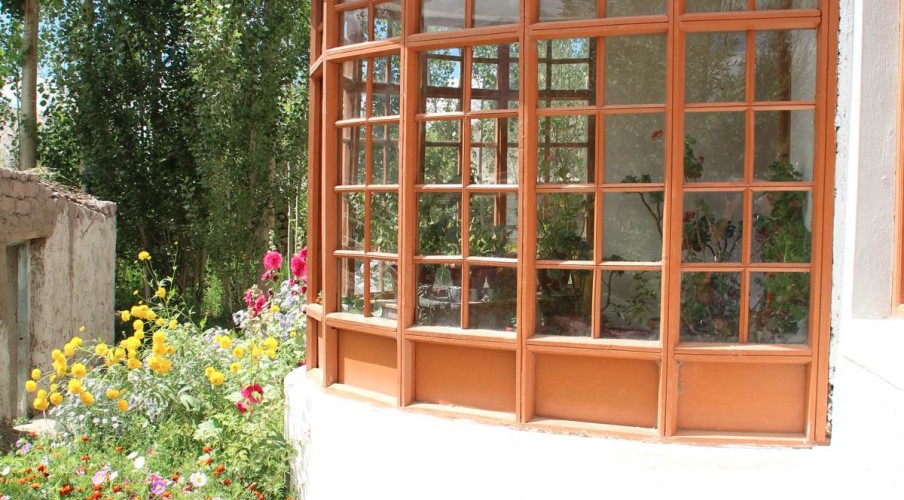
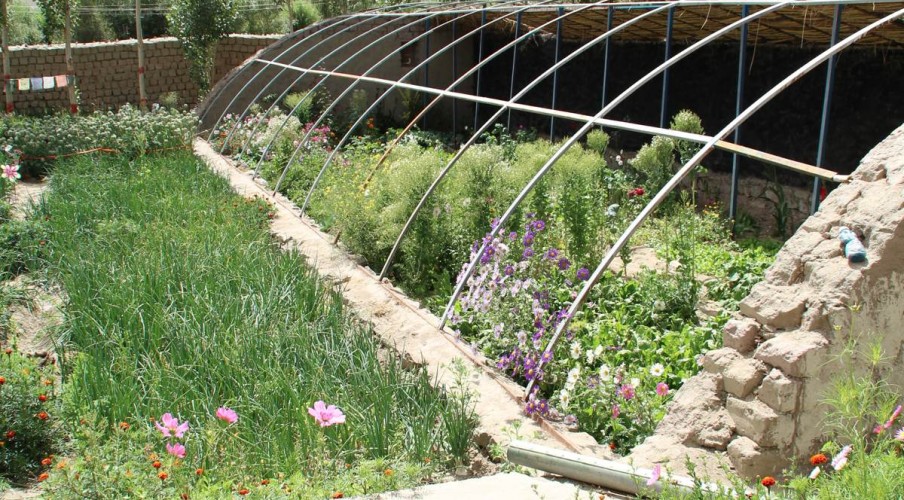
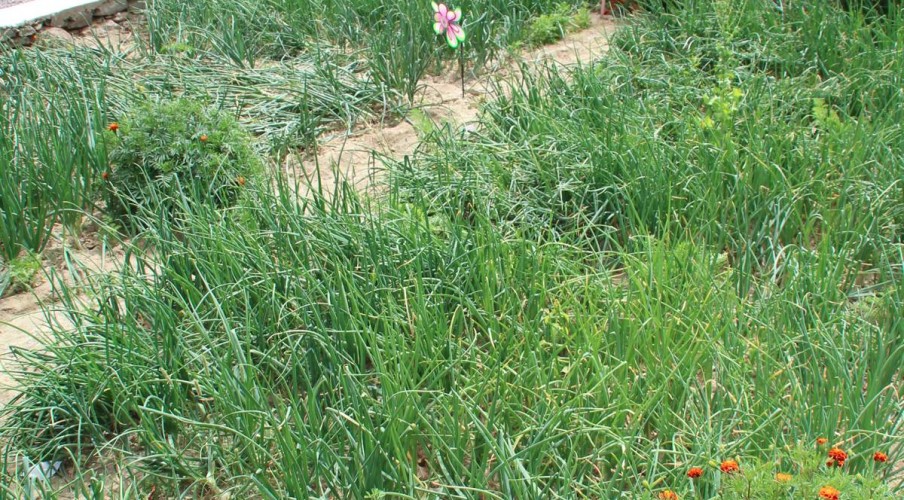
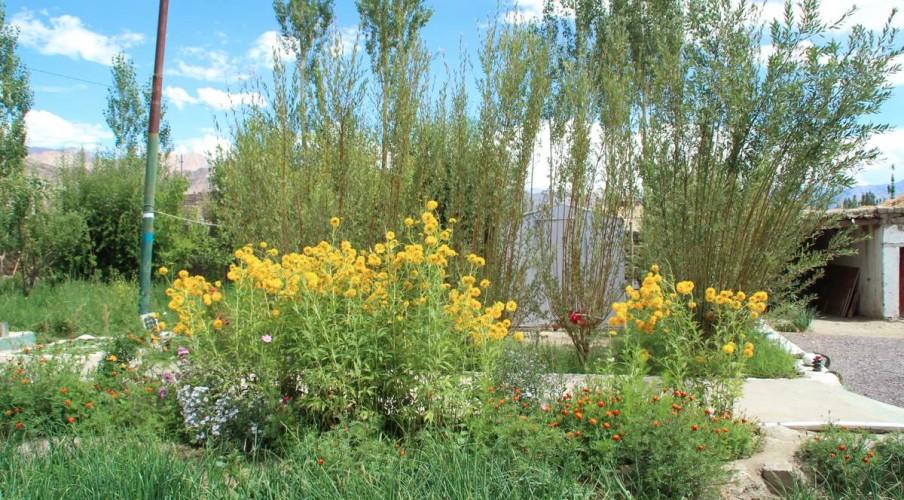
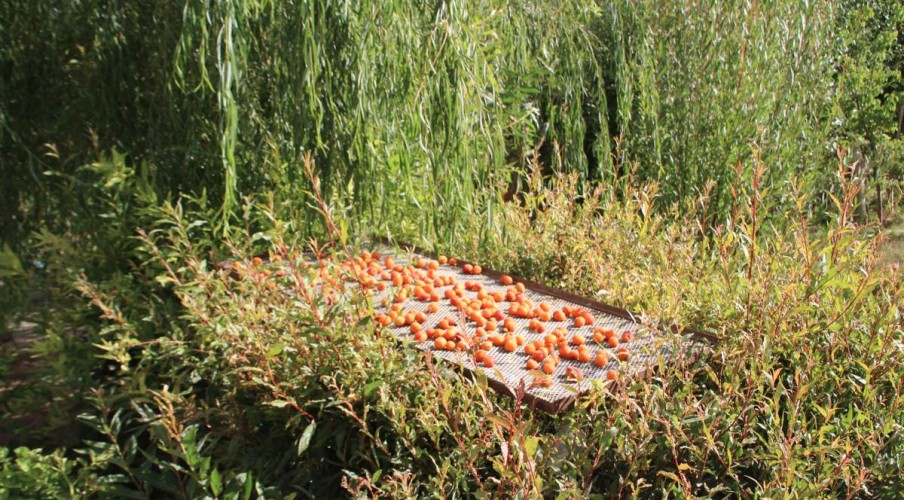
Like most local families, Phuntsog and Yangdol maintain a large kitchen garden and ours is at least 250 sqm and has healthy plantings of peas, potatoes, cabbages, cauliflower, onions, silverbeet, coriander and a lot more. There are apple trees and apricots. Apricots are a staple here and thrive in the climate. If only we could grow them this large in Perth, we would all have one in the backyard for shade. The families keep no chickens (at the Dalai Lama’s behest) though they will eat eggs. At least in summer, there is no shortage of fresh vegetables, and they dry what they can for the winter, but they do have problems maintaining a balanced diet in the long snowbound winter. As a result they do eat some meat: a goat or sheep will be slaughtered to ensure everyone stays healthy. We have had three meat dishes since arrival, and all of us have rejoiced a little! What barbarians we are – the planet does need to be vegetarian to survive!
Nilsa walks down daily to her aunty and uncles, where they collect the fresh milk. Aunty milks the cow, and Mei is hoping to try soon. Yangdol boils the milk, makes curd, butter and milky chai. We do crave fresh Australia butter!
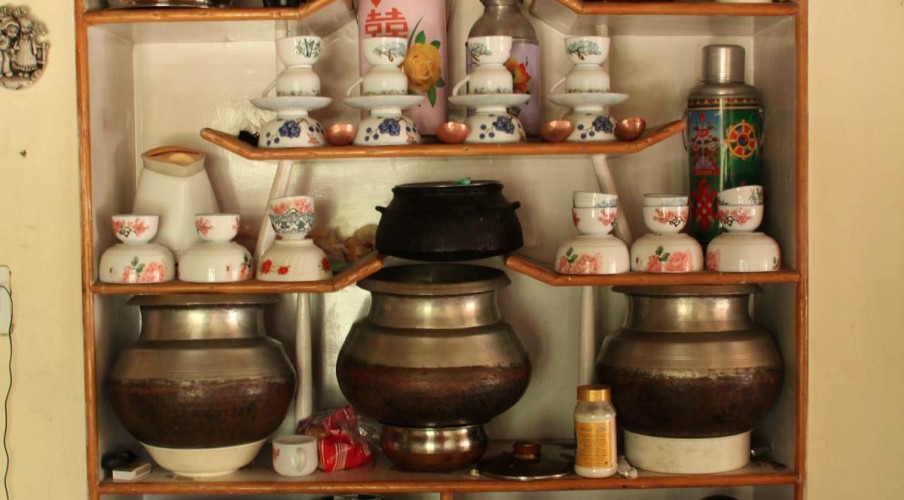
Our water comes from a bore and through an intricate system of channels that are opened and closed from one day to the next to distribute water across the yard. We have a solar unit for hot water, a tank of drinking water that we then put through a filter system, and a tank of water for washing. All of this is retrieved with a bucket. There is a running tap in the kitchen and in the bathroom. We are use to regular ‘ bucket runs’ all day and night. No shower! Just a hot bucket shower … it’s been over a month since a bath or regular shower. We wash our clothes out next to the bore. Water is a precious commodity here, although the melt from the mountains allows many families to irrigate their gardens and homes, it doesn’t last all summer – our local stream has been dry for a fortnight.
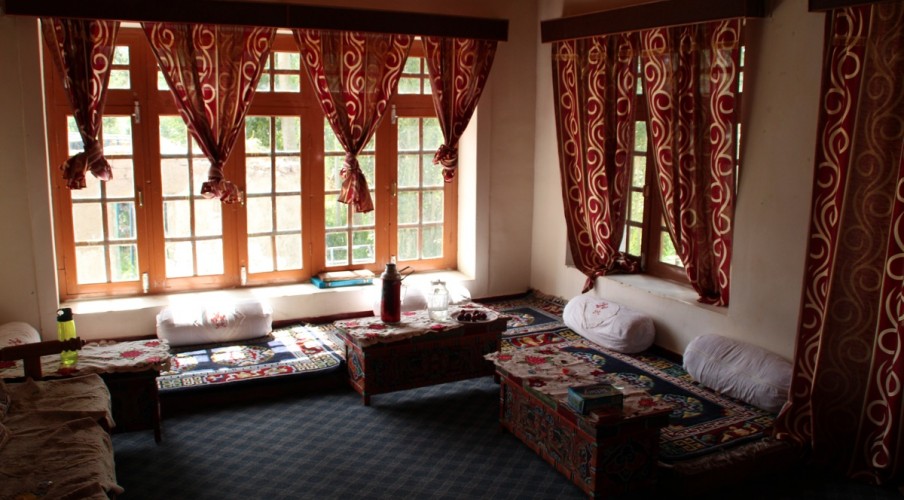
Most nights, Yangdol and her family sit on the stoop outside the front door and cut and prepare vegetables for dinner. Mei loves helping and Xavier is regularly conscripted to help shell peas and ends up loving it too. To eat, we sit in front of low carved and brightly painted tables on the slightly raised and carpeted floor in front of broad windows. This is very much the ‘traditional’ Ladakhi family/dining room. When the time is right, a cloth is ceremoniously spread out on the carpeted floor and the food is brought in from the adjacent kitchen and spread out on it and we serve ourselves. There are firm taboos around feet and Grandma lets us know when some one has transgressed at any time. Simon, the bearded young man in some of the photos, is the visiting landscape architect at Druk Padma, and is regularly guilty of stepping on the cloth! He is building a greenhouse to propagate plants and to green the school site and buildings. Xavier and Simon have become great mates – Xavier loves a trip on the back of his motorbike.
Our cuisine is quite simple: often pasta or rice base with vegetables from the garden: sparked up a little with Indian spices. Sometimes Tibetan MoMo’s (steamed dumplings), occasionally trad Ladakhi consisting of doughy barley pasta (shaped into ears) in a delicious thick sauce – once with a delicious mutton sauce. Last night is was rice, a fabulous Brinjal (eggplant) curry and, low and behold, a lamb and potato curry. Meiduo gobbled down the meat. This morning a short term guest cooked superb puri’s (breads) and delicious potato subje.
As the ‘guests’ we are very much ‘served’, and so we are always fighting to clear the dishes or to do some domestic labour. Dinner is generally accompanied by awful Hindi soaps on the TV – Yangdol and Nilsa are addicted … we are amused, and generally beat an early retreat to bed.
We generally get power from 7.30PM until 11PM, and have learned to daisy chain all our electronic devices (too many) to get maximum charge. Sometimes it fails completely and small solar charged lights are mobilised. Gas bottles fuel the twin burner camp style burners – there are no ovens. Most mornings Yangdol or Grandma cook Ladakhi flatbread over a fire in an outdoor kitchen area.
Like many Ladakhi families our house has an outside washroom and dry drop toilet, as well as a flushing squat toilet inside. Chris uses the drop, the rest of us use the inside toilet. Human waste is recycled (every few years) for the garden.
The parents rise early. They sweep and clean and prepare the food for the family and their guests. We hear Phuntsog praying as he works, in fact, any monotonous labour is generally accompanied by the regular hum of Buddhist chants. We are yet to hear a grumpy word from anyone, or between adults and children, other than those by the Hill Wilson Tribe. In Ladakh, any expression of anger is generally frowned upon … so we have had a struggle on that count! At one time Yangdol had 10 adults staying: she works full time in a medical centre, and is permanently good-humoured, kind and fun to be around.
Grandma has quite a few friends who visit. They are very old ladies and all wear the plum and grey wool Ladakhi dresses, and turquoise and coral jewellery. Though they are old and grey and their faces are worn from the harsh conditions, they will walk miles to see the Ringpoche or the Dalai Lama, while our kids complain about a kilometre to find a bus.
In almost every sense they are a ‘typical Ladakhi family’ – they are not wealthy at all and must work extremely hard to maintain what is a very modest standard of living. They have very high aspirations for their one daughter, who they intend to send to Delhi to complete her schooling after Form 10. It should be said that the guidebooks are utterly correct in describing Ladakhi people as wonderfully generous and welcoming people. We are regularly amazed by the generosity we receive at odd moments and the sincere desire to ‘care’ for visitors and guests.
The family all love Meiduo – a little too much sometimes. Yangdol calls her her Ladakhi daughter, and Meiduo can find the attention just a bit overwhelming. Other times she is in her element. Mei is always emerging from Nilsa’s room with a new Ladakhi outfit on. Yangdol and her daughter are always re-doing Mei’s plaits. Plaiting is an art here. The girls at the school sport thick black perfect ropes artfully placed high upon the head, or clipped back (required by school rules). I have studied their plaits and have no idea how they appear to be woven not by hand but by some other more perfect method. The old women all wear their hair long, and often in two plaits that are then braided together to meet each other, like a skipping rope down their backs. They wear badges with images of His Holiness the XXII Gyalwang Drukpa (the leader of the Druk (dragon) lineage which generally holds sway across Ladakh) or his Holiness the Dalai Lama. Buddhism is deep and pervasive: at assembly the children at Druk Padma bow their heads and join their hands in prayer.
We are lucky enough to have a little kitchen off our room. It has two gas hobs serviced by a gas bottle outside. We have no running water, but bucket in our washing and drinking water from outside. We filter our drinking water. In winter the family intend to move into this space as it is much easier to heat and maintain. The family will move in a traditional Ladakhi stove, a slow burner, to keep out the below zero cold.
We do suffer from being about 25 minutes from Leh – the centre of excitement! – but we also enjoy being away from what, at this time of the year, is a rather frenetic place. We pay about 20 rupee to get in – unless a random car picks us up – which is often. In town you can do internet and eat most cuisines, from Israeli to Mexican, all done generally well. Our fave is Chop Sticks, which does good healthy noodles and wok meals. You will not find a good steak! Indeed, Tibetan Veg stands supreme, seriously threatening the authentic Ladakhi food culture. Historically, Ladakh is very much linked to West Tibet – and now there are large refugee camps outside Leh, some that we have visited. Free Tibet stickers and T Shirts are common.
Anyway, Mei is next to me on the iPad, Xavier has left for School, Josie is negotiating to meet up with some Museum people … and I need to get into town …
[This was written a few weeks ago by Josie and more recently added to by Chris …. but lack of power or internet (generally both) and trips away have delayed actually getting it up on the blog.]
Josie Taught Today
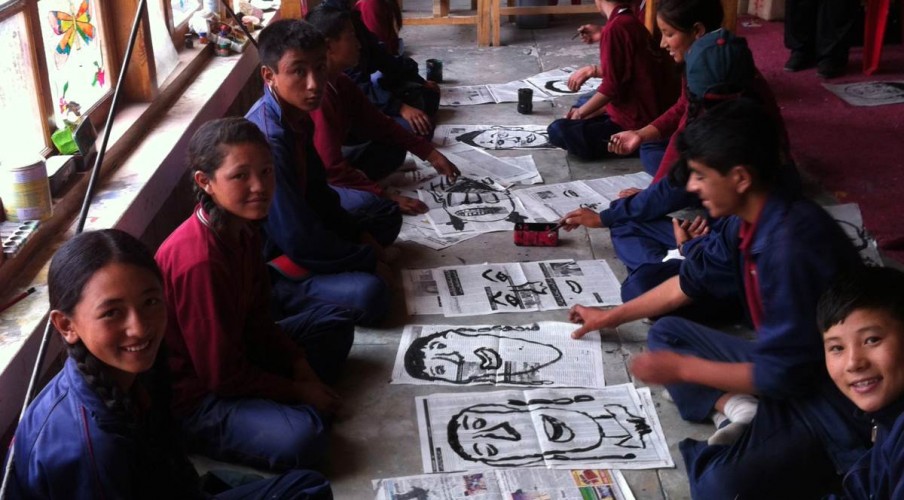
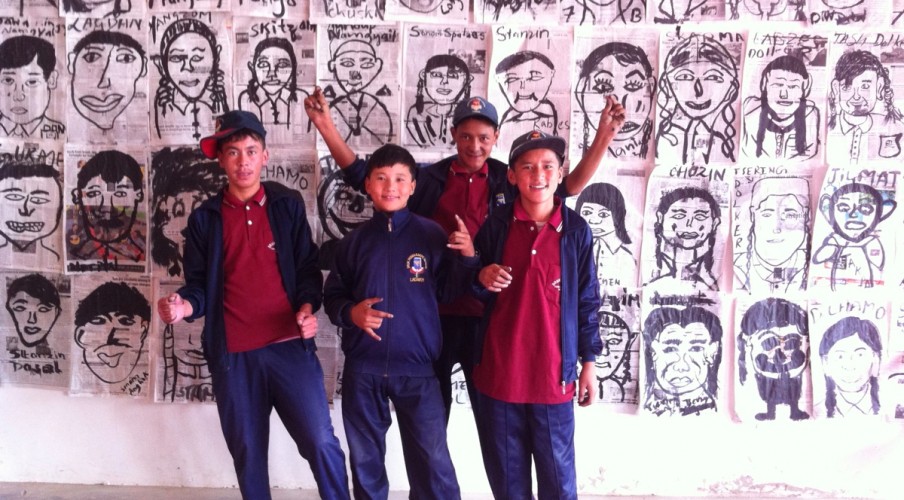
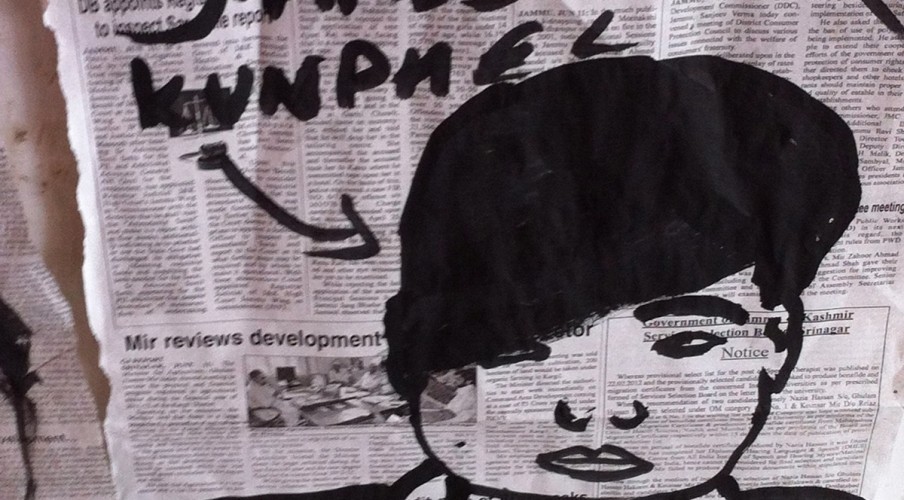
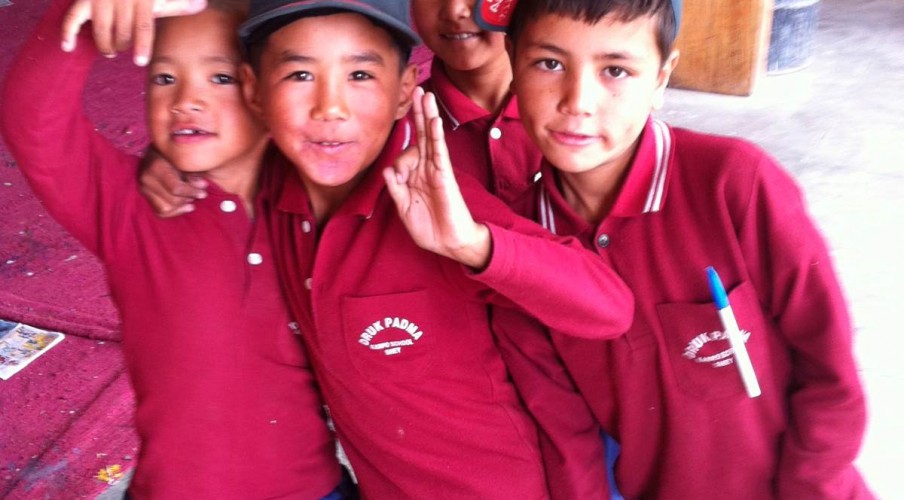
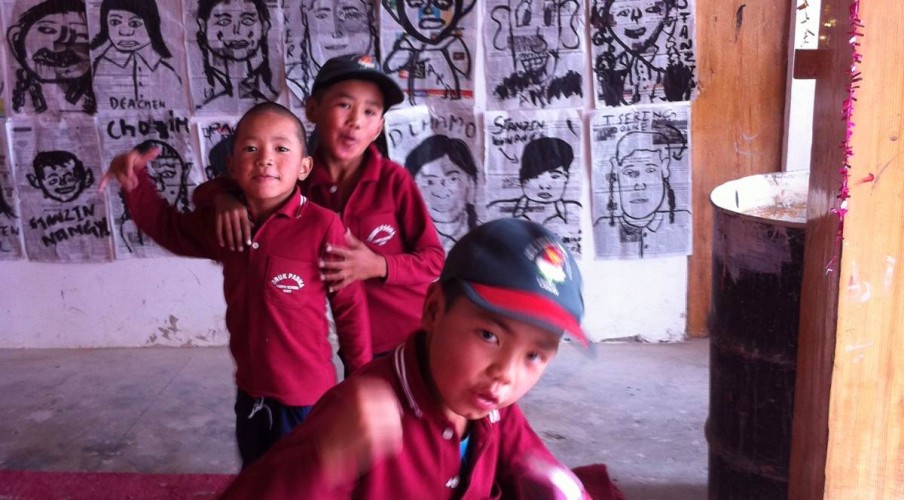
Josie has been doing some art classes with the kids – today she did some quick ink portraits, and they are working on a Joseph Cornell project as well. On top of that she has kick-started a museum project. She may be working harder than DP Chill.
Recent Comments