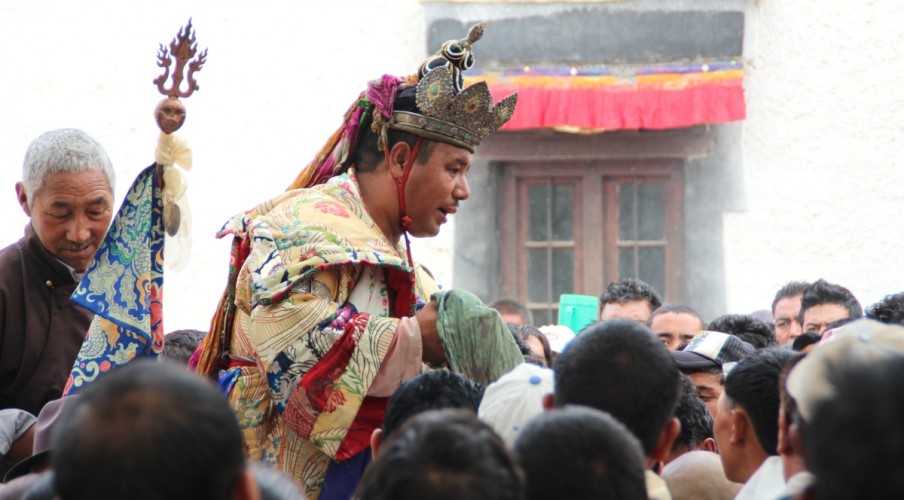
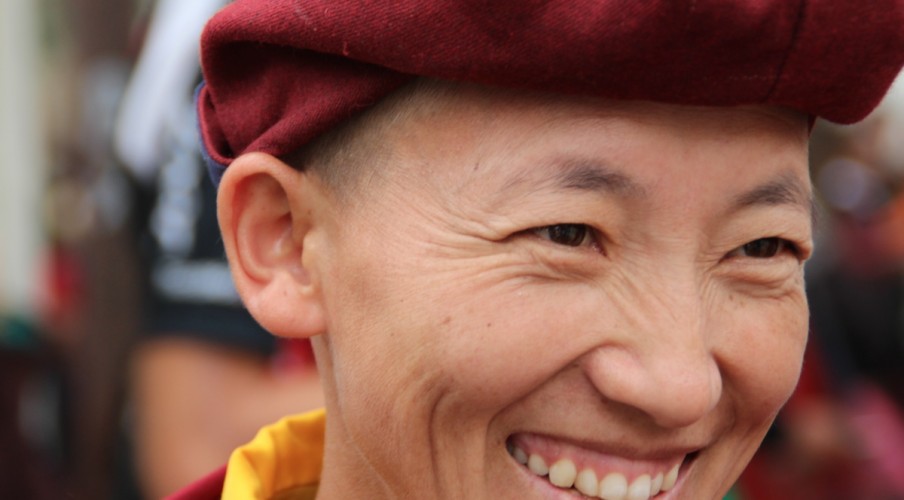
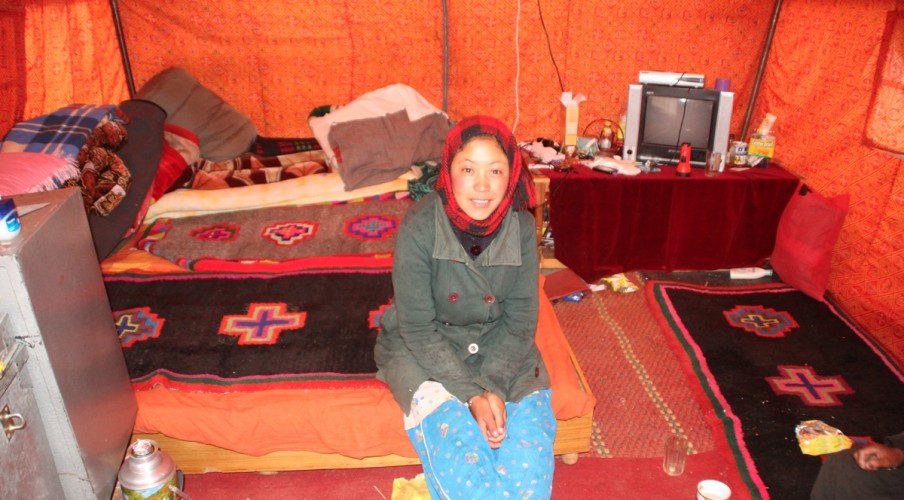
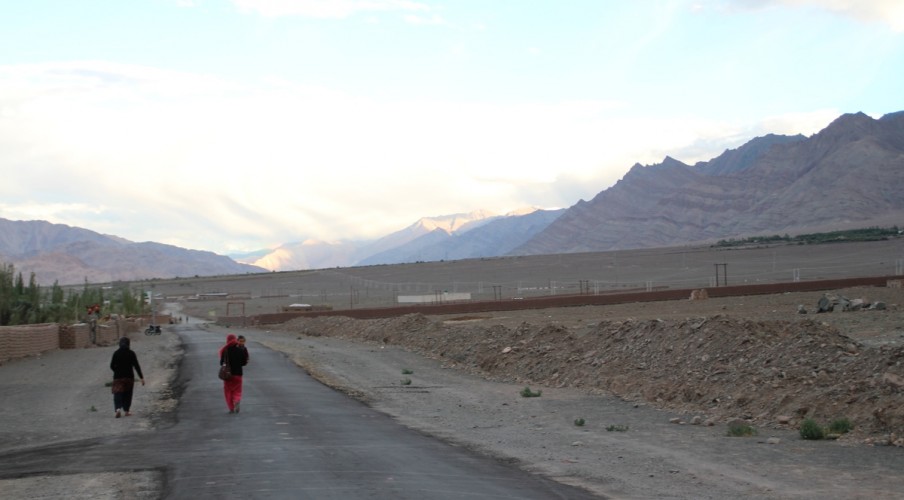
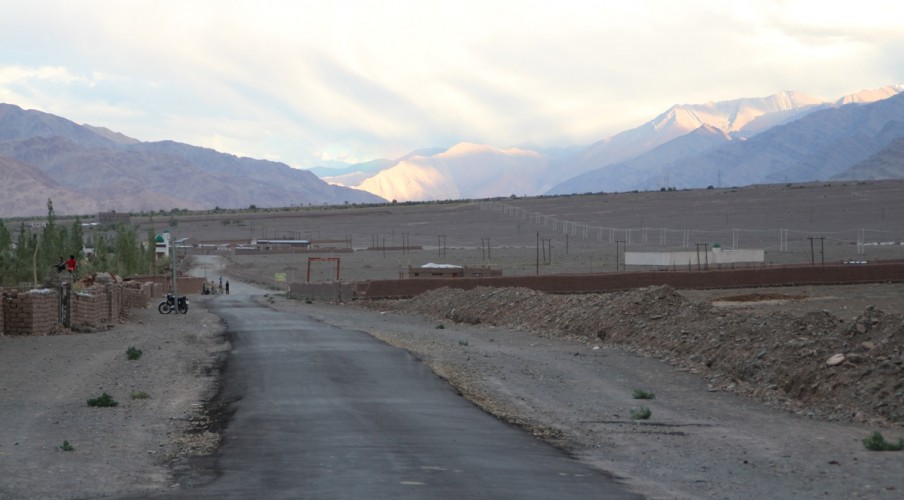
Not long ago we went down the road from our house to see the Oracle, who is the harbinger of the harvest and, therefore, good fortune to the village.
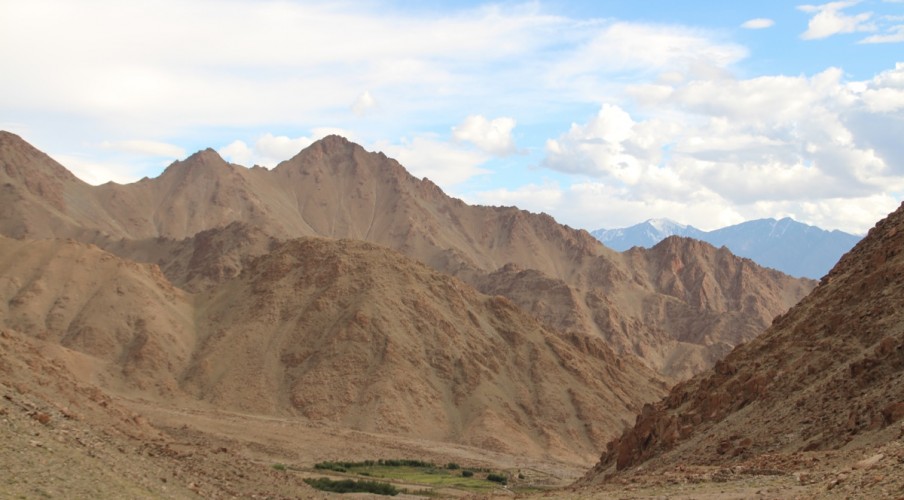
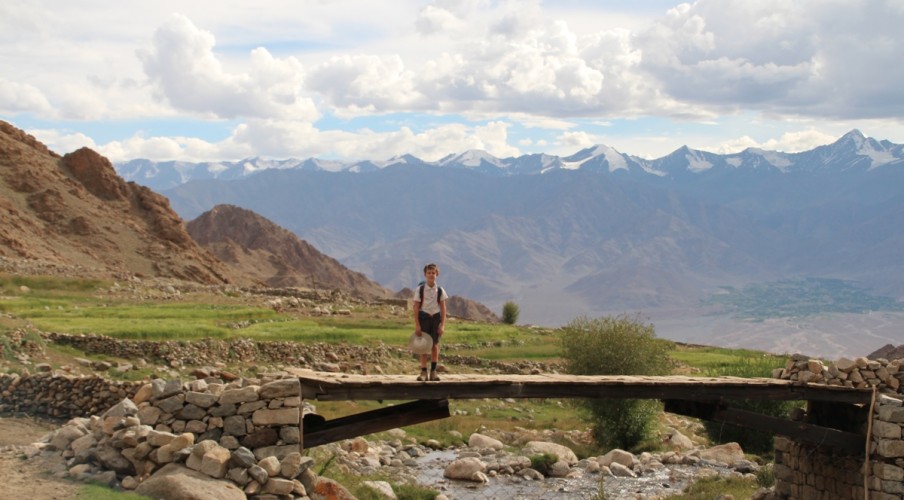
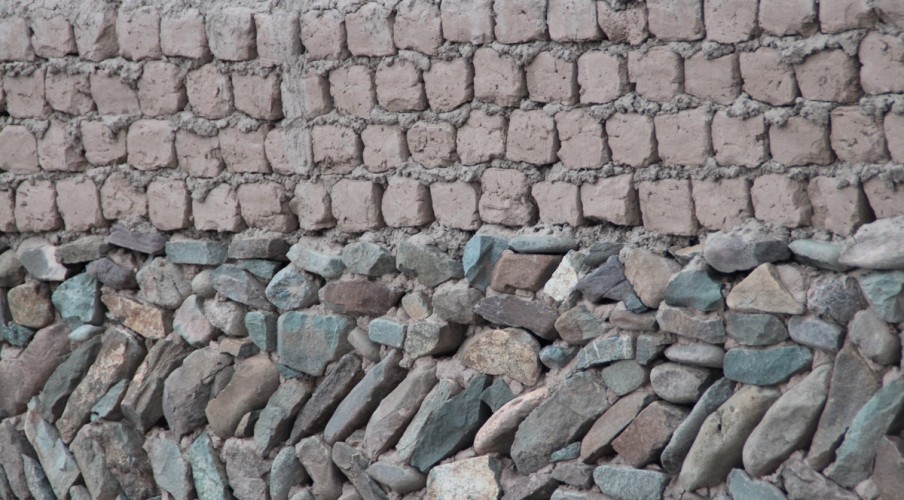
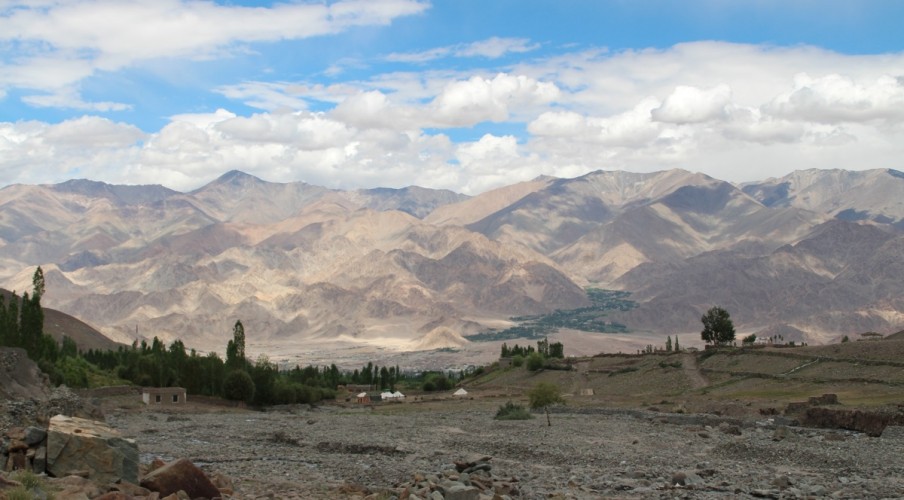
The appearance of the Oracle marks the commencement of the summer harvest, when the golden barley fields that spread out across the valley either side of the Indus will at last be cut by men and women wielding hand scythes. For weeks we have walked along the irrigation channels running between the fields and next to exquisitely built stone walls, watching the crop ripen. As it has become more golden and the heads of barley getting heavier in the breeze, the expectation across Shey for the harvest has risen. There are two types of barley grown, one for the Sampa flour that is the main ingredient of the local cuisine, and one for the Chang, the local beer. Most families will have fields, often a walk from their house, which they crop every year.
Oracles are very important in Buddhist tradition and within the social order here in Sheh. Phuntshog tells us that our local Oracle inherited the position from his father, and he from his father, ‘going back to the beginning’. When he is not required to be ‘the Oracle’ he is just an ordinary guy, like you and me, working in Shey.
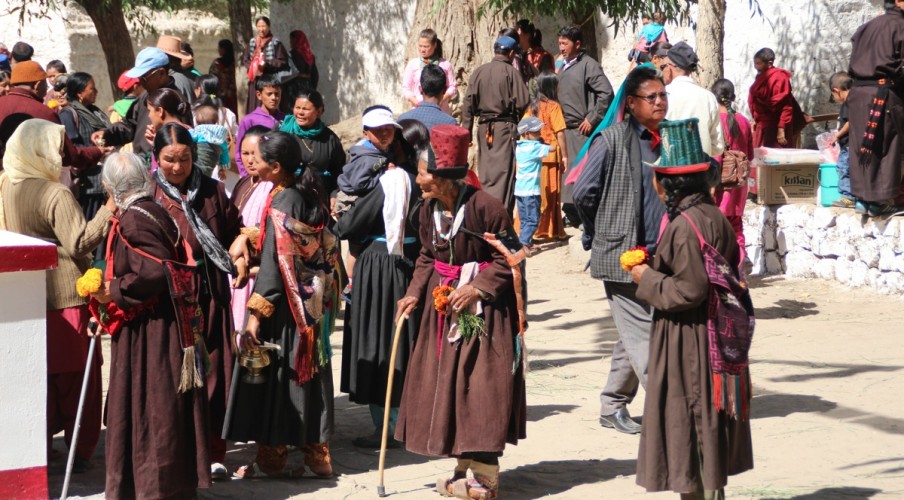
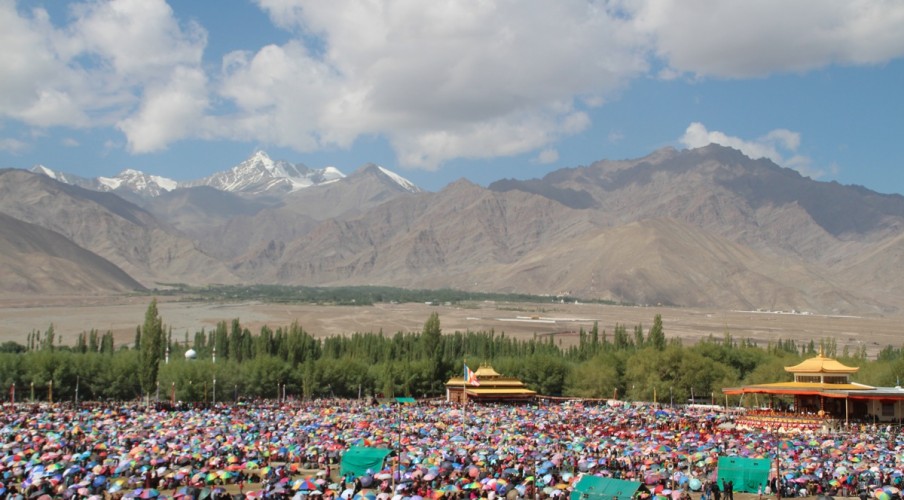
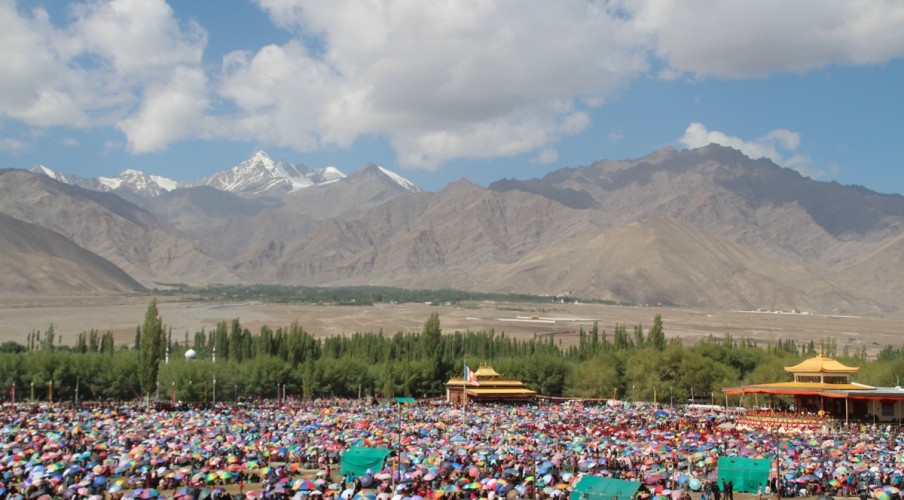
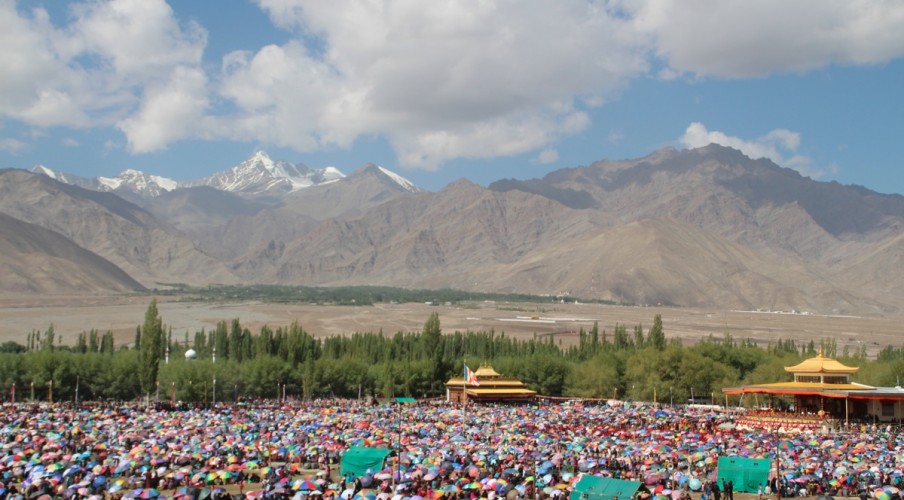
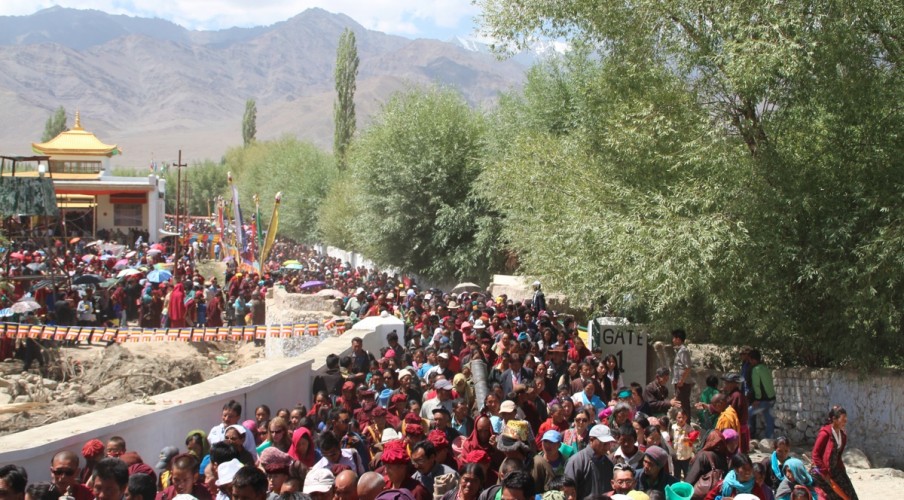
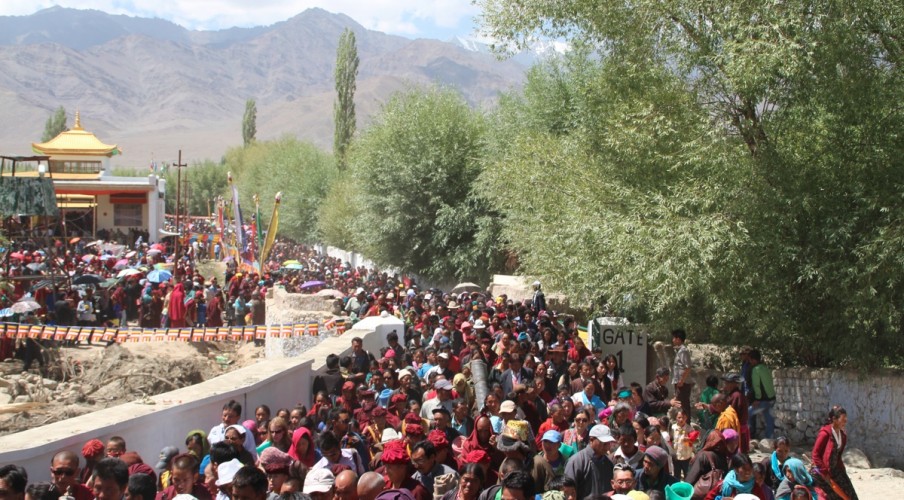
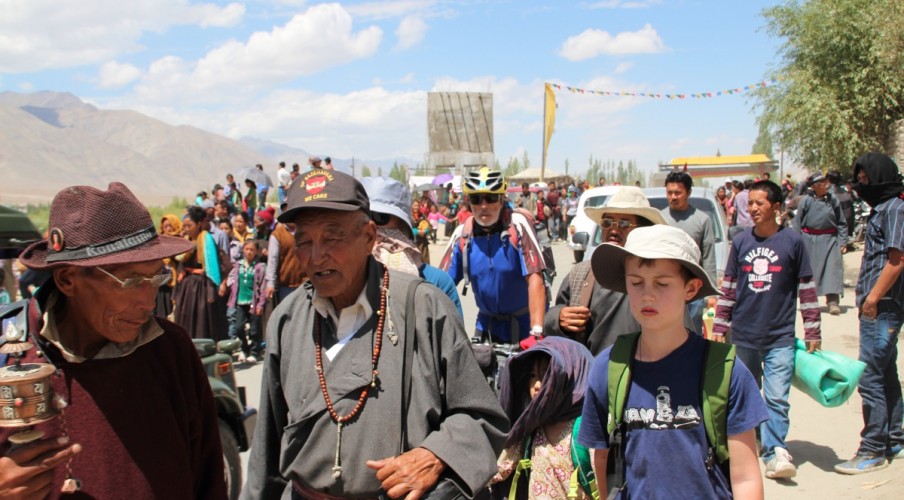
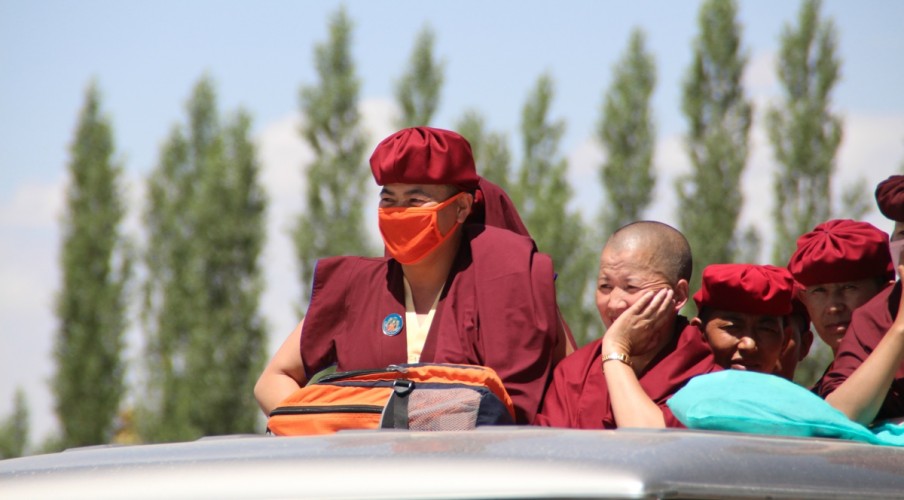
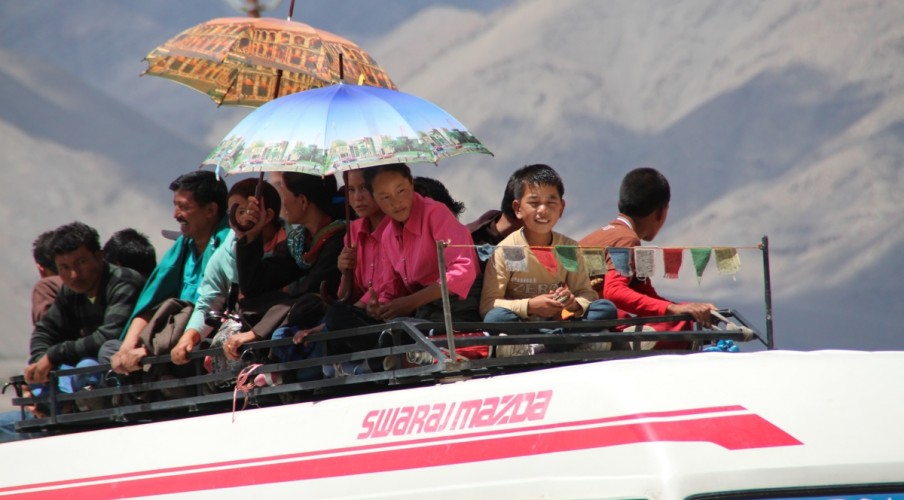
The walk down to Shey Gompa takes only a few minutes but is long enough for us to experience the festive atmosphere – it’s a BIG day in the local community and people are streaming in from all along the valley to Sheh Palace and the Gompa, from where the Oracle will appear after his days of meditation. On the road outside there is even a guy selling fairy floss from a rickety old bicycle wheeled trolley. We buy some!
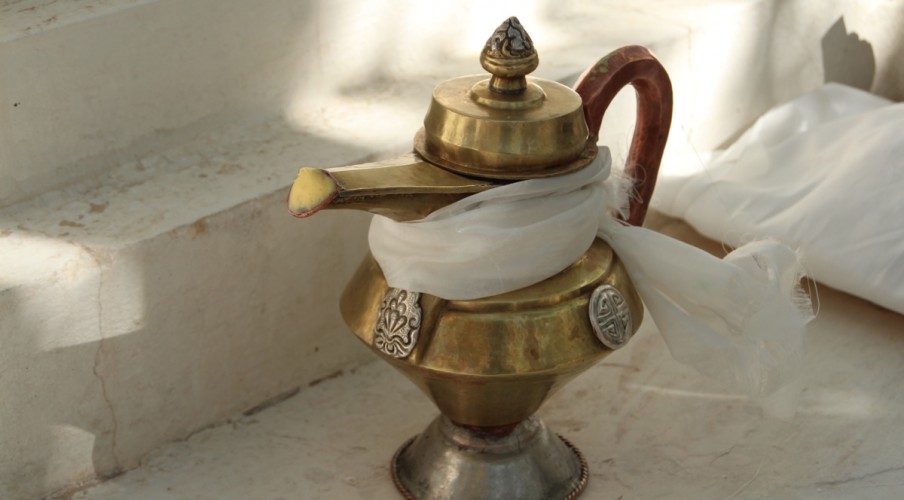
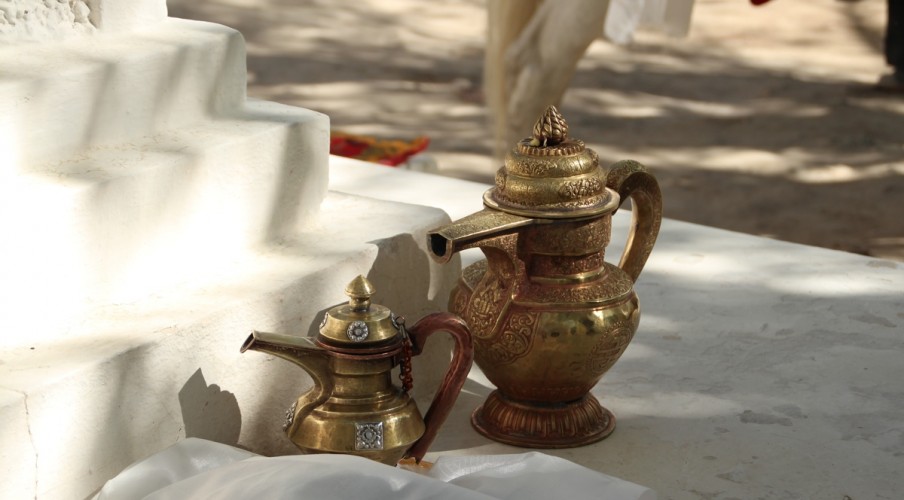
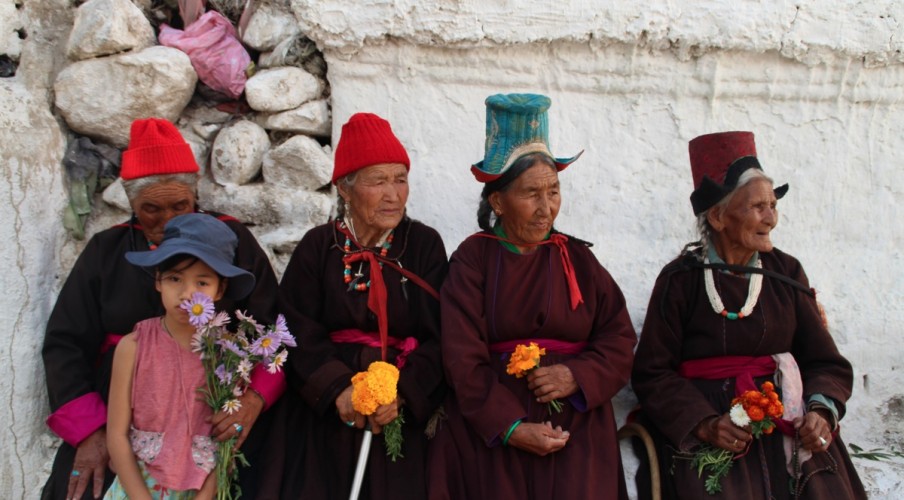
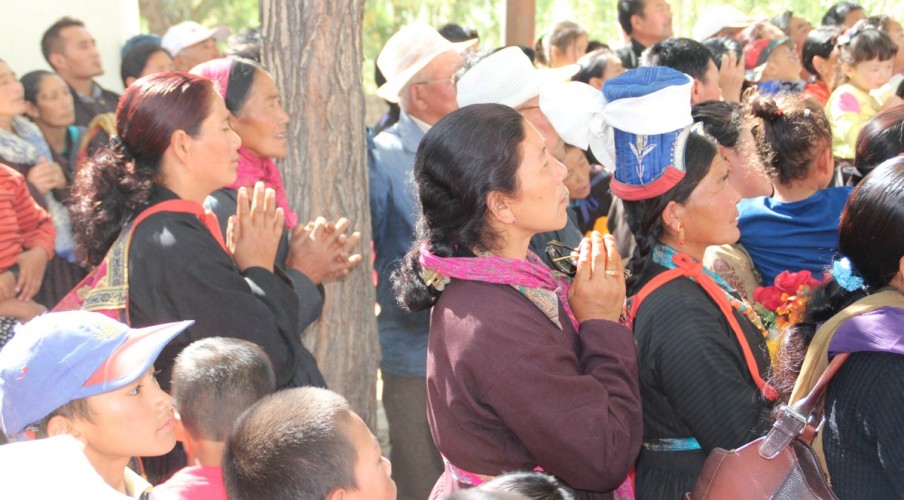
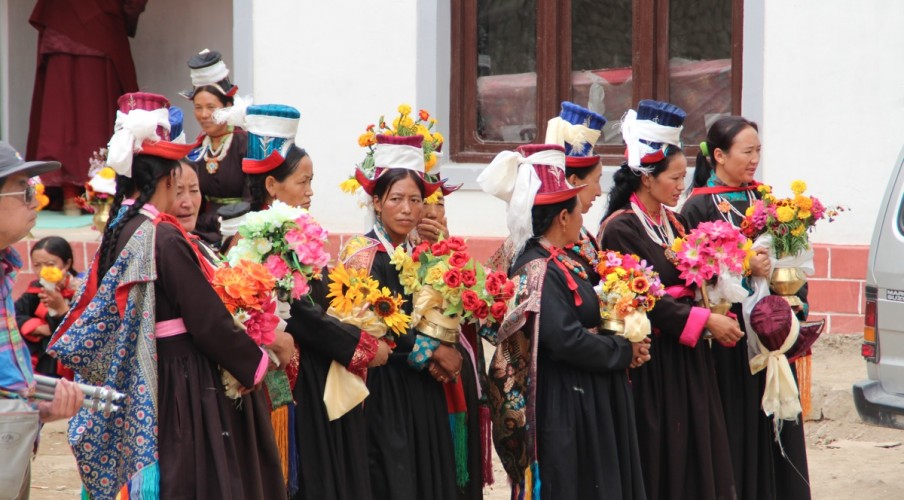
All the local people are dressed in traditional clothes; the women wear their yellow gold and coral earings, and gold and turquoise necklaces, and the men carry family Chatskan, the gold pitchers filled with the local barley-based alcoholic chang, or else gin or whisky, the spouts dabbed with dollups of greasy butter. These liquid offerings are for the Oracle to imbibe and, as we soon discover, spray across the assembly as he responds to questions in a seeming trance state. Or perhaps, he has had too much to drink … or both.
Butter is very important in Buddhist Ladakh. Butter lamps burn in the Gompas (and are never allowed to extinguish), before the image of Buddha or the Rinpoche. Butter tea is made by churning the two together in a Goor Goor, and it is then heated and salt is added. It is offered to visitors and is considered a ritual offering that is hard to refuse, but rather tough for the western palate.
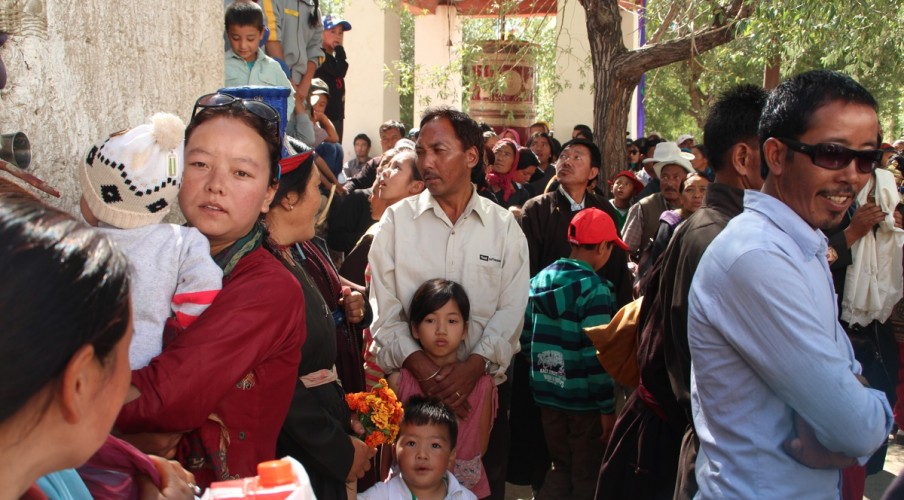
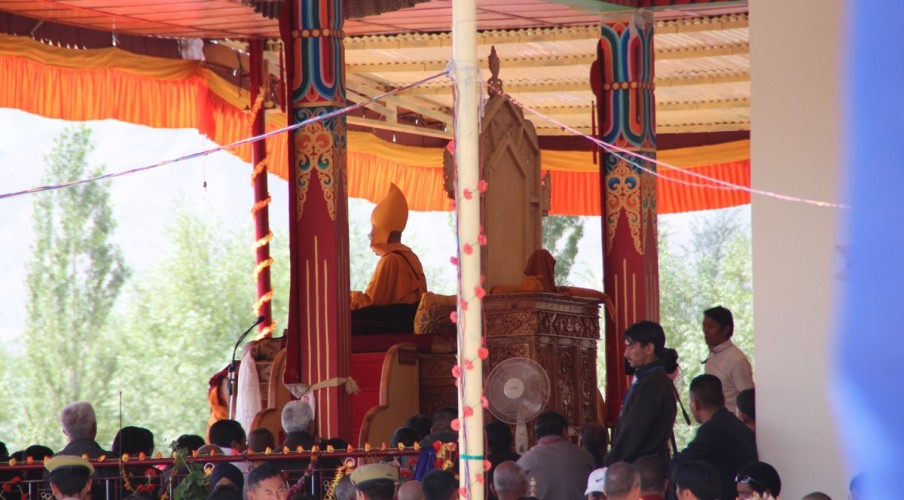
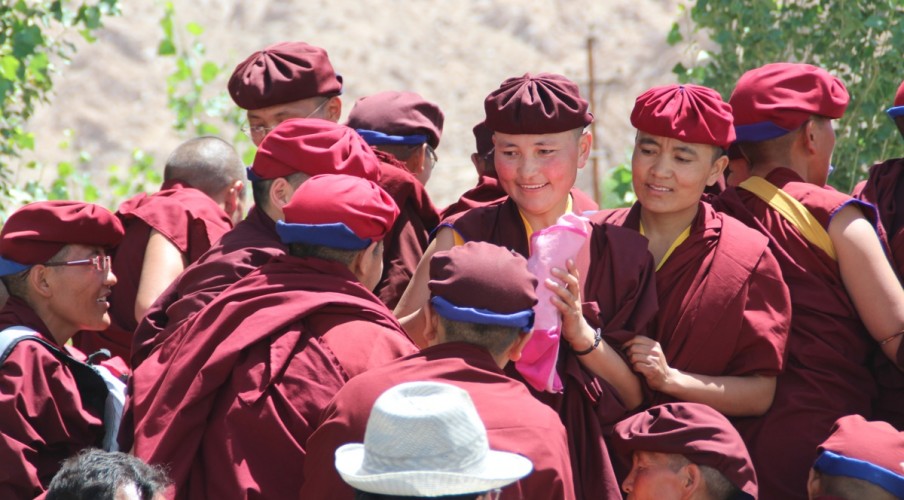
There are several hundred people gathered in a relaxed expectant throng around the Gompa doors, waiting for the Oracle to appear. The doors on the lower floor are open to the 17th century gold Buddha that stands nearly two stories high, the head rising through a gap in the floor above. These doors on the lower floor are only open a few times a year, making it possible to stand at the base of the extraordinary golden Buddha and look up through the ceiling to see his head. In the room robed lamas are praying while some villagers try to get a glimpse of the Oracle through a tiny glass window into his adjacent room.
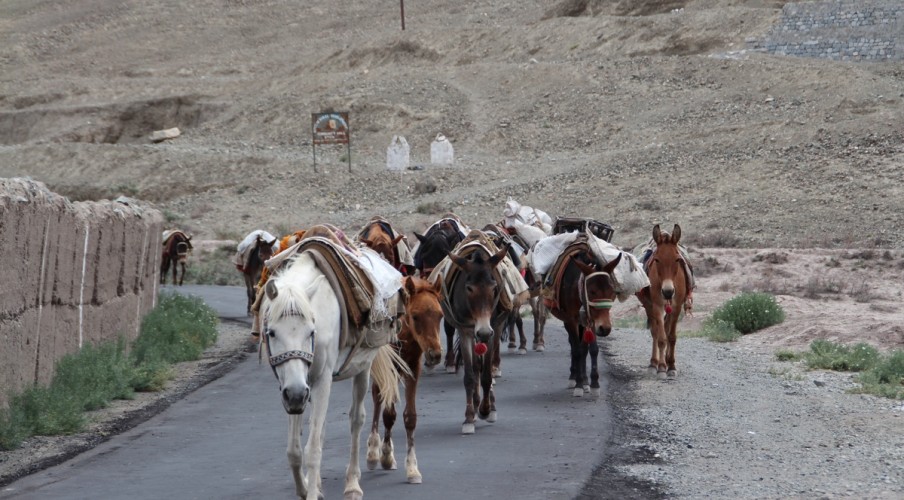
Standing at the ready in the middle of the crowd outside is the Oracle’s white horse, which will eventually carry him through the local fields. The horse is festooned with ribbons and bells, and quite transformed from the rather dissolute pony we had noticed hanging around the local daba on the main road for the past week or two.
The Oracle has been locked up in solitary meditation for 15 days in preparation for this moment, so there is a real air of expectation in the crowd, which is packed tightly into a courtyard. Everyone is looking up to the door of first floor room where he is expected appear, and where men and boys are pressed onto the verandah and into adjacent upstairs rooms.
The women wait in the courtyard, gossiping and laughing. When the door to the Oracle’s room opens, he does not immediately appear, and there is a surge to the door by the man and boys up on the verandah, and a great deal of yelling and calling out. Every few minutes, in unison, the crowding men let out a loud cheer and raise their fists.
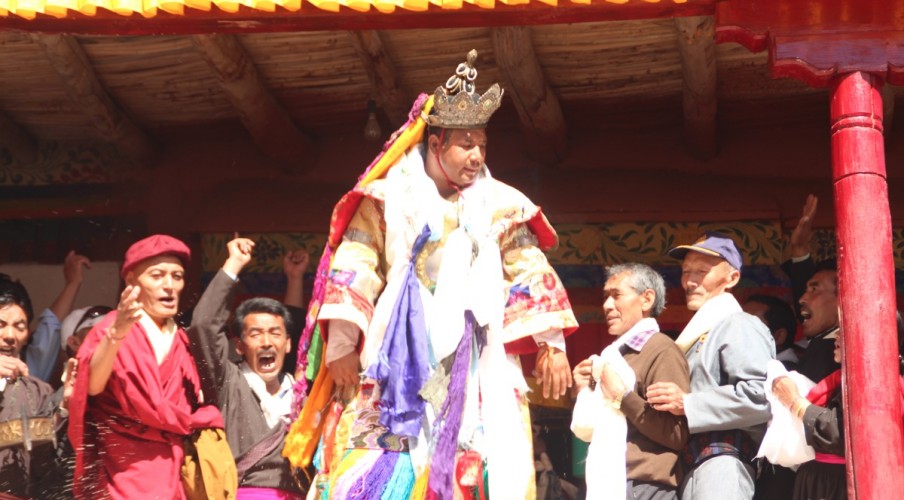
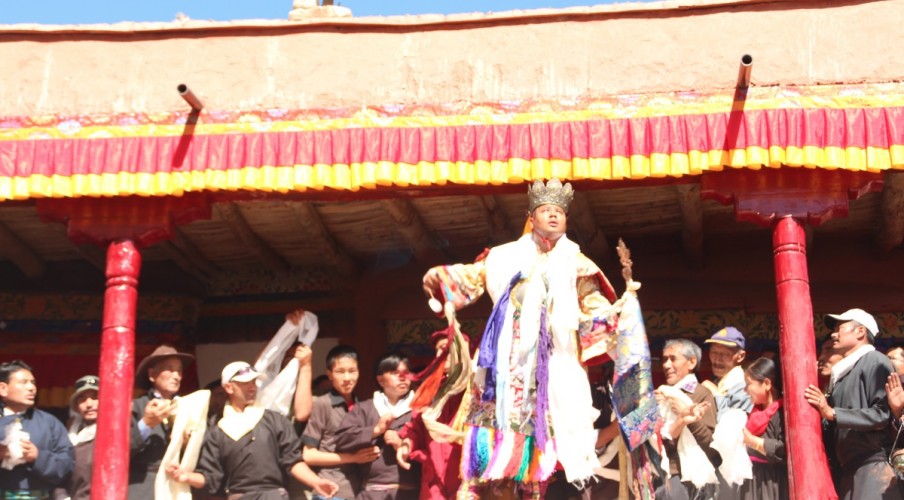
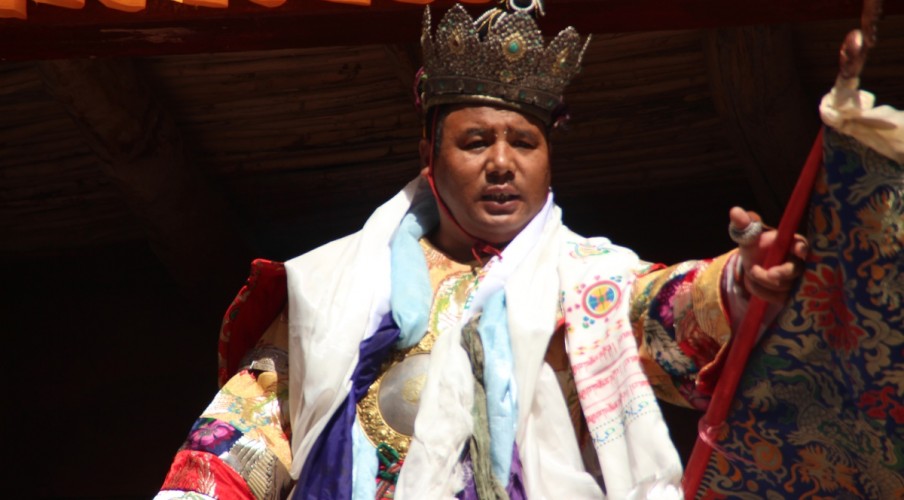
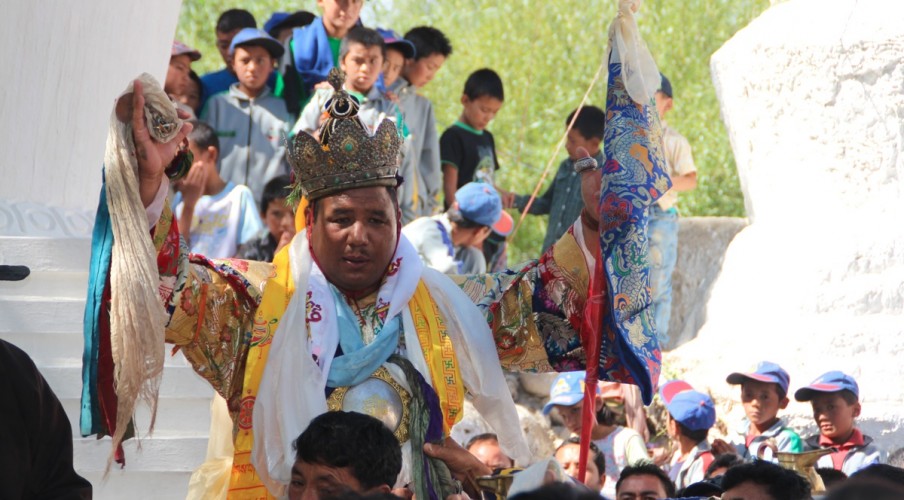
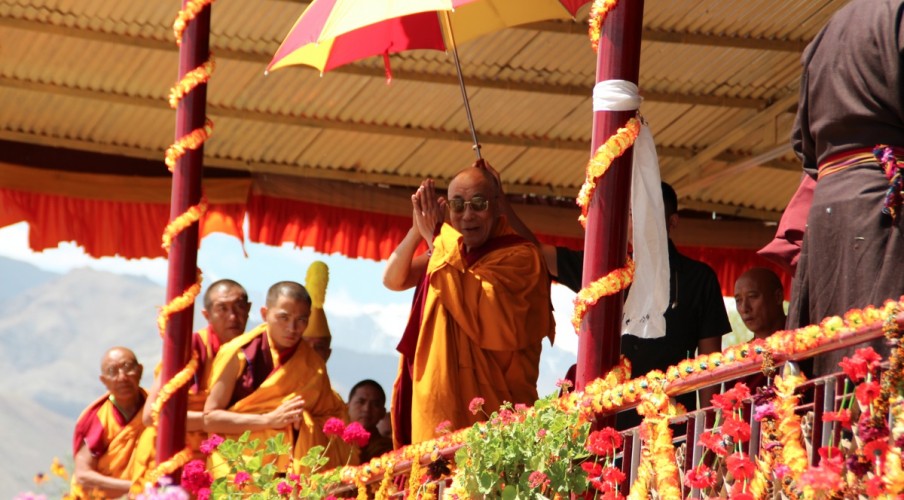
Finally there was a roar from the assembled crowd, and then another, and the Oracle emerged. I thought him rather Rabelaisein… he was a large man, a cross between a court jester and a high priest. He called out to the people, who were laughing and smiling. We all called back. Urns and bottles were pushed at him. He would pause, take an offered bottle, and then throw back his head to take a wild swig. Some of the alcohol made it into his mouth, but a fair amount was sprayed over the crowd, often accompanied by laughter and loud calling out. The Oracle then dispensed advise to whoever had offered the alcohol. Later, the remaining spirits would be shared with the crowd, children as well, who would hold out cupped hands and take sips from the now blessed spirits.
For several minutes he paraded up and down the edge of the verandah, often precariously balanced at the edge, making wild gestures, often with a bottle in his had … the booze was going everywhere. An elderly man acted as his minder, steering him through the crowd, members of which would press forward, lacing silk cloth through his belt and accepting his blessing.
he moved up onto the roof of the building, followed by minders and lamas, where fires were lit and more yelling and calling out could be head – and then to more cheering the crowd made way for the big man as he joined the patient crowd waiting at the front of the building … he moved about accepting bottles of spirits and calling out, or with his head down, as if to keep a confidence, talking directly to one of the crowd.
Eventually, he was guided totake up his mount and after much carrying on the sweaty and now rather boozy looking Oracle was lifted onto his horse and made his way towards the fields. He then led the assembled procession through the fields and late into the afternoon we could hear the beating of drums and the cheers as the Oracle made his way around the village, blessing fields of barley and alfalfa, and bestowing goodwill upon the whole community.
The Oracle looked like he had had a fair bit of butter in his day. Nilsa informed us the night before his appearance that the Oracle was capable of drinking 400 bottles of alcohol in one day – ‘or is it 40?’ she added. Regardless, he is obviously a man of great powers and revered by the local people. The most famous Oracles are at Matho and Alchi, and are women.
Our Buddhist friends from Hong Kong who we met in Leh trotted off to see a local Oracle to get some good numbers for the HK lottery, which I suppose is as legitimate a use for an Oracle as any?
Recent Comments