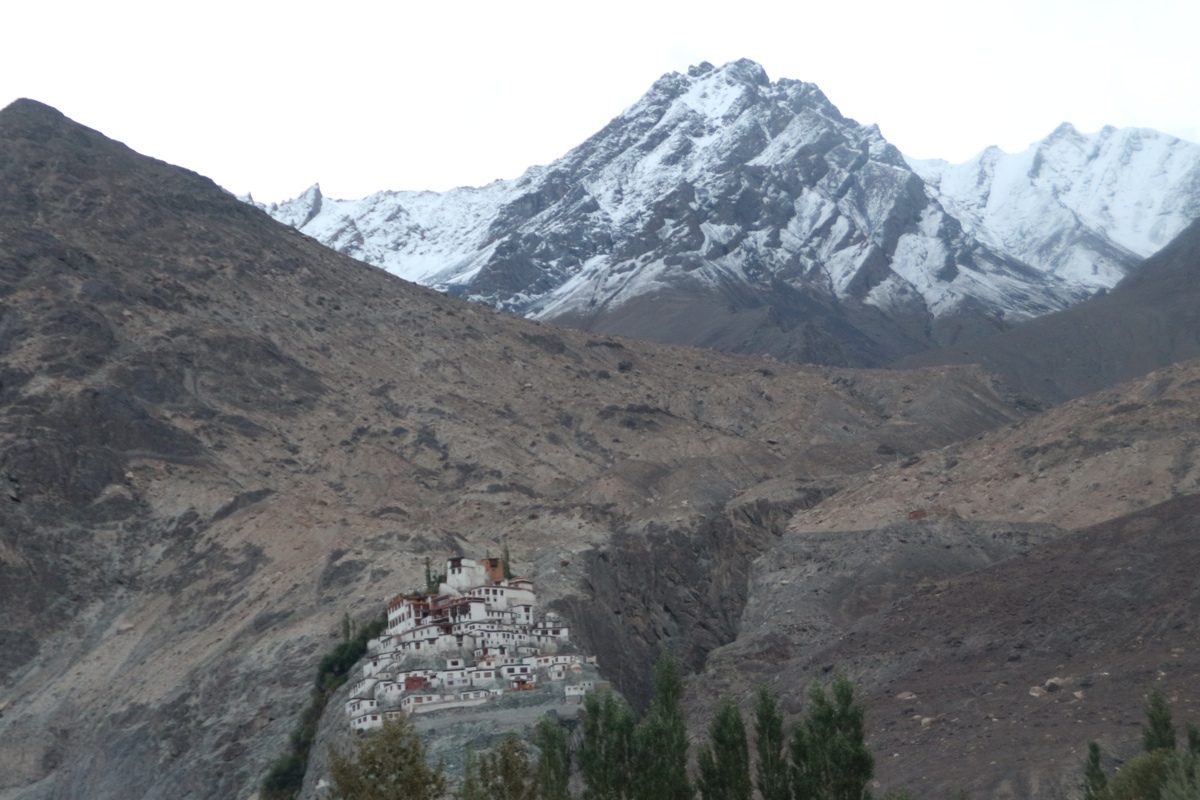
Our Diga La trek was yet another triumph (tongue firmly in my cheek!) of my perfect planning.
It was a long and tough trek that allowed Xavier the opportunity to discover for the very first time, the real meaning of FATIGUE.
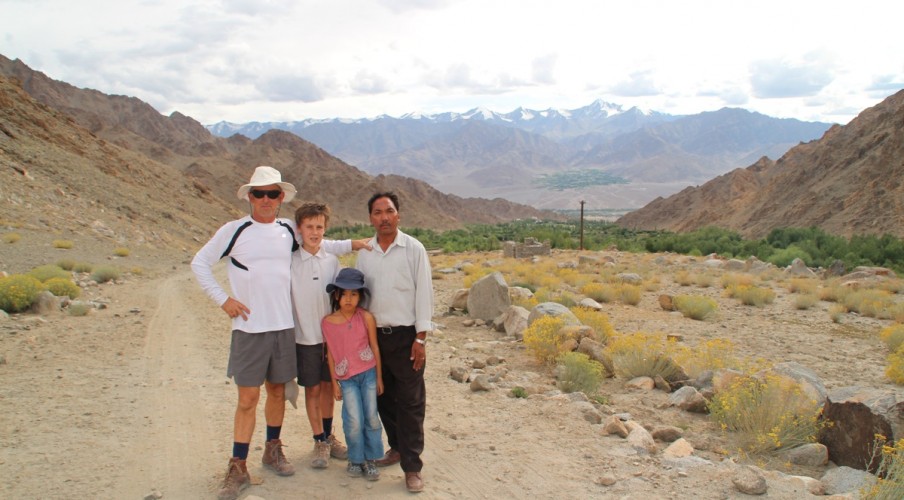
Our first day started a few hours later than planned … our Phuntsog was late with the drop-off, so we started walking at about 4PM and had to put up the tent at around 6.30PM as the sun disappeared from our canyon. The question was – had we climbed enough to make the climb to Diga La a real proposition the next morning? On the way to the drop-off an old man harvesting in the field laughed and said “2hrs to camp, 2hrs to pass” ( in Ladakhi, of course). Hmmm that didn’t seem right, but I wanted to believe him, which was the main thing.
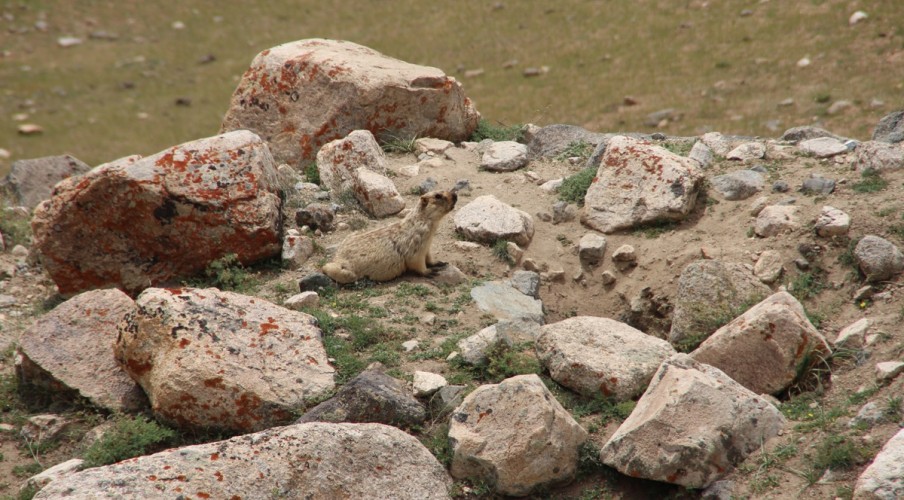
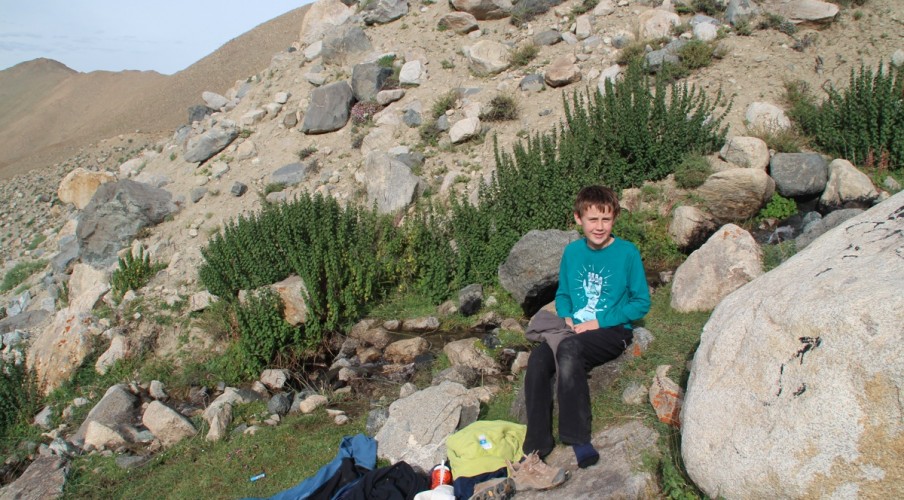
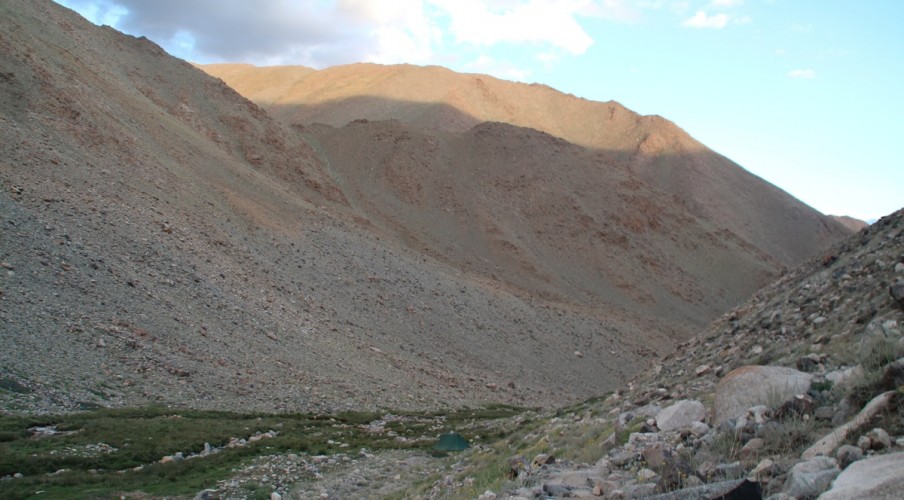
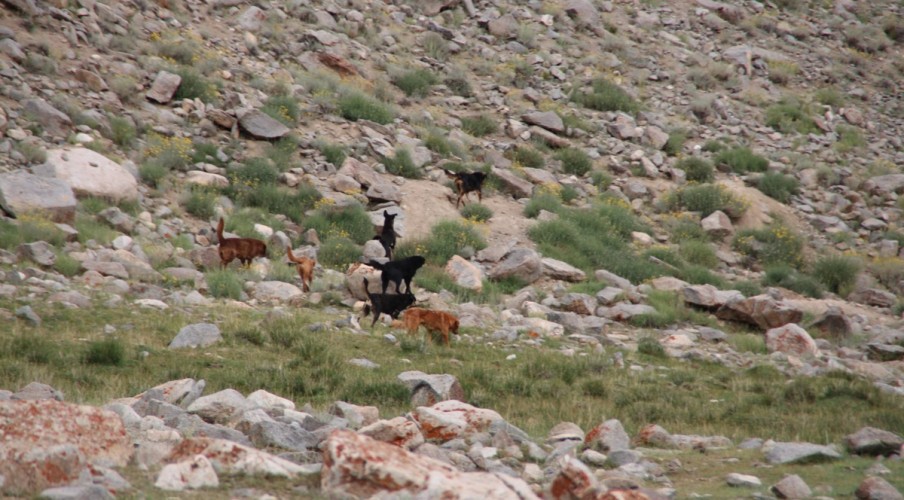
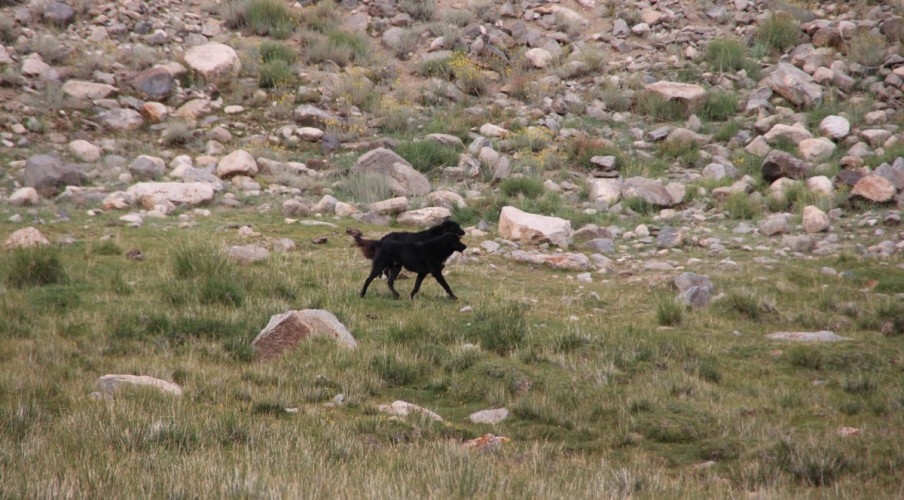
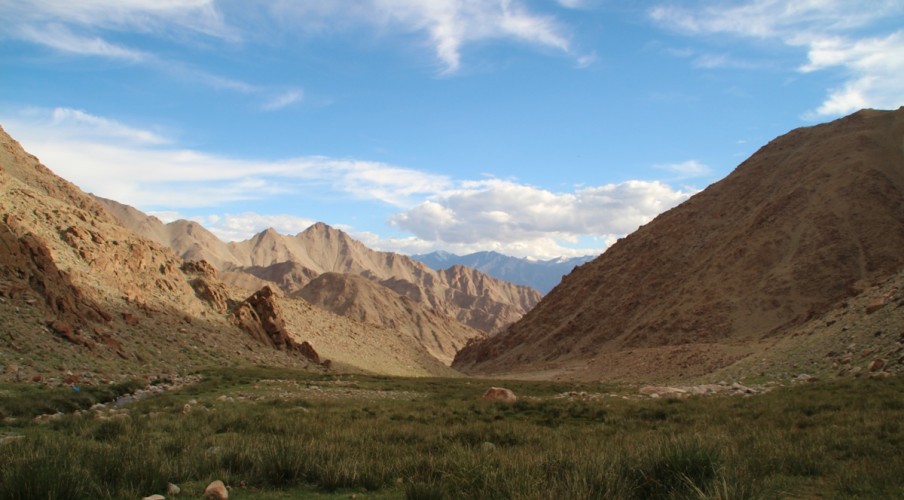
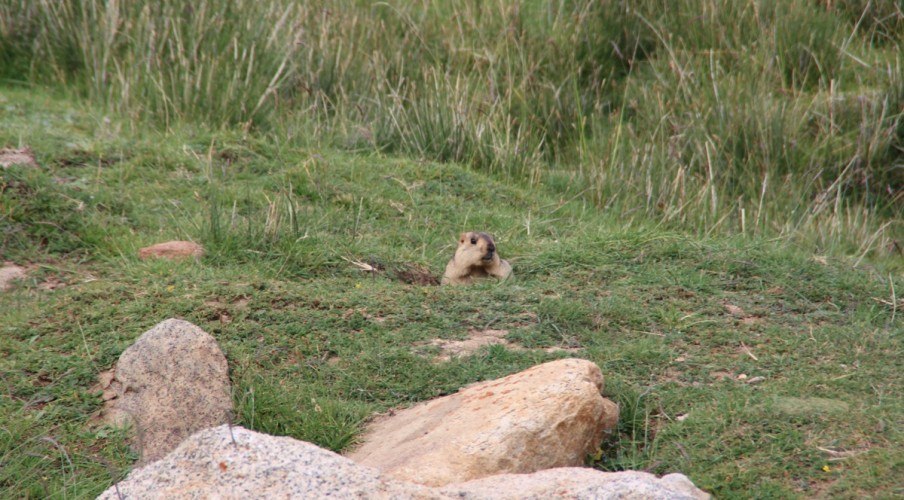
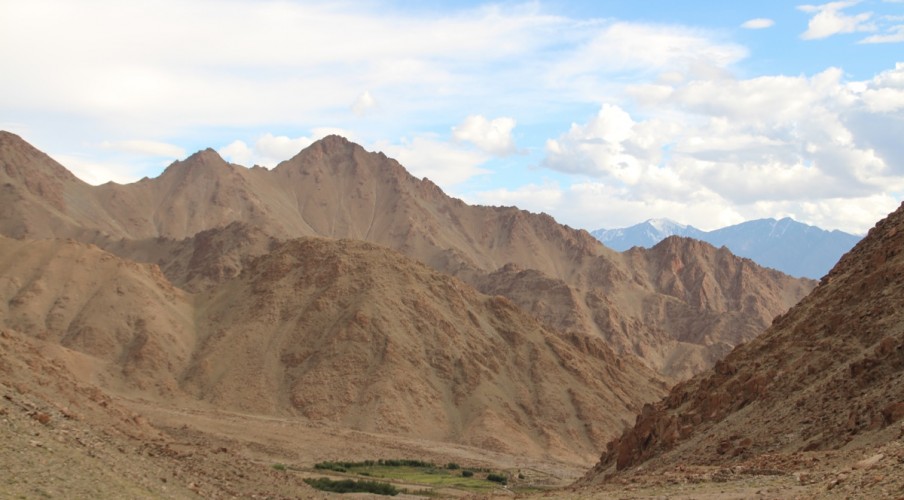
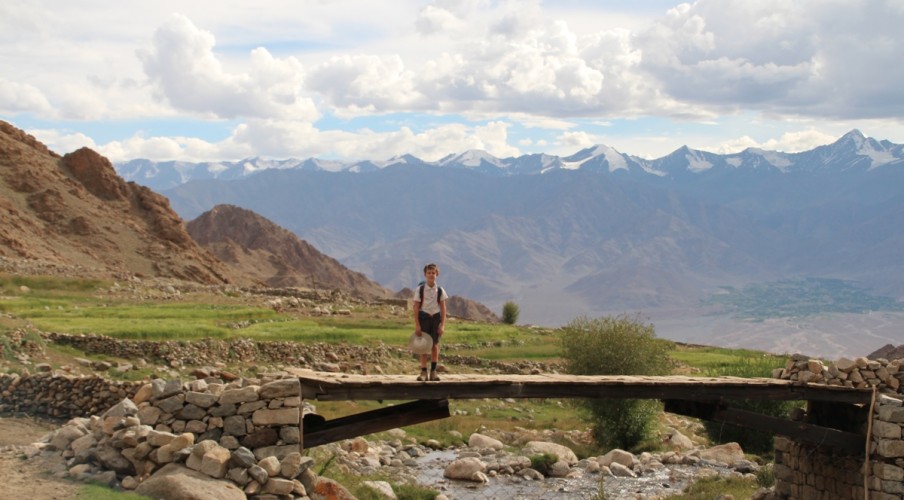
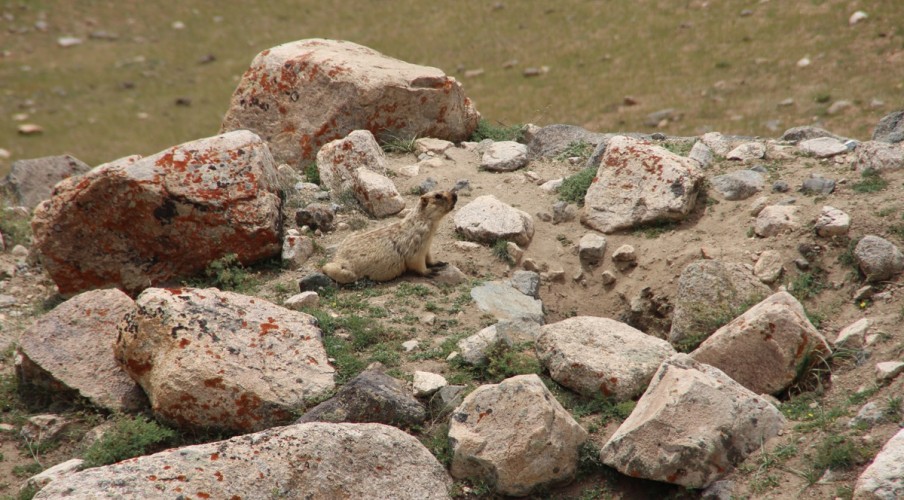
The walk was a cracker with the late afternoon sun and mountain landscape making the perfect setting for the father-son team! A fairly gentle incline up a green valley, with a strong melt stream running down its centre, we felt great and optimistic about our chances. I was carrying under 20kg while Xavier had a mid-size pack. We were comfortable. The valley had a healthy population of Himalayan Marmots that amused us as they scurried between their burrows, their heads popping up to observe us as we walked up the valley. While this could bear and leopard country – the chances of seeing one are negligible to zero – as they hear you from K’s away and make good their escape. We were a little concerned to see a large pack (well over a dozen) of ‘feral dogs’ – mainly Himalayan mastiff crosses. A black pair led the large group by about 200M – the photos don’t really do justice to their size – they were real monsters. Back in 95 the Mountaineering Institute I attended had a Himalayan Mastiff as a mascot … it was the biggest dog I have ever seen. They behaved like a wild pack, moving in unison, pausing in unison. They were in fact, quite shy of us and made their way down the valley. I have been told they hunt the marmot and anything else they can get hold of … we were glad they weren’t interested in us. In Australia we would shoot them as feral, but in Buddhist Ladakh, that is not really an option.
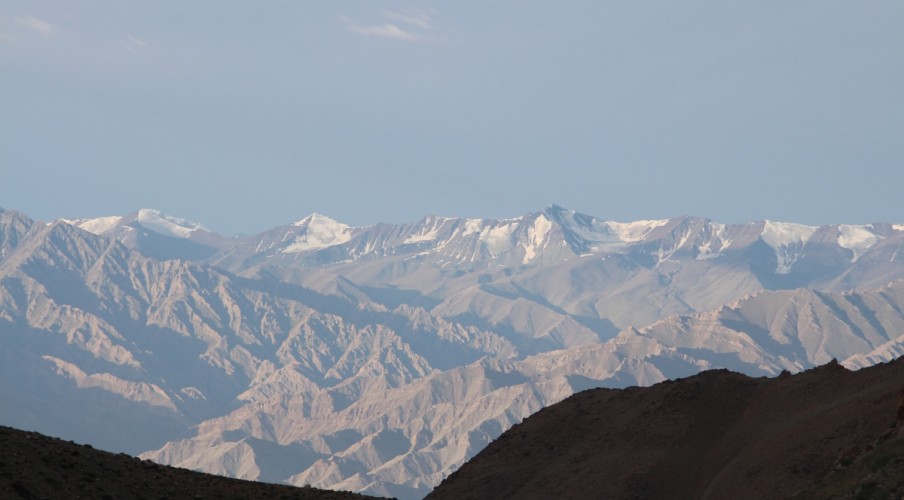
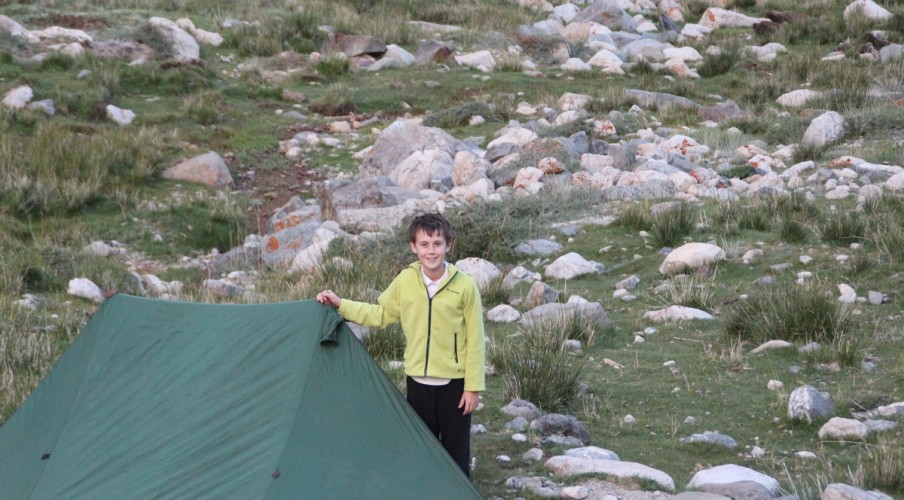
We probably climbed to about 4200M – when 4500M+ would have been much better, and made a brilliant camp next to the stream. As we lost light we cooked and made ready the tent. Xavier had never experienced the ‘Himalayan Sky’ from the vantage of a campsite – and it was truly magnificent. The altitude, the clear air, and the frame provided by 5000M and 6000M peaks … meant that it was a breathtaking vista. We were very content to make our way into the tent as it got quite cold. We played cards, then settled down to an iPod session with our wonderful little BassBurger speaker: Charlie Mingus, Nick Drake, Cat Power, Nick, Bowie, Hendrix, Eminem, Fort Minor, Hilltop Hoods, Jay-Zee … eventually Xavier fell to sleep, but the altitude kept me up to about 3AM, as did the crappy gradient we were camped across: ohhh! the slipping and sliding to the bottom of the tent – how I hate it!
At this point I should put in a plug for some of my equipment suppliers: Scarpa, Wilderness Equipment and MSR stoves. My WE Transverse Ridge tent was purchased in 1985, the pack about 20 years ago, and the MSR XKG petrol blaster crossed the Himalaya in ’95, as did my Scarpa boots. All are still doing the job they were designed for – hell, I love the sound of the XKG in the morning, and the snug feeling as I slip into my Scarpa SL Attak leather boots.
We woke early, and on the basis that our local advisor suggested it was just a 2hr climb to the pass, we thought we would pack our breakfasts and set out in the dawn, hoping to make it by 9AM. My lack of planning and naivety (climb 1000M+, from 4200M to 5400M in a couple of hours???) soon became apparent as the sun rose and the dimensions of the challenge came into view … well no high pass is really in view until you are on it, you just keep on going UP UP and UP.
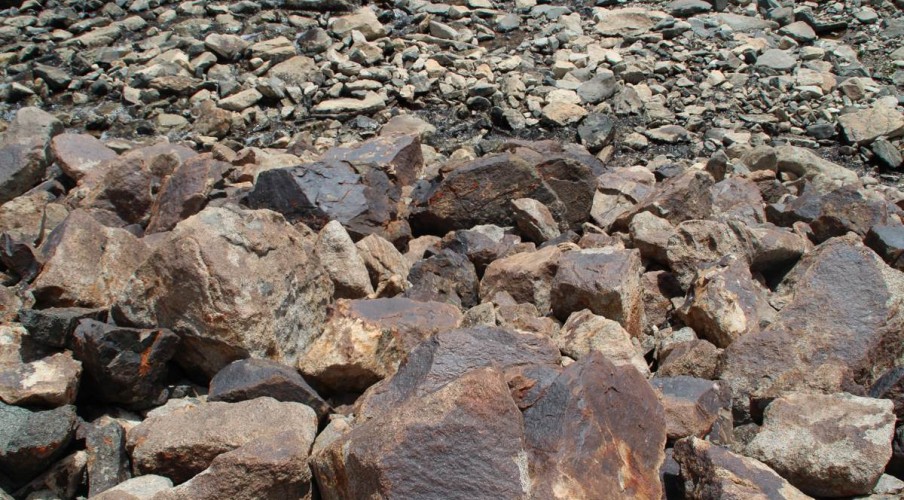
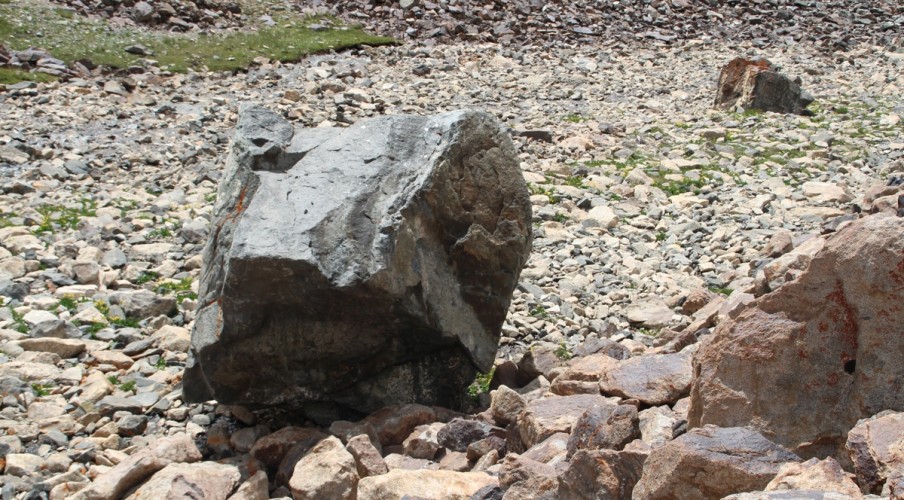
To cut a very looong day into a readable blog it is sufficient to say we climbed (i.e. non-stop) for close to 6hrs, well beyond what I really should have put Xavier through. Our end-point was just below the final very steep climb to the summit/pass where I lost the trail and ended up on a boulder scree of, well, only in Ladakh do you see boulder scree’s of such proportions … well, car size in some instances. I now know you can mainly avoid it by skirting on the upside to the right – but in my depleted and shattered state I had missed the faint snaking line and made a mistake. As we leaned up against a rock cube the size of our old Barina, and quietly assessed the situation, we were reminded of how far and high we had gone by the nearby ice covered ridges and peak and the view back west to the distant Stok ranges, that now seemed well and truly below.
We had a scheduled car pick up over 1500M below us at 3.30PM and feeling quite concerned about: 1 Getting Xavier off the mountain; 2 Josephine’s anxiety when we missed the agreed pick-up, and 3, making it off the mountain myself … we decided to turn down. Climbing for 6hrs and not ‘making it’ is tough, but you do need to make decisions with your head. We would have made the pass, but our return would have been marginal and certainly in the dark and the very cold.
Xavier can be a whiner when he is feeling OK, but when the chips were down he did a magnificent job (particularly if he can talk about the potential purchase of some Dr Dre headphones). His climbing effort was tremendous, but now he was feeling the grip of fatigue, and his low-cut boots were not giving proper ankle support. His ankles were killing him and I was now worried that a slip on the 3 to 4 hour descent would result in an injury. Unlike our trek up Stok the week before, this was basically high Himalayan wilderness – we saw no one on the entire trek … though we did see some yaks feeding and some deserted stone shelters … so we were very much on our own.
The trail was really a rock strewn nightmare for the very depleted dynamic duo, but we survived. We made the tent in 3 hours and after a quick cook-up and pack stuffing session, we set off for Saboo and our recuers … just making it by 4PM and only 30 minutes late. So …. We had walked pretty constantly from 6AM to 4PM, and we felt it. We were very tired. My most dependable guide to the Diga La (well, I didn’t read this section until I got back to Shey) suggests that doing the 5400M Diga La in one day, as we had tried, was harder than many 6000M trekking peaks, and, as the very experienced author wrote, “the hardest trekking day of my life” … this made us feel a little better for our effort.
Next week I’m off to tackle a 6800M monster.
Recent Comments