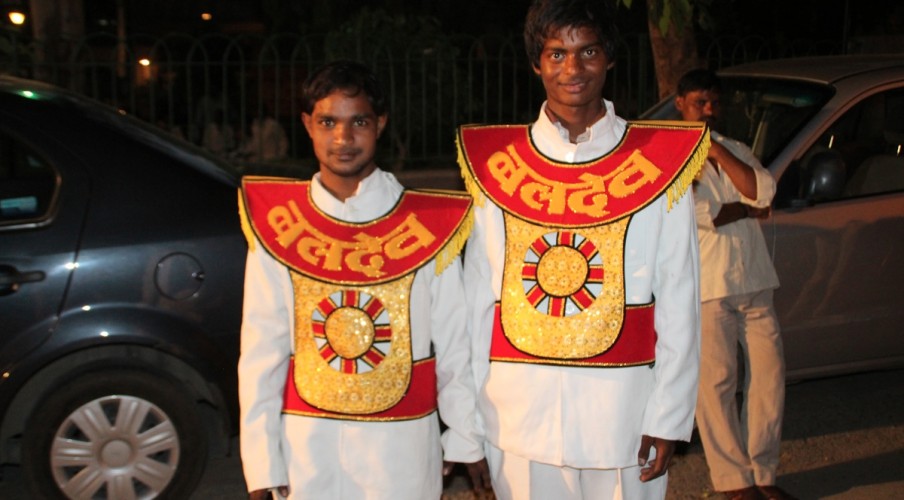
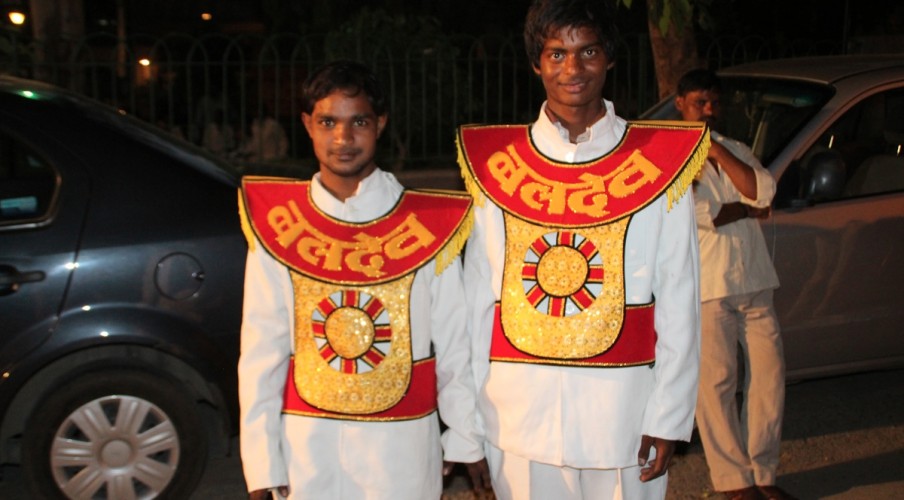
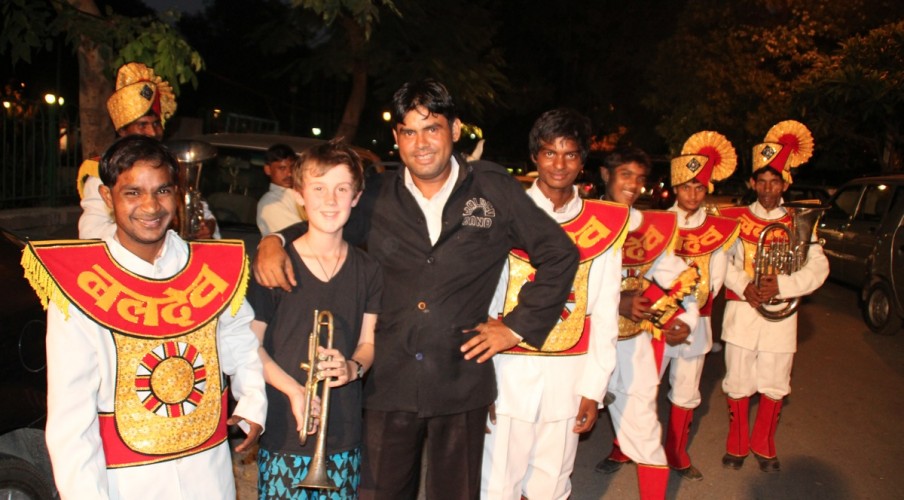
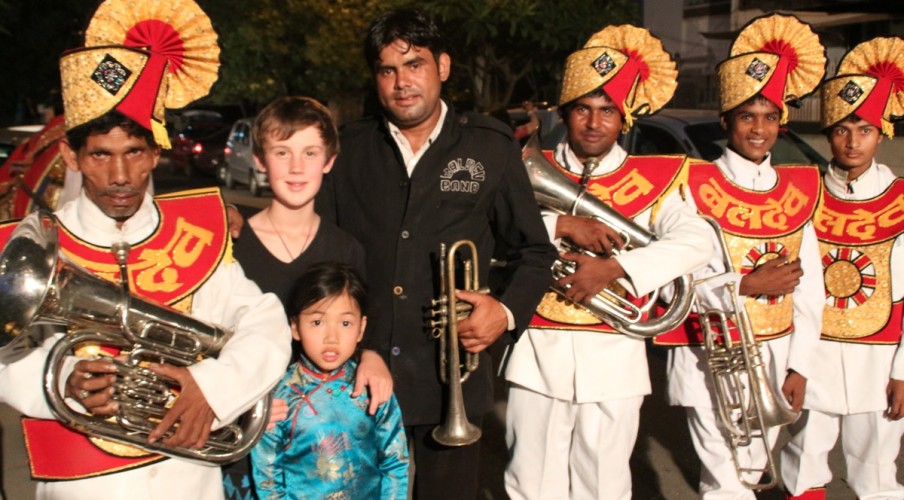
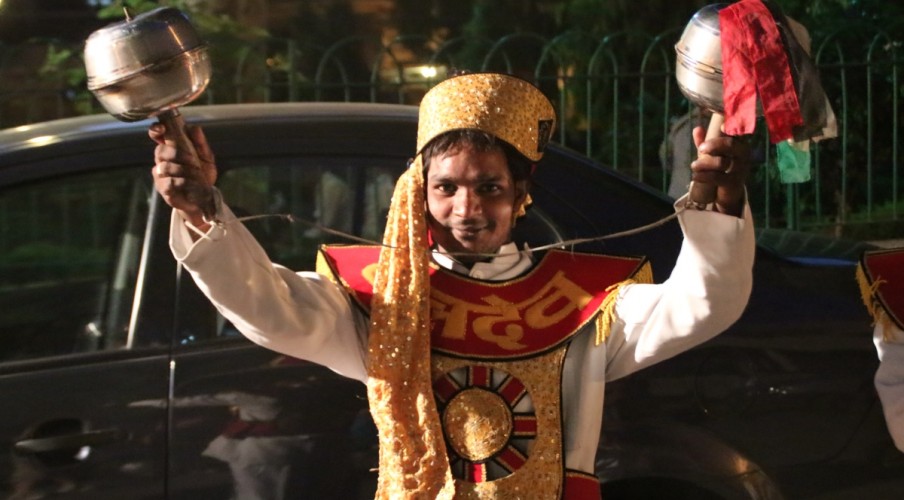
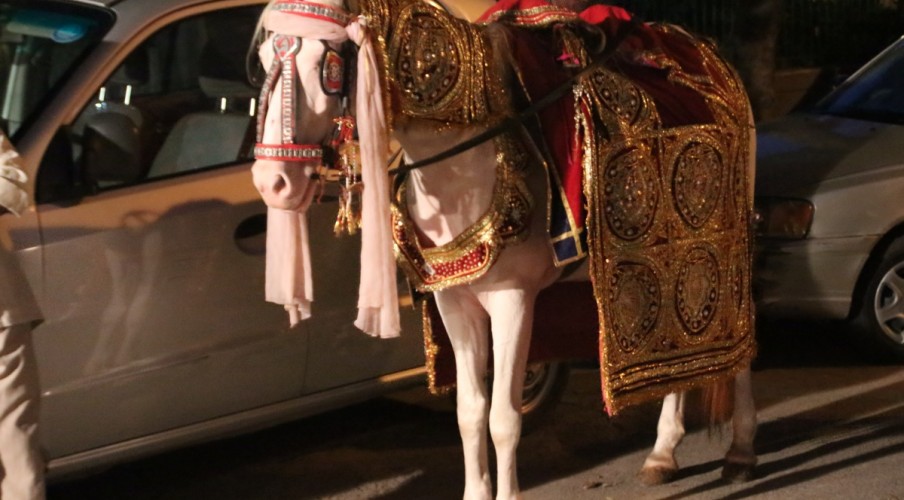
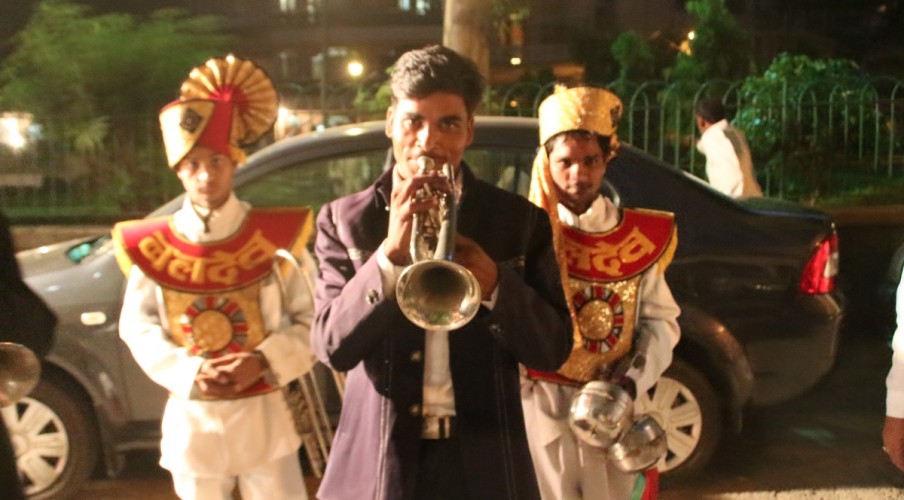
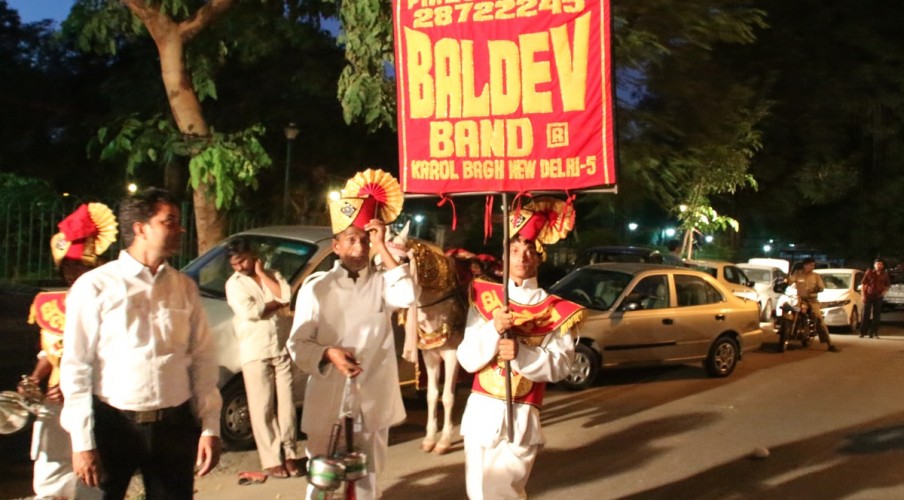
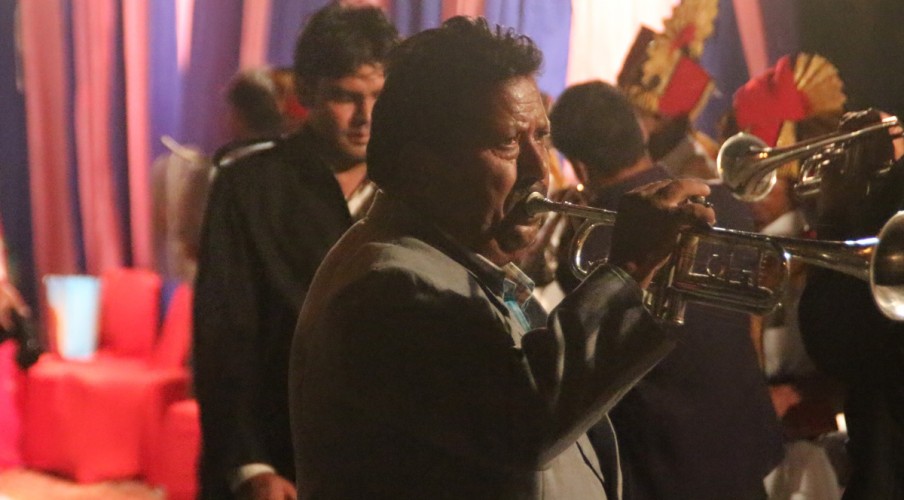
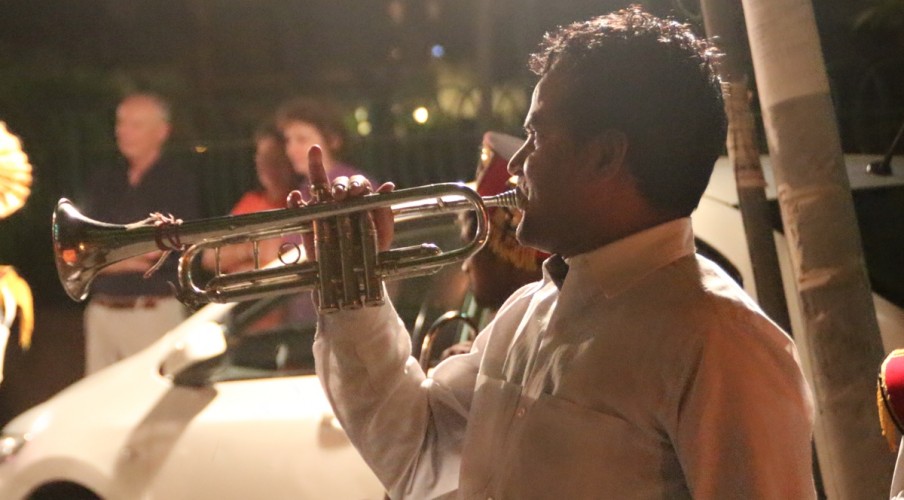
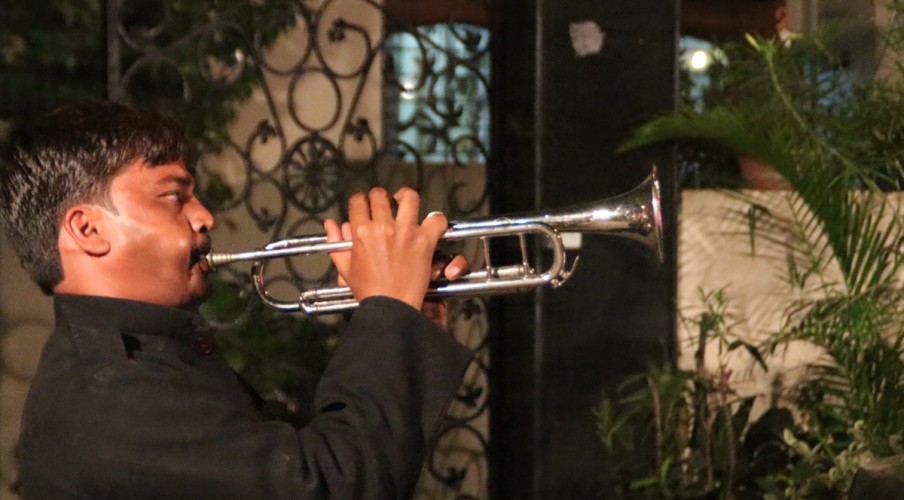
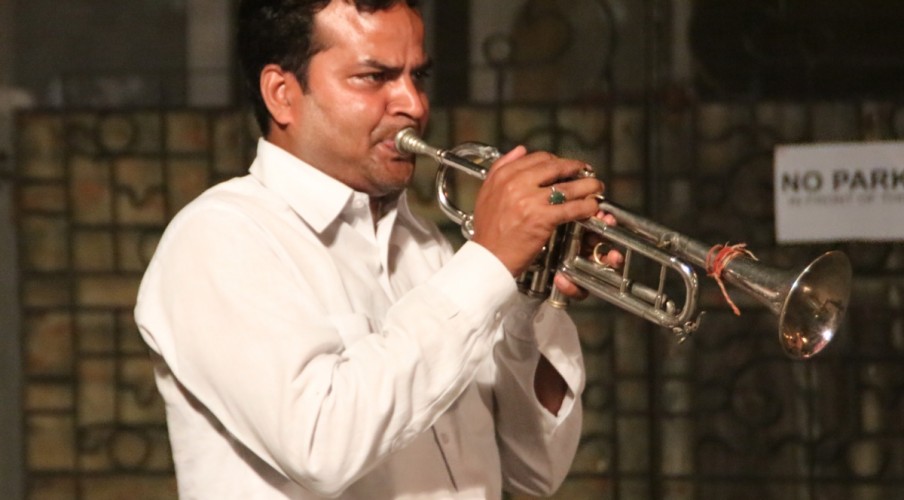
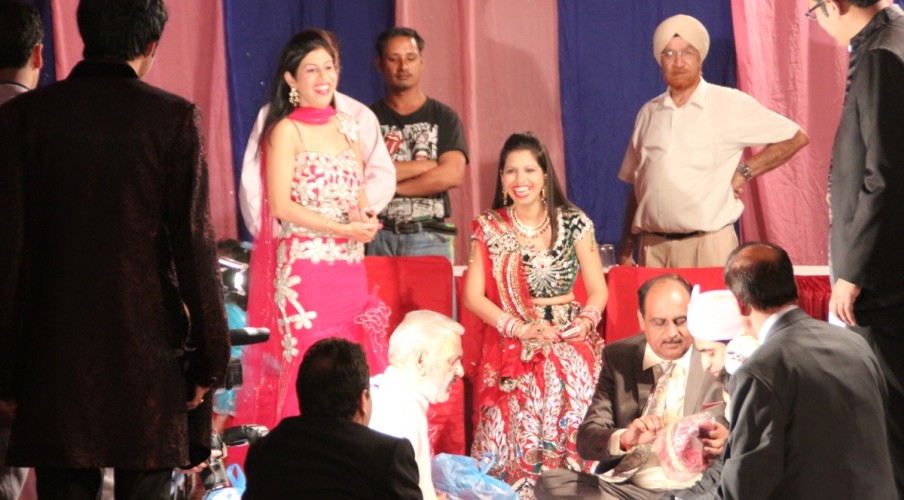
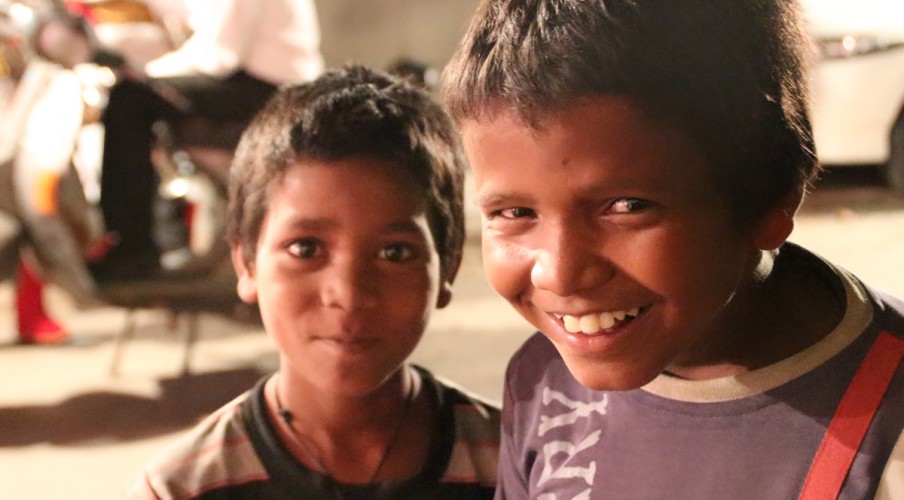

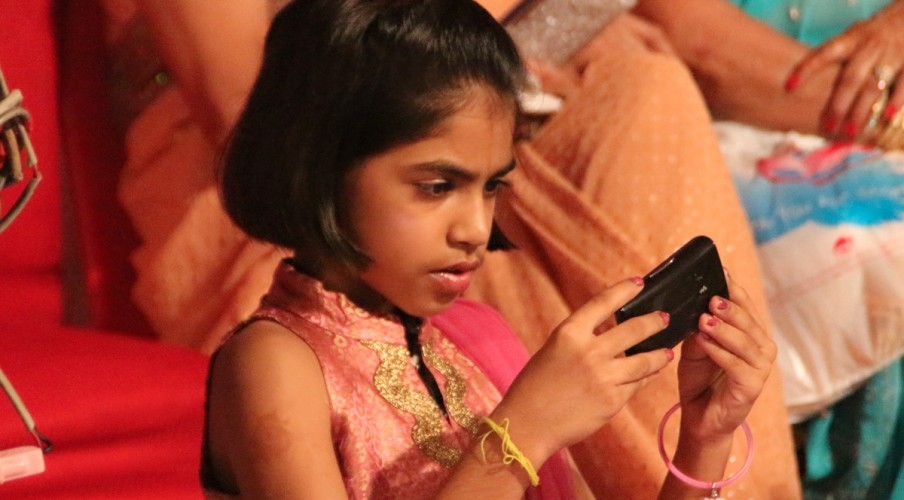
Arriving in Delhi, we were immediately invited to a wedding, with was getting underway in a muslin tent, on the street, down from where we are staying at Meera’s House.
Posts in Category: Christopher
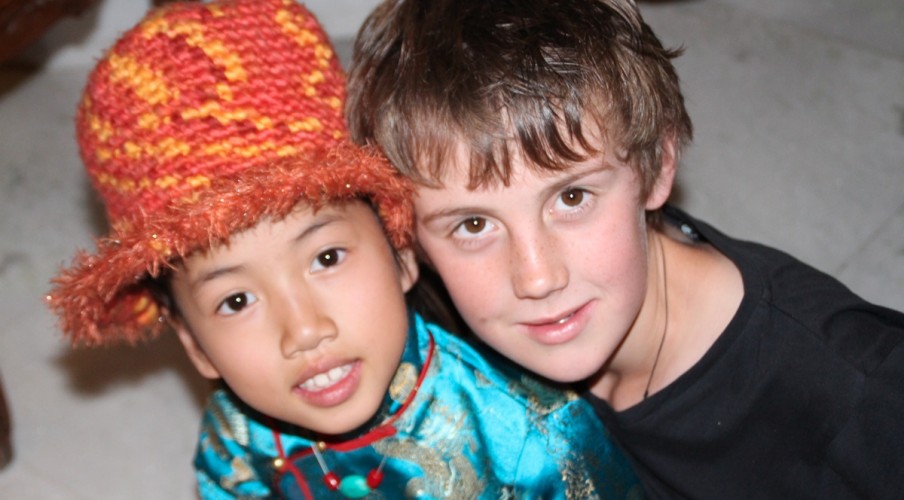
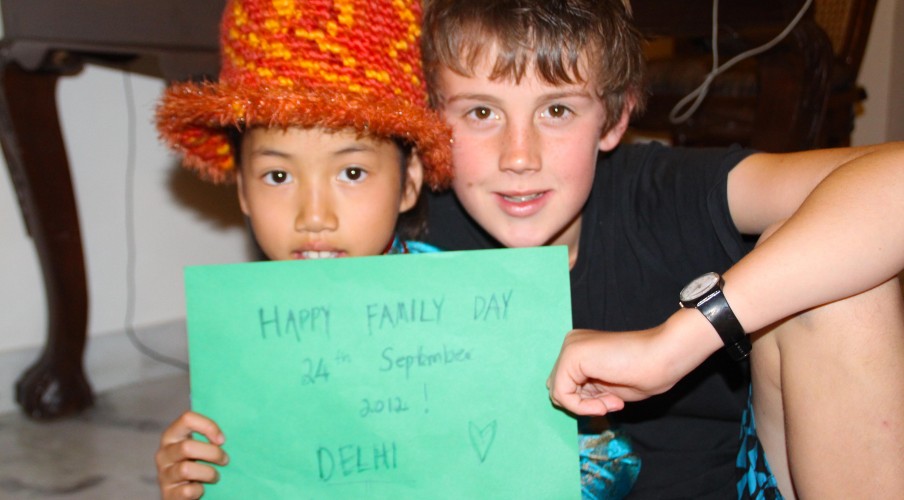
Family Day No 5 at Meera’s House, Delhi
On September 25, 2012 by Chris With 1 Comments
- Christopher
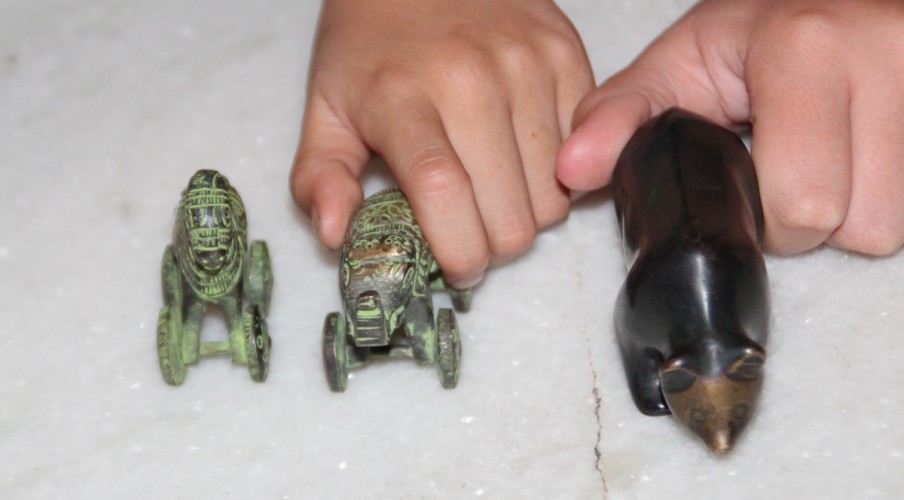
We Walked Several K’s to Matho Monastery
On September 24, 2012 by Chris With 0 Comments
- Christopher
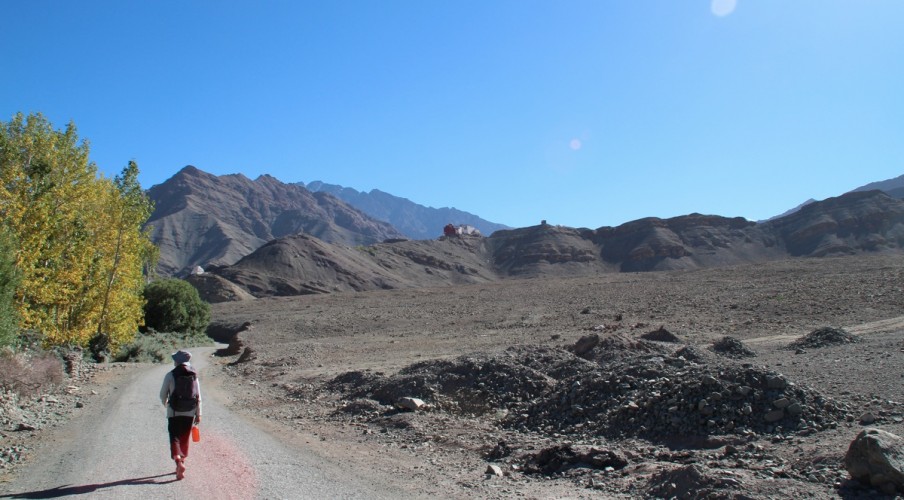
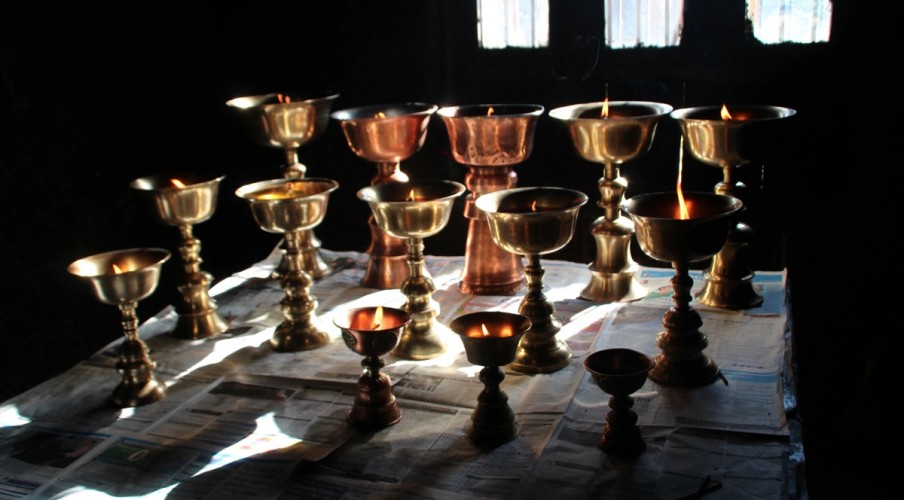
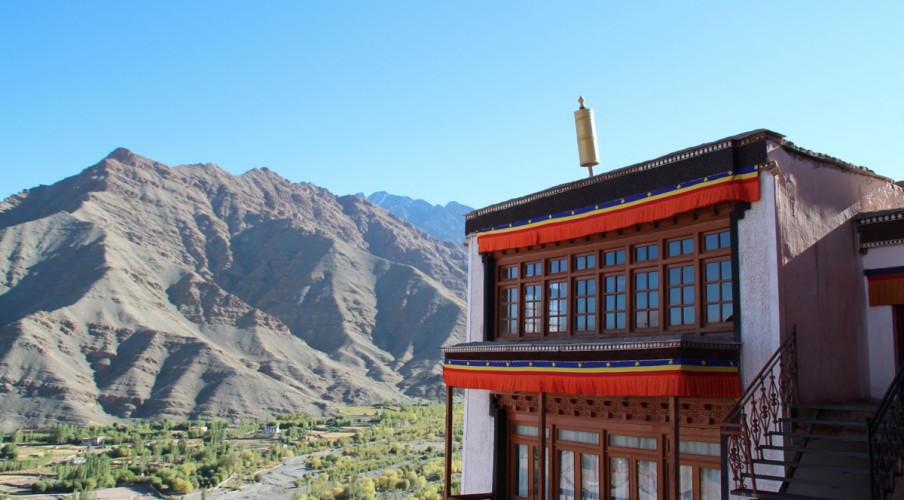
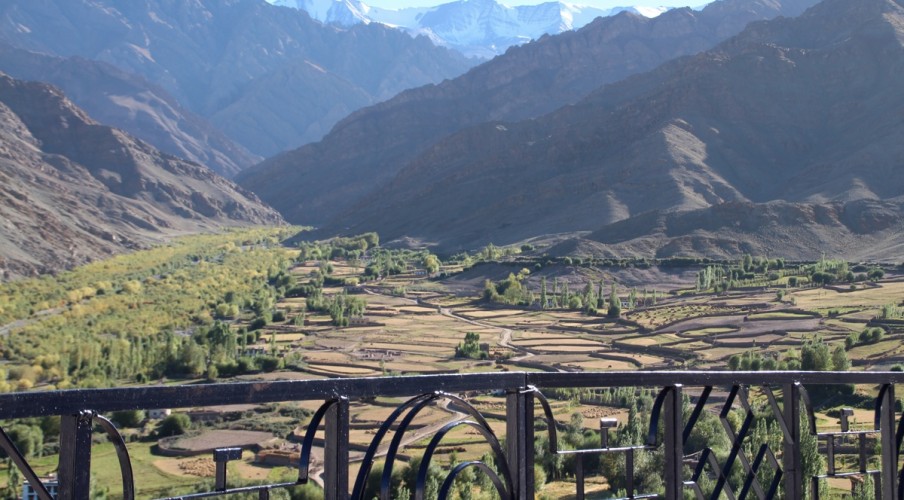
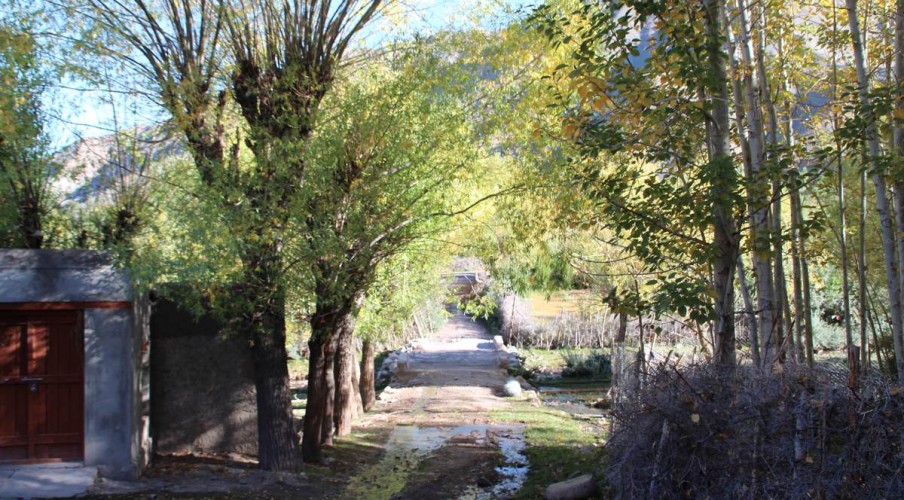
A few days ago we left the kids at home with Yangdol and took off to the west to visit Matho Gompa which was founded in the 16th century by Lama Dugpa Dorje. Within its walls there are four hundred year old thangkas and a mad monk who suggested that I looked at least 60, maybe 70. He had a great collection of swords too, and wandered around with us calling out random numbers.
He was just slightly deranged.
The gompa is the only one in Ladakh belonging to the Sakyapa Lineage. In February two oracles run blindfolded on the roof defying the deadly drop, calling out predictions for the coming year, while cutting there necks and chests with knives. Afterwards, there is no evidence of the cutting.
The countryside is marked by grand residences and fields superbly demarcated by double width mud brick walls.
After a few hours we tried to hitch home for dinner, but managed to walk most of it due to a lack of traffic.
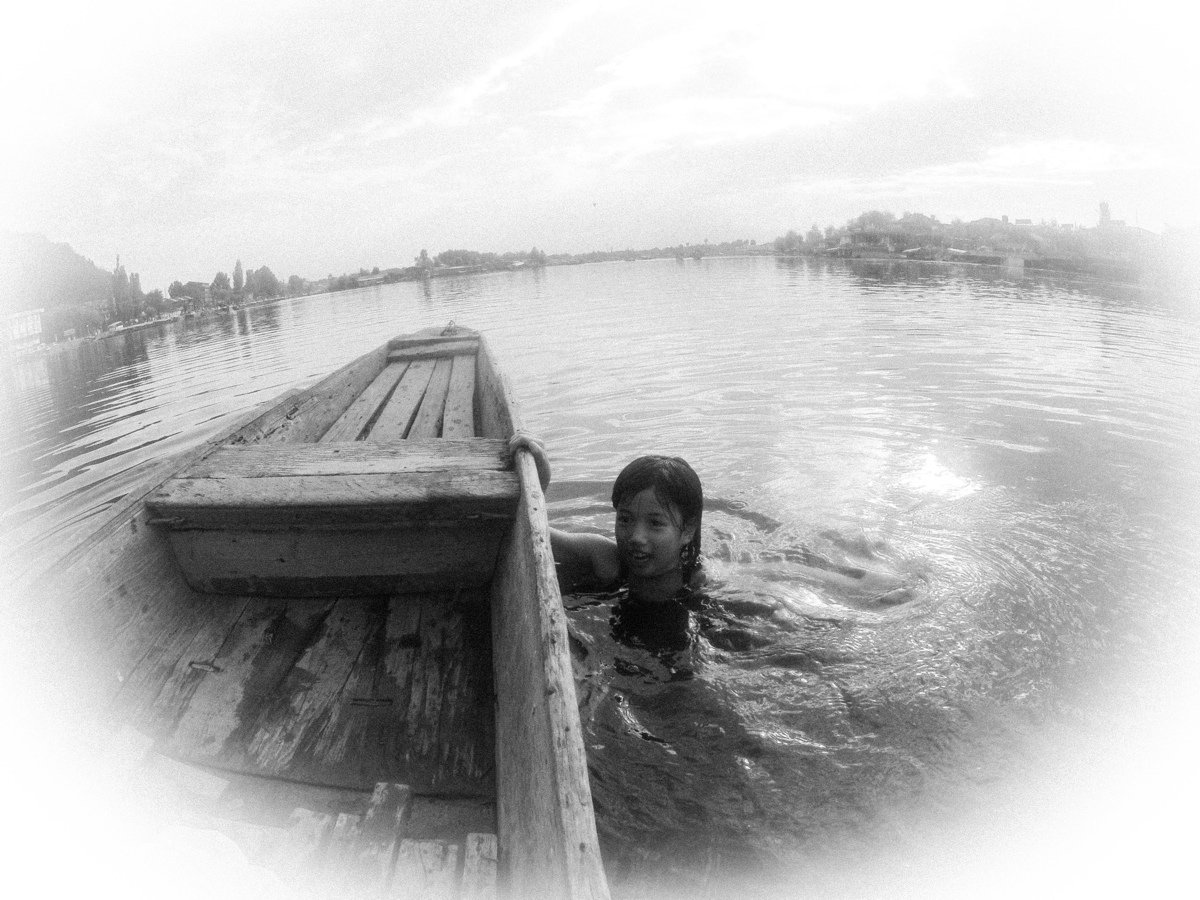
Xavier [5000M]
On September 22, 2012 by Chris With 0 Comments
- Christopher
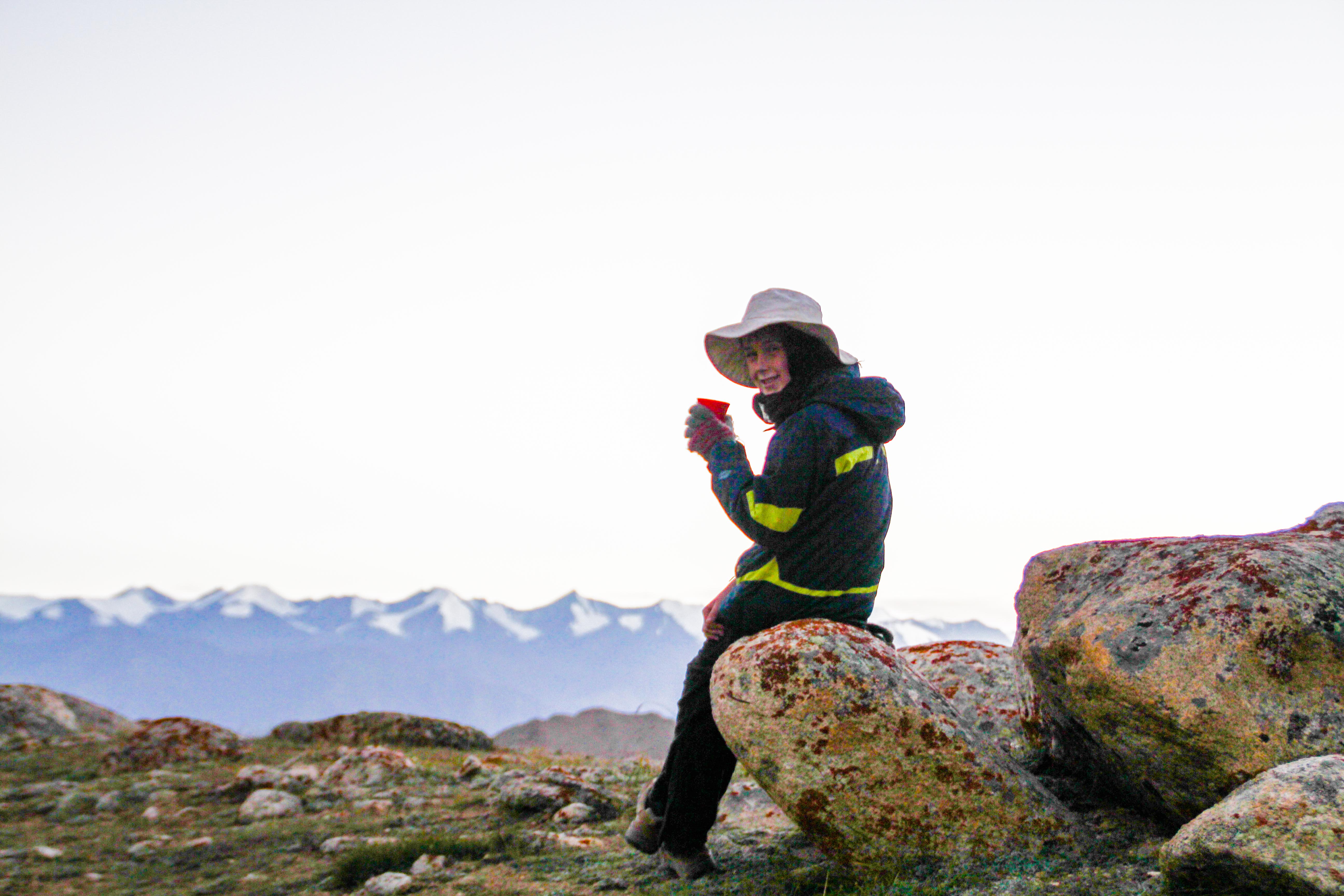
This shot was taken at our first camp site on the way to the Diga La (La=’pass’). Things were about to freeze … like the creek running past out tent ,,, and our fingers and feet, The Stok ranges can be seen on the horizon.
The next day we finally made it over the ‘Diga’ and then got caught in poor weather and snow falls, but that is another story.
Gompas?
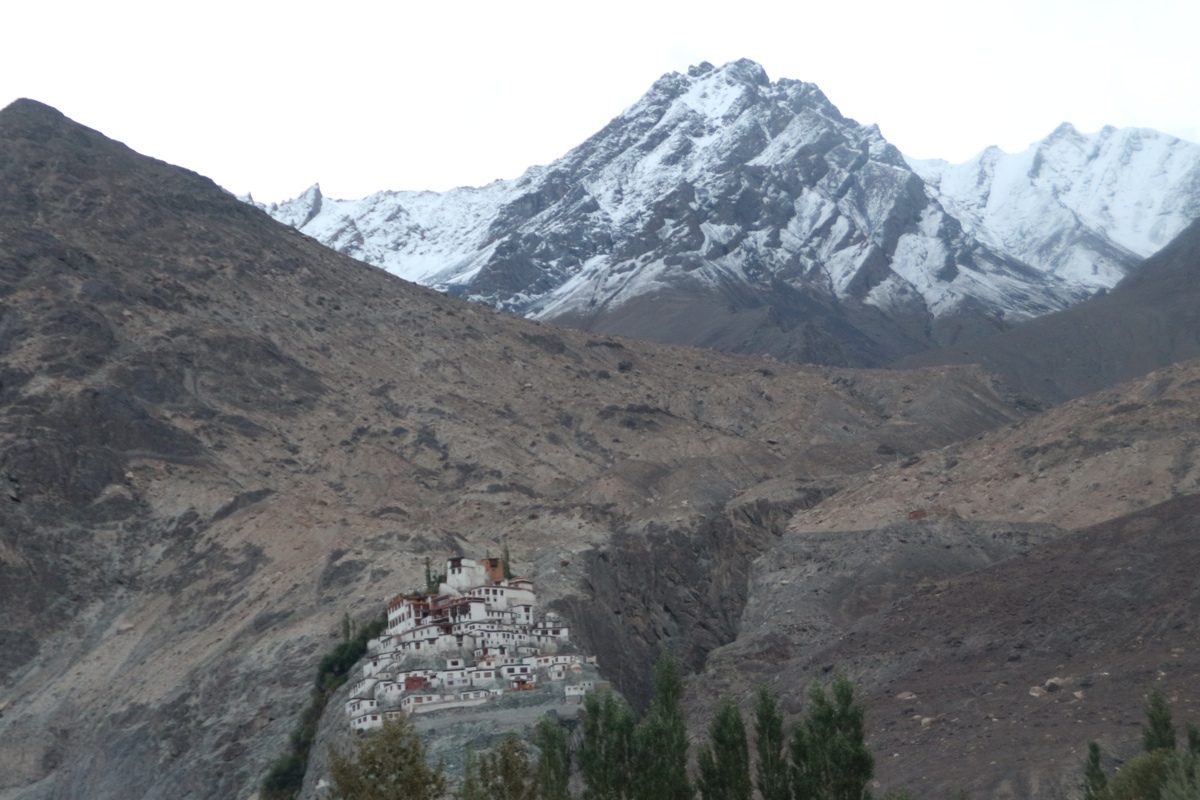
Thankyou Amanda and Angela! I have just discovered that Josie was actually stepping into a temple … not a ‘Gompa’ … the Hundar Gompa was actually a hundred metres below us. Sorry! It was the 14th century Lachung Temple, one of the oldest temples in the Nubra, the temple has a huge idol of Tsong-kha-pa, crowned with a Gelugpa yellow hat – it took our breathe away,
A Gompa (Tibetan: དགོན་པ།) might best be understood as a conflation of a fortification, a monastery or nunnery, and a university located in Tibet, India, Nepal, and Bhutan. Their design and interior details vary from region to region, however, all follow a general sacred geometrical mandala design of a central prayer hall containing a representation of Buddha or thangka, benches for the monks or nuns to engage in prayer or meditation and attached living accommodation. The siting and aspect of the Gompa, satellite buildings and grounds are founded on ancient principles of geodesic lore and environmental metaphysics. A gompa can also be just a meditation room or hall, without the attached living quarters. Meditation rooms in urban Buddhist centres are often referred to as gompas. They are a tradition in Ladakh. [this is mainly from Wiki].
A major part of travel and tourism here is visiting the different Gompas that sit along the valleys. Often they contain extraordinarily beautiful art: statues, wall paintings or thangkas – paintings on silk. They are remarkable in the way they stand high above the valley floors. From the roof of one you can usually see another up the valley.
I suppose they are a little like churches, or monasteries. They often contain displays of artefacts as well … there are always surprises! Snow Leopard skin masks … the odd human skull bowl … etc
We were seduced by Diskit Gompa in the Nubra Valley and visited it for ‘prayers’ one early morning. The Lamas (monks) were particularly welcoming and we will be supporting a young lama at the Gompa’s school.
Josie Steps In
On September 21, 2012 by Chris With 2 Comments
- Christopher
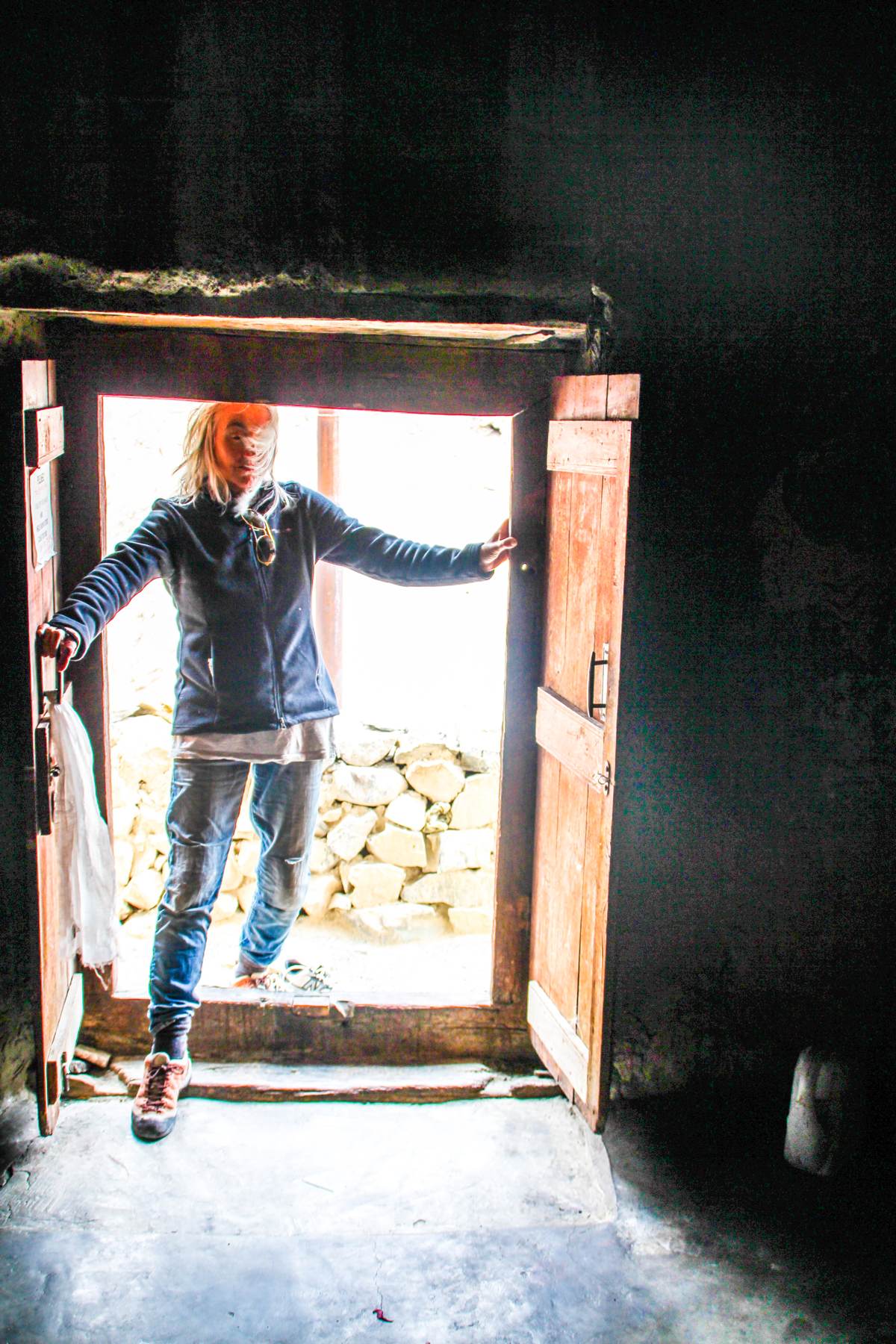
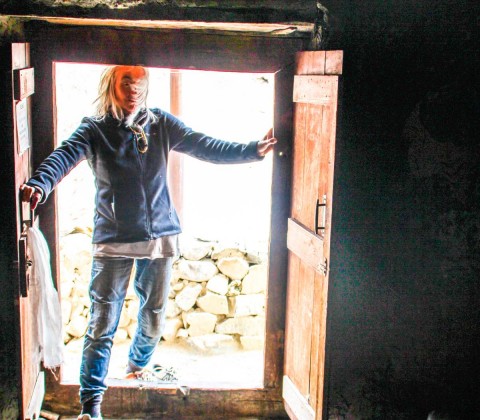
Josie steps into the 500 year old Hundar Gompa.
Rare (Very)
On September 20, 2012 by Chris With 0 Comments
- Christopher

We had just crossed the Khardung La and were beginning to relax again.
Lopsang was opening up on the accelerator as we hit some newish bitumen. At one stage we stopped to survey the terrain above after hearing a charge go off: the road workers were blowing up cliffs above and they can sometimes cause rock fall. On these roads, you occasionally need to drive around a boulder that has fallen from above and embedded itself in the road surface like some fallen meteorite.
As we approached a tight bend on one of the innumerable zig-zags I was able to get a clear view of the road 20 metres below and caught a glimpse of what was obviously a large cat – easily the size of a solid domestic dog, say a labrador, loping along the road. I told Lopsang to watch out (excitedly, would be an understatement), and as we turned the tight bend, there it was. I had initially thought ‘snow leopard’, but it was unmistakably a lynx, the black tuffs at its ear tips easy to see.
Ahh, no camera. Our first battery on the EOS had prematurely died after a freeze moment on the Diga La, and the second battery had died on the way up the Khardung La. Only the iPhone was functioning, and in the fairly bright light, and with a wild cat running away, not easy to get a shot in. The image above is a screenshot from a four second movie … any way we have the memories. We all had a clear view of the magnificent animal … as Lopsang made meow noises and laughed. He has seen snow leopard … but never a Lynx, and some people believe they are rarer, and more difficult to sight. The team of wildlife photographers from our Diskit hotel would have done a better job with their rather LONG lenses!
Look closely!
Camel Cheese [Bactrian, of course]
On September 20, 2012 by Chris With 2 Comments
- Christopher
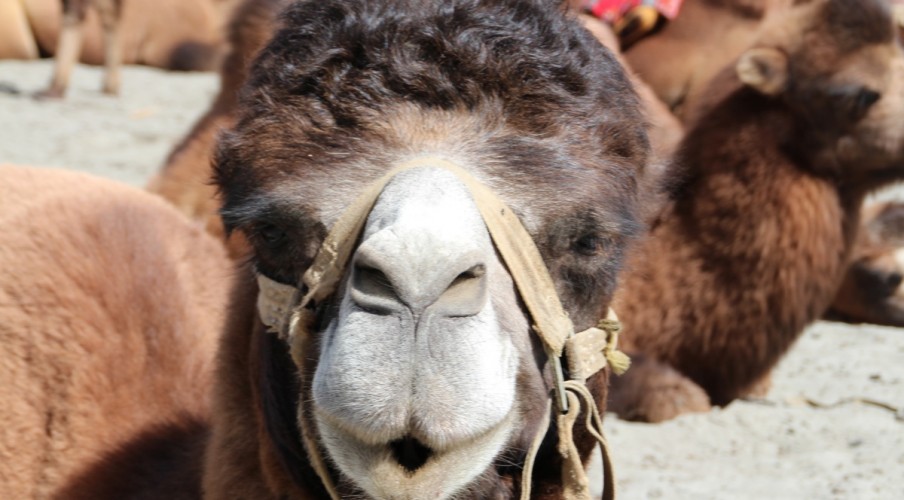
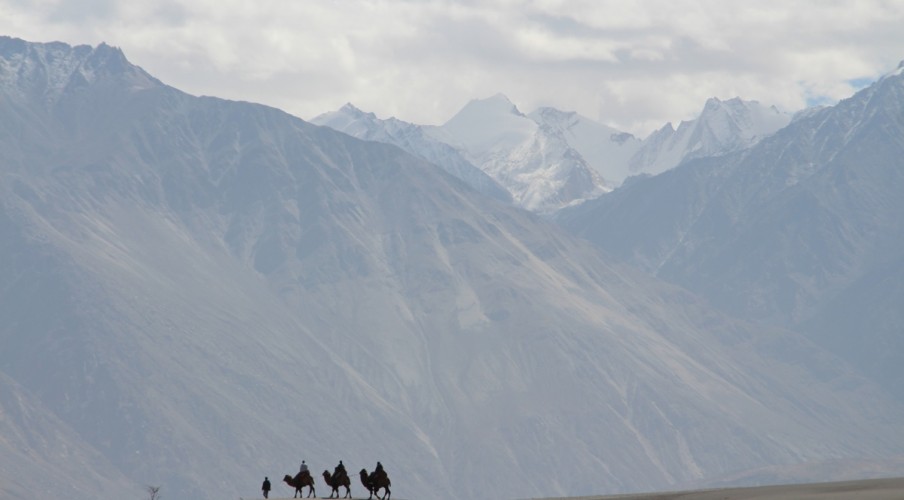
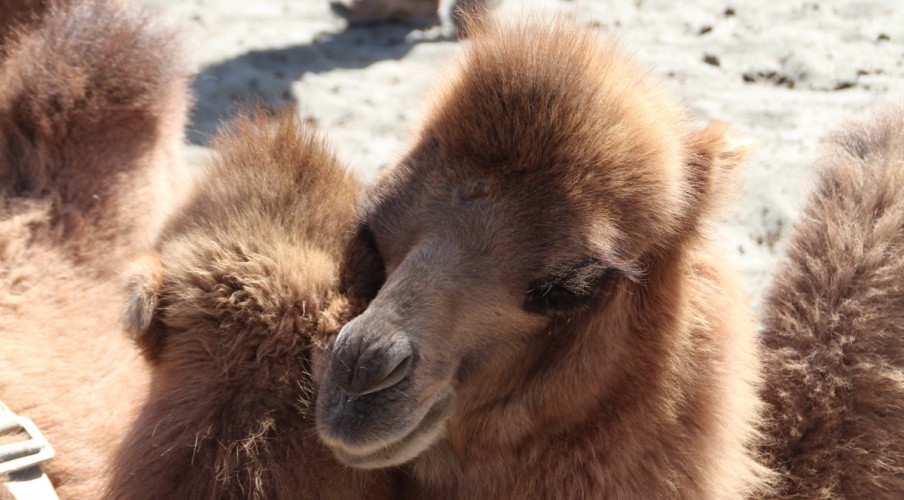
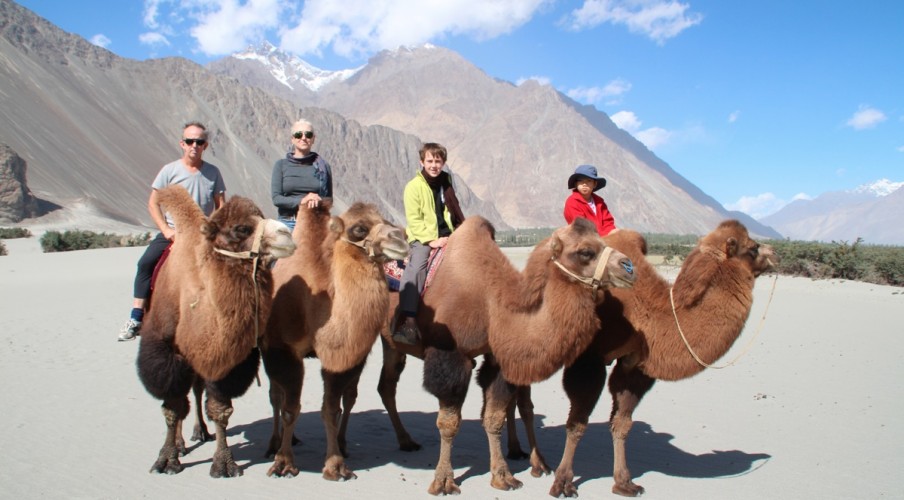
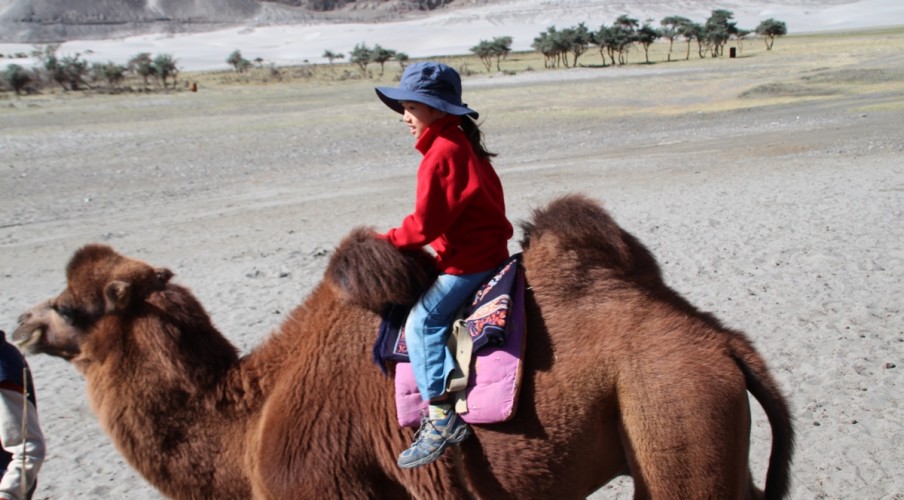
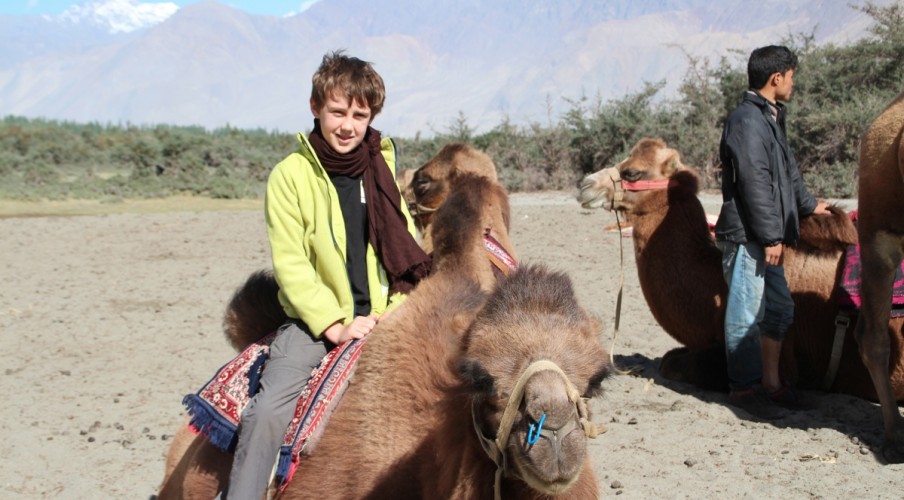
We are not beyond the rare cheesey moment on our travels. So between visiting schools and fortress gompas and walking high passes, and having our back wheels slide at 5200M at 30cm from a 500M drop … we just had to visit a little colony of central asian camels. They are reputedly the off-spring of animals that plied the Ladakh–Xinjiang caravans up until the closure of the India-China border in the 1940s.
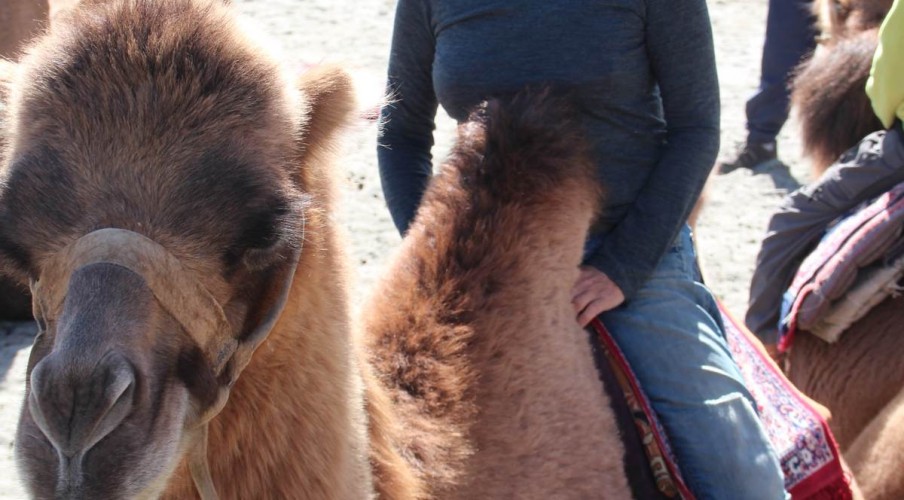
They are incredibly cute beats, with incredibly bad breathe. Very polite. This is major quiz night general knowledge, so read carefully: the Bactrian camel has two humps on its back, in contrast to the single-humped dromedary camel. Bactrian camels belong to a fairly small group of animals that regularly eat snow to provide their water needs. Any animals living above the snowline are obliged to do this as snow and ice are the only forms of water during winter, and by doing so their range is greatly enlarged. The latent heat of snow and ice is enormous compared with the heat capacity of water, demanding a large sacrifice in heat energy and forcing animals to eat only small amounts at a time.
In Leh there is a small supply of Nubra valley camel hair made into fabric … there is a very nice piece that may need to go into a suitcase ….
Recent Comments