Posts By Chris

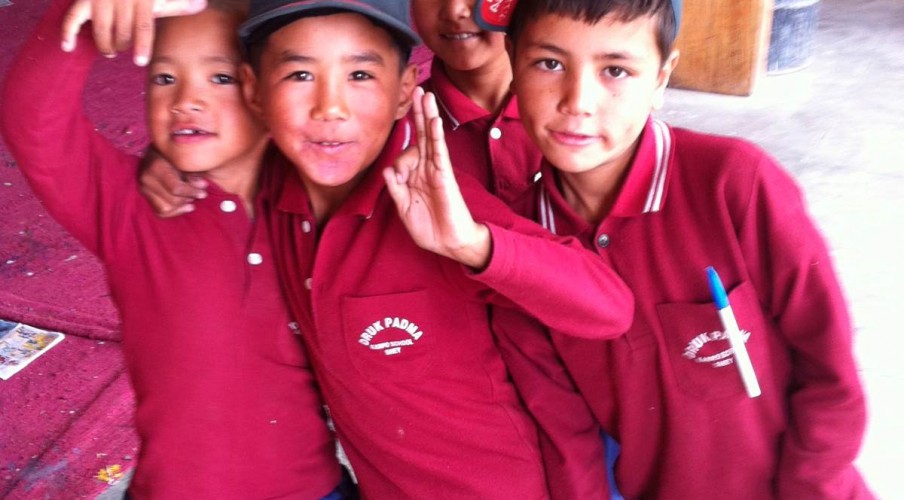
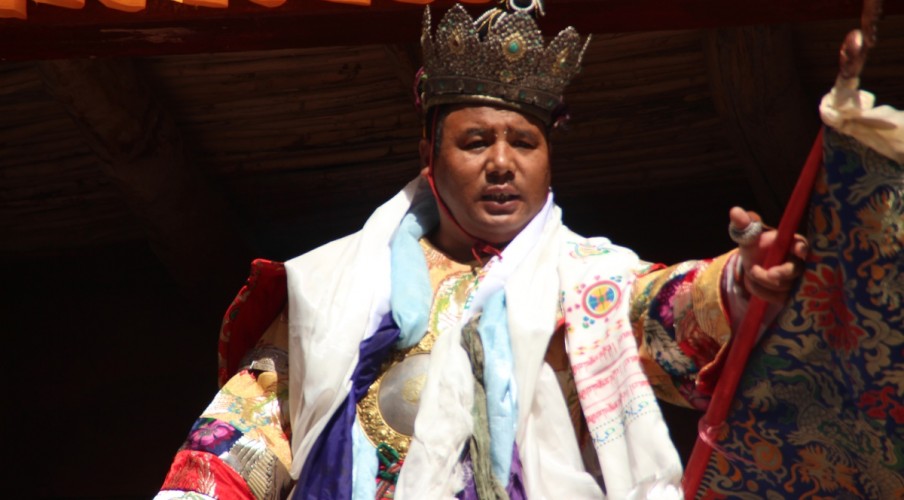
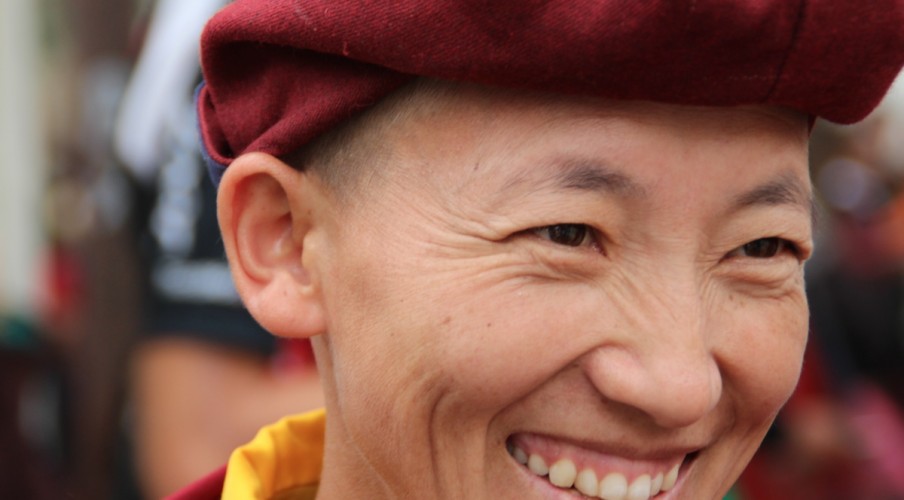
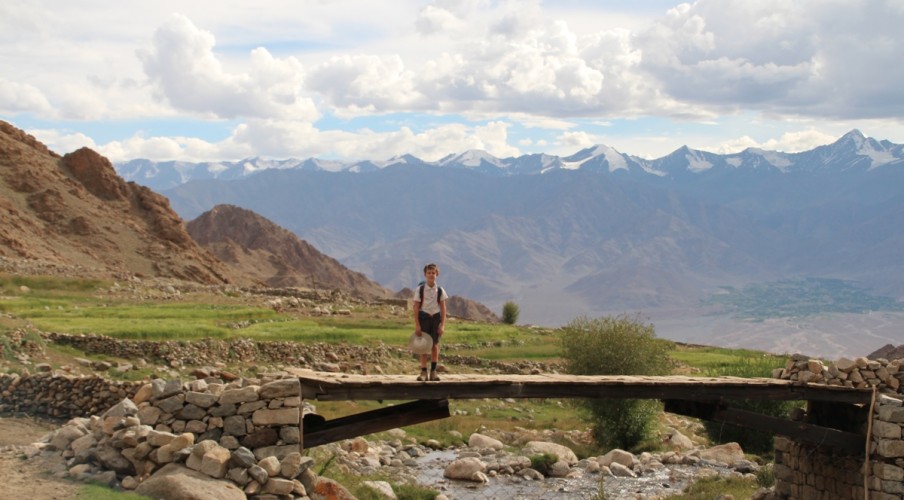
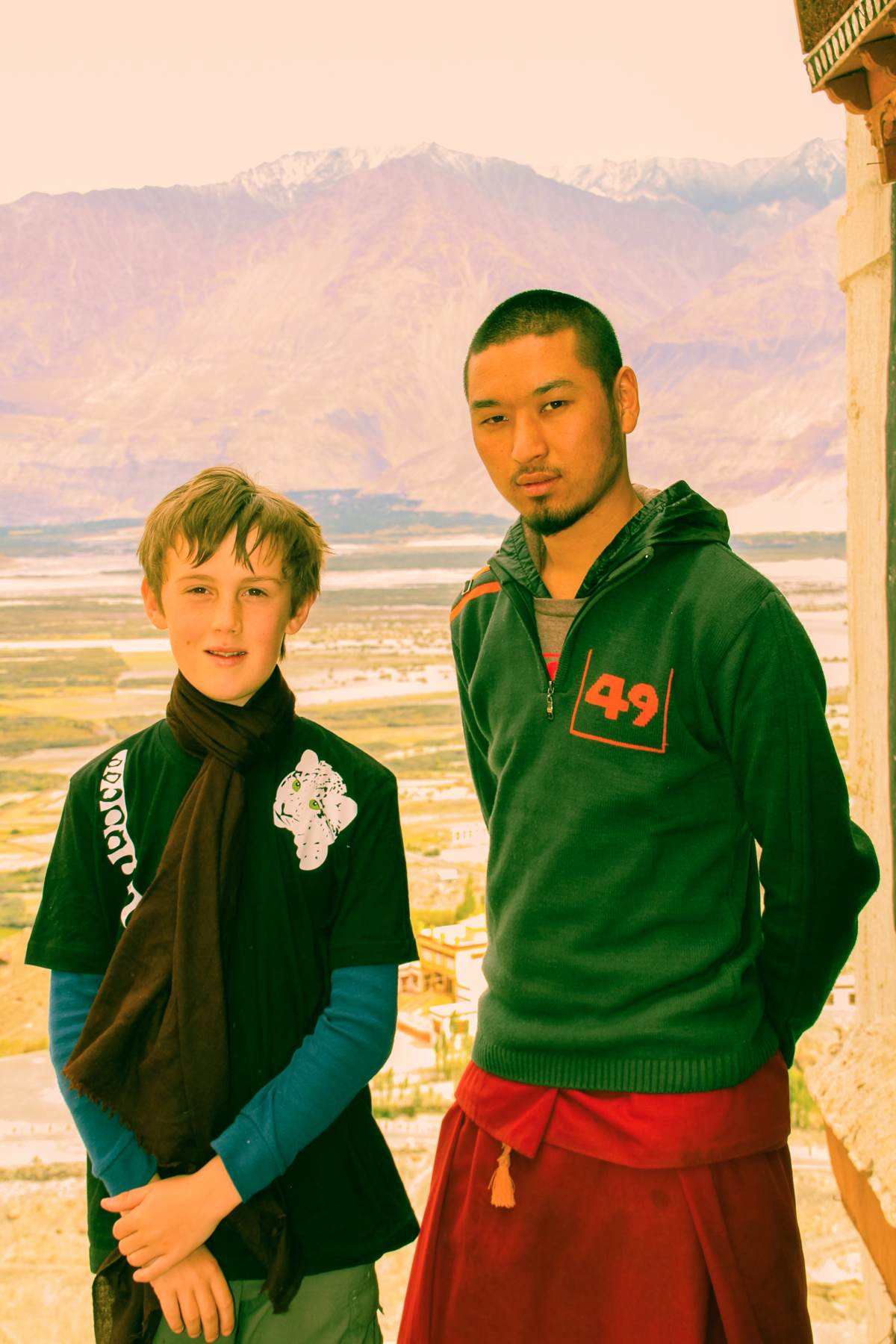
Xavier with Lama, one of our guides at Diskit Gompa

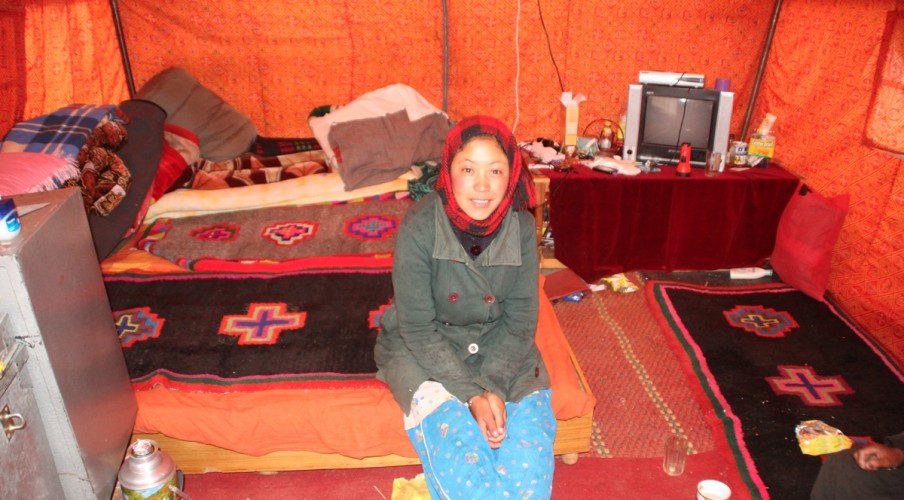
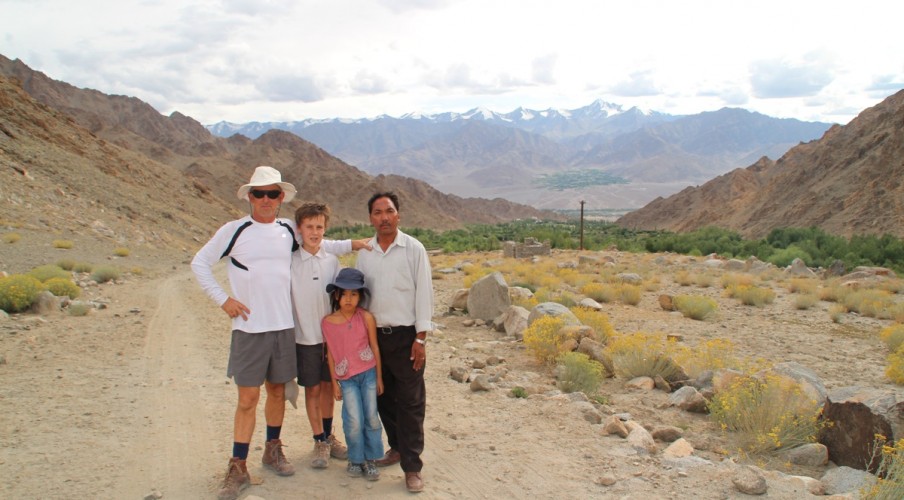
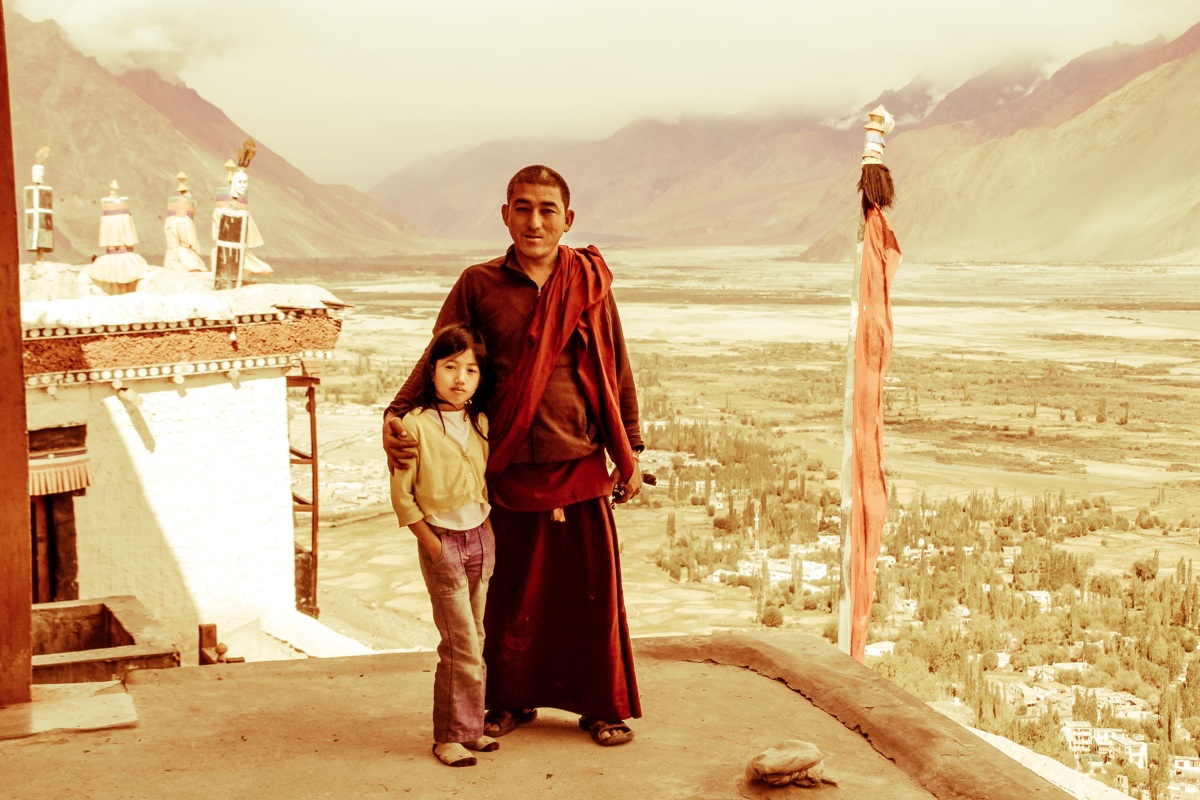
Mei with new friend at Diskit Gompa

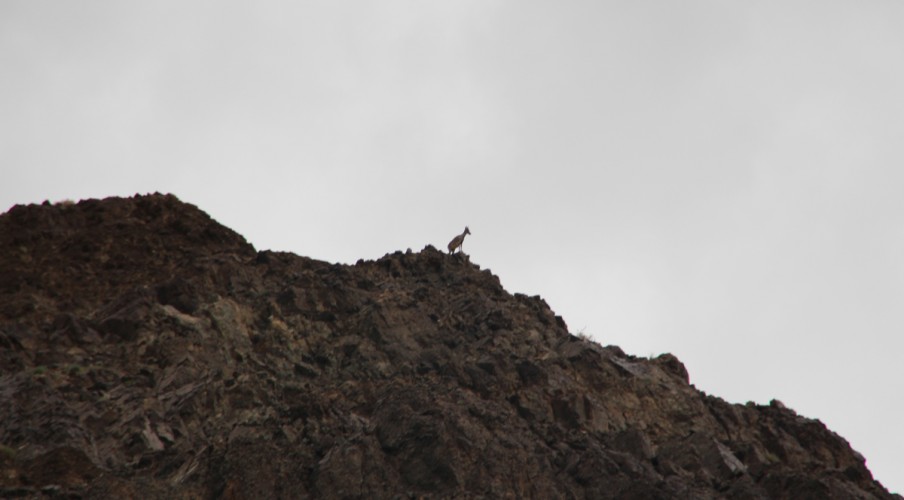
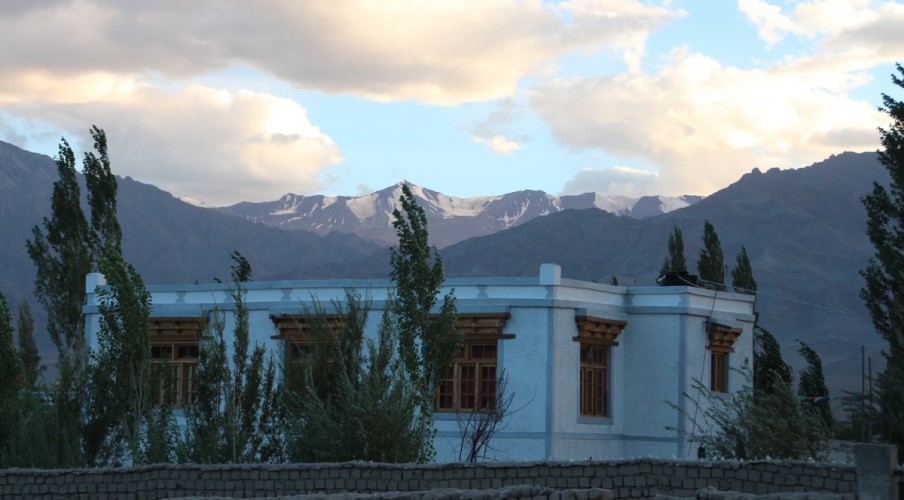
We have just returned from a wonderful trip to the Nubra Valley and a very eventful few days that we will write on in coming days … if the electricity and internet gods allow. Xavier and Chris crossed the Diga La (on their second attempt) to make it into Nubra.  Just over the epic 5400M pass it started snowing heavily and they were forced to bivvy in an old shepherd’s stone hut at 5000M for the night.  Nothing like the high Himalaya for drama.  A few days in Diskit were wonderful, particularly at the 17th century Gompa, where we were again seduced by the gentle kindness of the attending Lama’s.  Our trip back over the Khardung La (at 5600M+ some suggest it the world’s highest motorable road) was at times terrifying, as the snow fall had made the road just a little ‘slippery’ (with drops of several hundred metres standard fare).  We did  manage to see a very rare Himalayan Lynx – a big cat, as well as take a ride on some central asian camels (two humps not one, and very cute).

To Tso Moriri

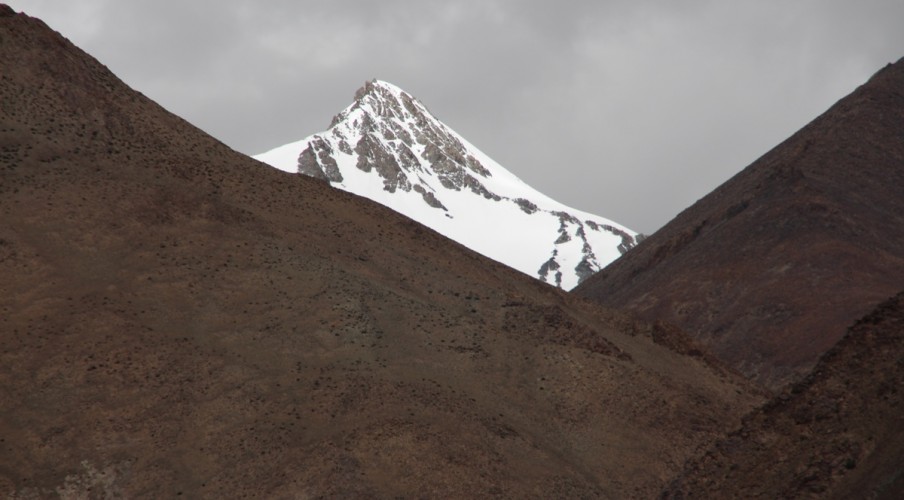
Well, we are back in Shey after three days at Tso Moriri, a remote high altitude lake set amongst 6000M snow capped peaks.  There were no real time reports from Moriri as there were no phone or internet services for us, and only brief periods of power in the evening.

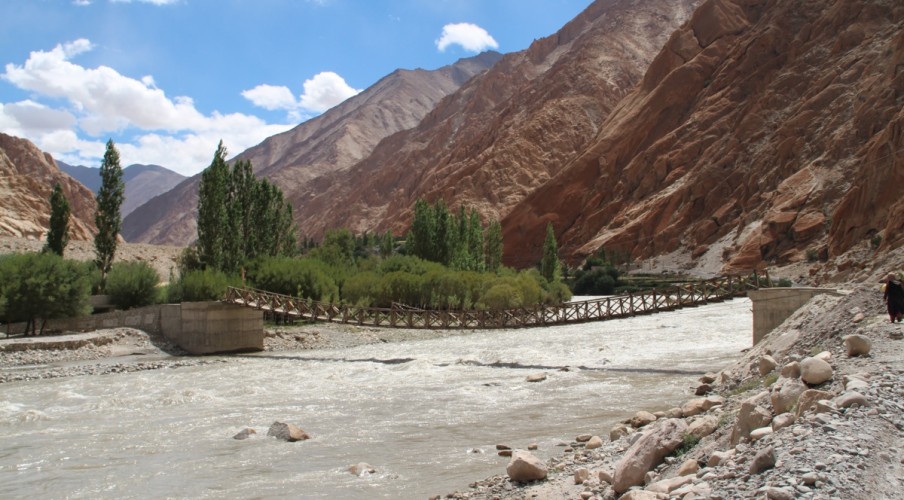
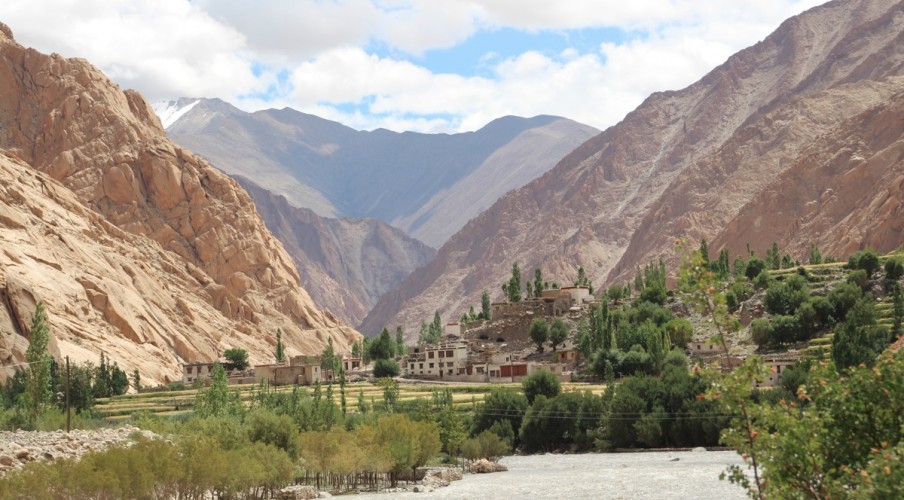
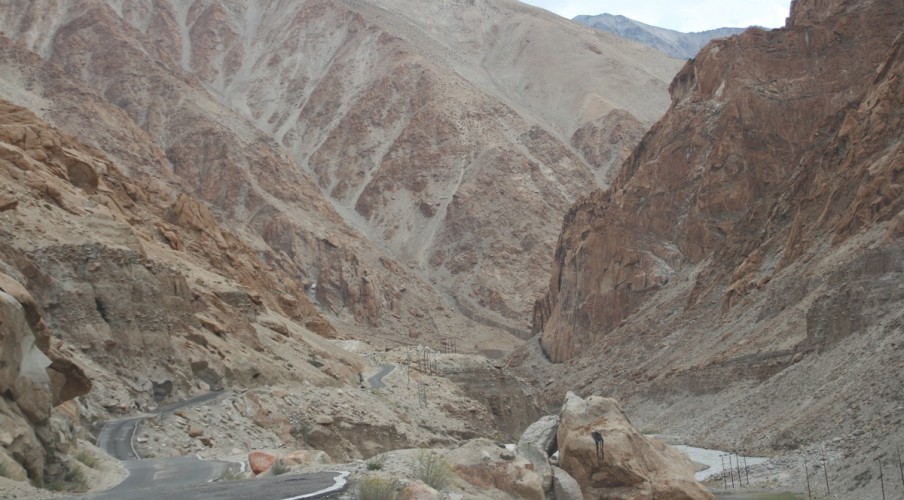
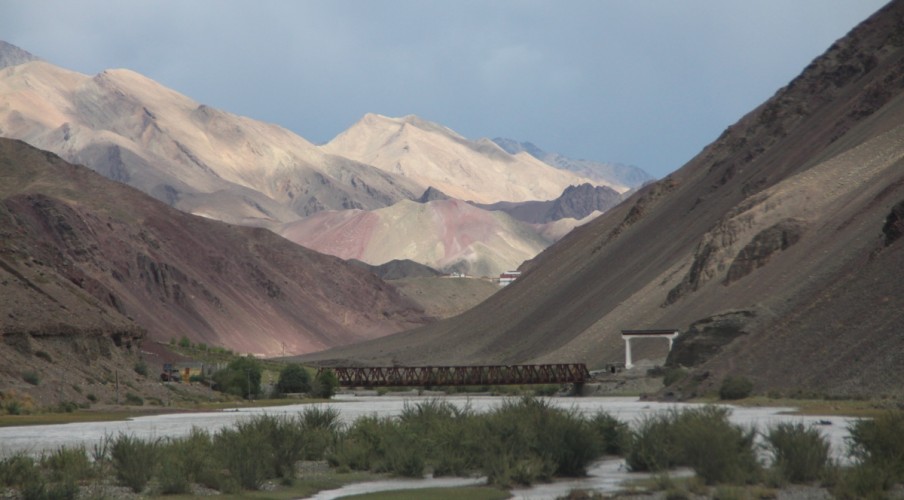
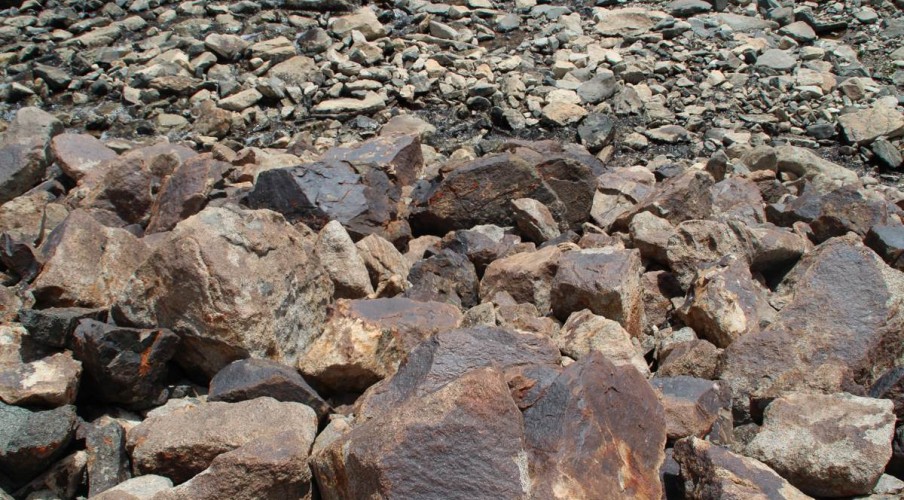
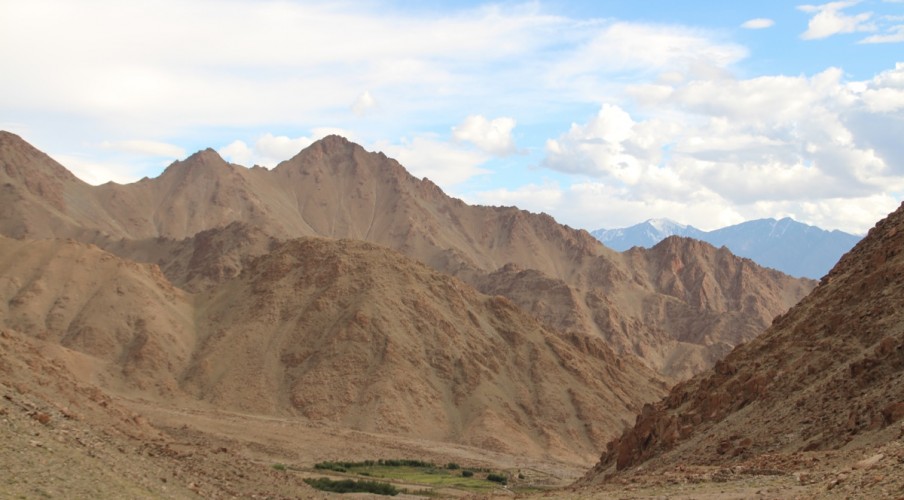
Moriri is a six hour drive from our home and we think it might take the bill as the most epic ‘drive’ yet.  The road follows the Indus higher and higher until eventually it delivers you to the lake at 4600M.  It travels through deep ravines cut into the rock, and passes small villages, patches of green and gold against a rocky geological riot as two tectonic plates collide: on the right side of the valley, the sedimentary rock of the India Plate, up against ‘our’ side, the torched Igneous of Asia.

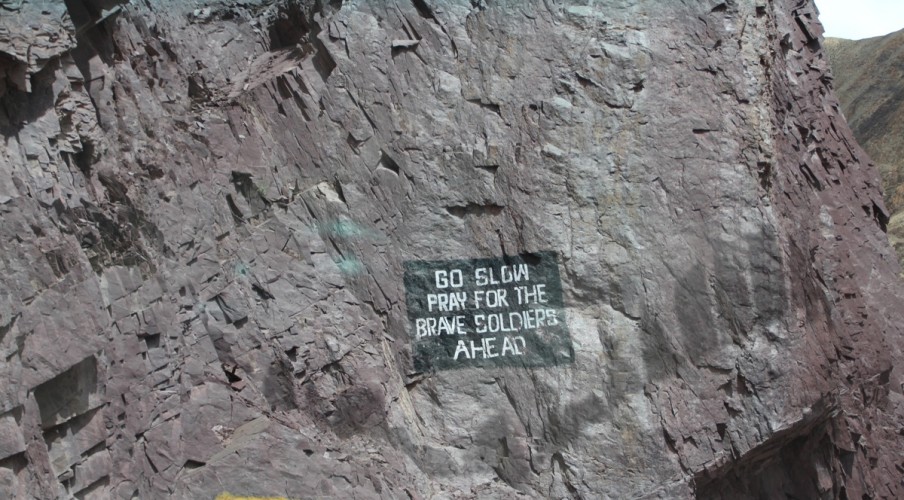
All through the rocky chasms on the way to Moriri are garrisons of Tigers and Brave Lions; the army in India is ubiquitous.  The families live in ugly compounds or colonies, with their own schools and shops and homes, built on the dry desert rubble that sits above the river.  It is hard to imagine it is a welcome posting for these families, but there is plenty of evidence they are very proud of their work.  Each new bridge, or road section cut from the cliff is marked by signage recognising the brave soldiers responsible for it, and not infrequently, there are marked graves.  Making roads here is a dangerous business.

Mind you, the men of the Indian army do not always physically DO the labour – this is often the responsibility of migrant men and women from the south who live in plastic tents or sometimes parachute tents, and wash in the river and chip and lift blocks of stone for months on end, presumably earning more than is possible in their home states far away.  It is not an easy sight to see them lift large pieces of granite and toss them into the back of truck, for hours on end, or seeing them squatting in their underwear in freezing melt water.

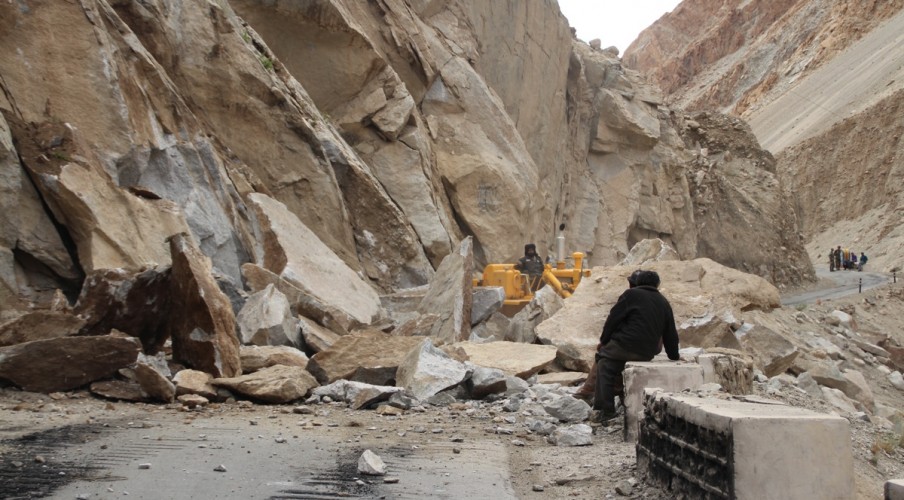
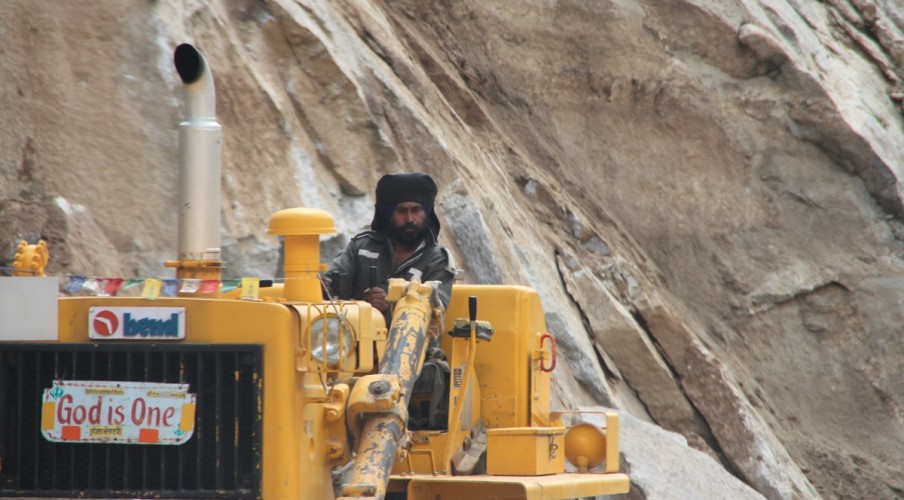
The army brings money to the area, and while it flies helicopters to and fro through the valleys in rehearsals or enactments of surveillance, or marches into the stark peaks for training in High Altitude Warfare, the army is responsible for the welcome maintenance of roads and bridges.  On the route over the Zoji La from Srinagar to Leh we were stopped while the army cleared a small avalanche of rock, which halted all traffic for about an hour.  On our drive to Zo Moriri we waited while a grader pushed huge shanks of granite off the road and over the precipice after the army had dynamited a dodgy looking outcrop of rock on the cliff above the road.

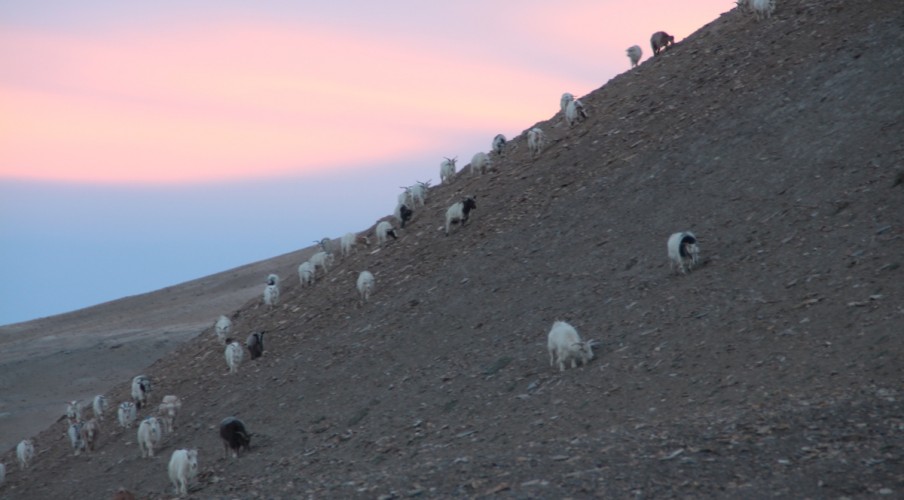
After about five hours of slow ascent we turned right, across an army-made bridge, to follow a tributary river even higher, to Tso Moriri.   After climbing steeply for about an hour the dirt road plateaus onto green pasture and we are amidst horses and yaks and dzo (a cross between a cow and a yak).  Small groups of locals are making short, wonderfully crafted stone walls, for reasons that are opaque to us.  Why have a wall in this vast pasture?

On and on you go, and it is possible to imagine this is Tibet, or Mongolia, that you are connected once more to the routes of trade that have cut across these regions for centuries, except that you are in a nice Toyota car looking through a window.  And the Chinese army is just over the mountains, in occupied Tibet.

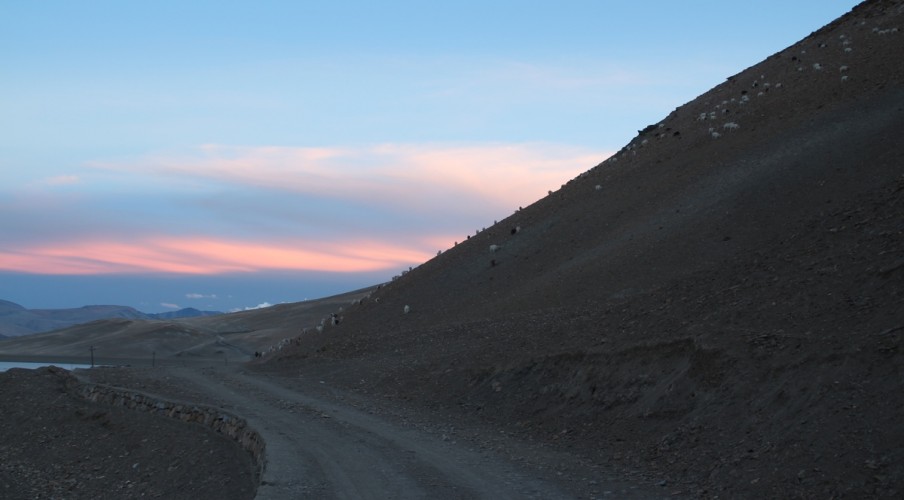
We arrive at the town of Korzok through impossibly beautiful high altitude pastured plains and streams and finally we glimpse the lake.  I am already breathless, but I attribute this more to the altitude rather than the effects of the sublime. We are at nearly 5000 metres, higher than the top of Mont Blanc.   It is a poor place, very harsh and mud-coloured. There are no whitewashed homes as we see in the valleys of Leh, just ramshackle mud brick squares and muddy lanes.  No fields of grain. Pads of cow and yak dung are carefully stacked against the outer walls of the houses to serve as fuel in winter.  There is construction, no doubt to accommodate the tourists, fuelled by cheap human labour and not by any technological advances.  As with the rest of Ladakh, there is no power during the day, but it seems doubtful that most village people would be able to take advantage of power, were it even available.  There are a few makeshift canteens and shops mainly selling the local Tibetan mo mo’s – steamed dumplings – and the every-present Maggi instant noodles.  A non-veg town.

We end up staying at the Super Deluxe Nomadic Life Tent Camp.  There are a number of these ‘permanent’ camps dotted haphazardly across the base of the town.  Ours has a large tent with a bed big enough for three, so we grab an extra mattress and move in.

There is an outdoor throne (our word for a western toilet), which makes Mei (and me) happy!

Everyday life at Yangdol’s Place, Shey, Ladakh


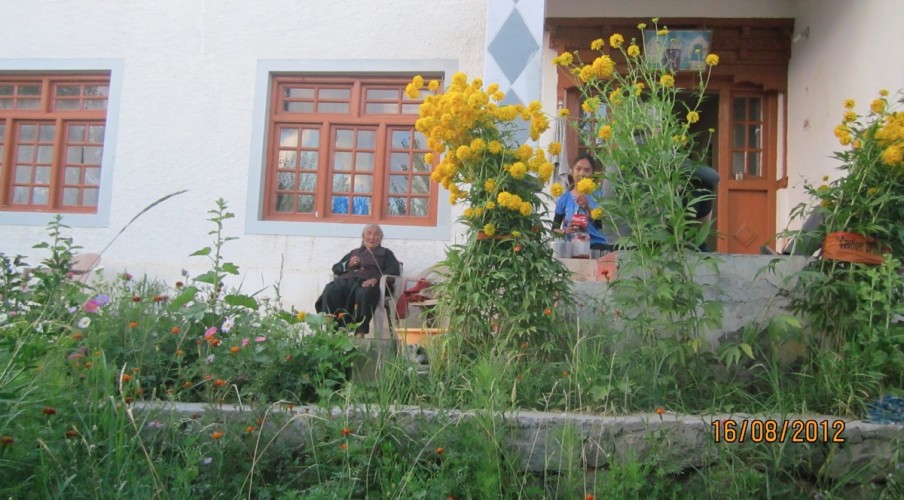
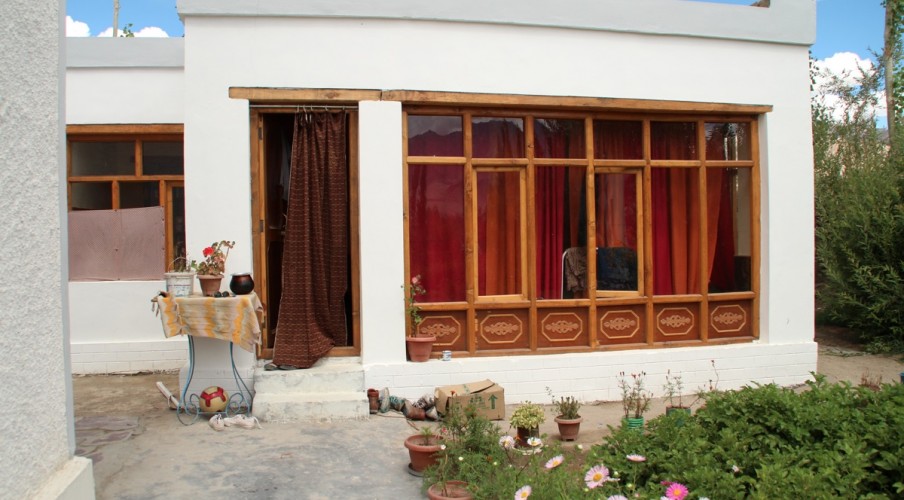
We’ve now been living in Shey for over a month with a lovely family: Yangdol, her husband Phuntsog, and their 13 year old daughter Nilsa and the ever present, always smiling, often coughing, ‘Grandma’.

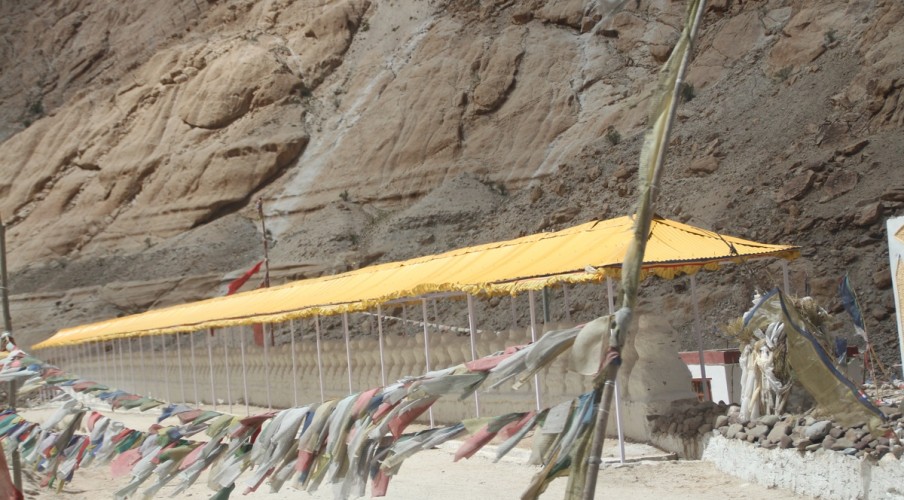
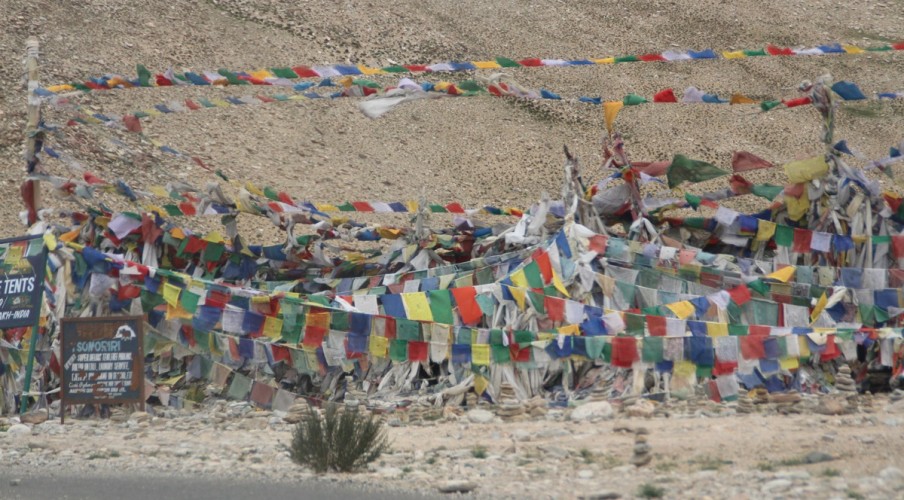
Like the great majority of people in Ladakh, our host family are devout Buddhists.  There are thriving Shia Muslim and Christian communities in Ladakh, but you have to look fairly hard for them because all through the valleys and all around us here in Shey the landscape has been transformed from ancient times by the deep popular devotion to Buddha: at intersections there are giant prayer wheels, cars regularly divert around monumental ‘Chortens’, and high on rocky outcrops impossibly difficult to get to, you will find a prayer flag placed or rocks arranged precisely as markers of devotion.  And looking up or down the rocky valley, generally high on a rocky outcrop, there will inevitably be a beautiful Gompa (monastery) catching the sun.

Most houses have prayer rooms, generally on the top floor.  Our Ladakhi Grandma keeps the butter lamps in our prayer room burning and every morning strolls through the house and garden swinging her charcoal burner smoking incense, ritually purifying the house and surrounds.  The practicalities and meanings of the everyday Buddhist rituals of devotion are still mainly a mystery to us

Food is the big issue!  After weeks in India you begin to crave certain beloved delicacies from home.  Responding to these impulses in local restaurants generally meets with failure!  Best to stick local!   Meat is NOT on the menu, and we miss it sometimes (Mei dreams of a good Chinese Pork Bun) but there is certainly no lack of food.  We are all losing weight – Mei and Xavier more so than their parents.

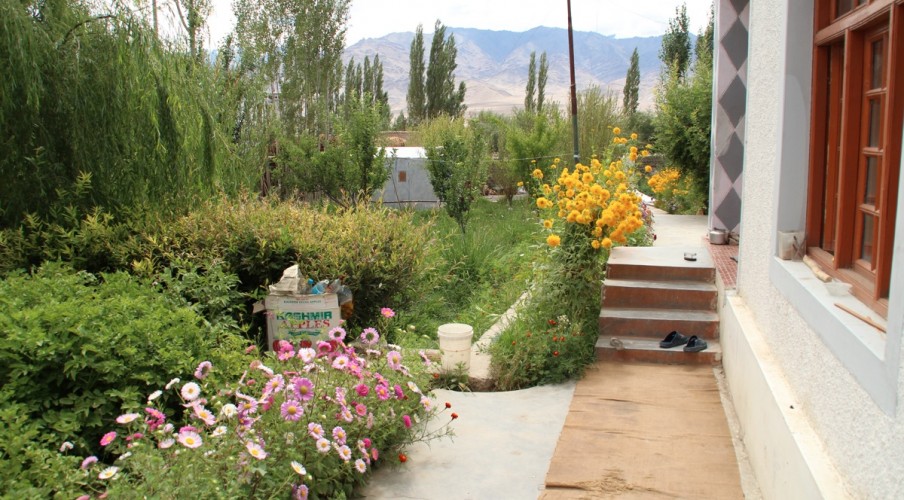
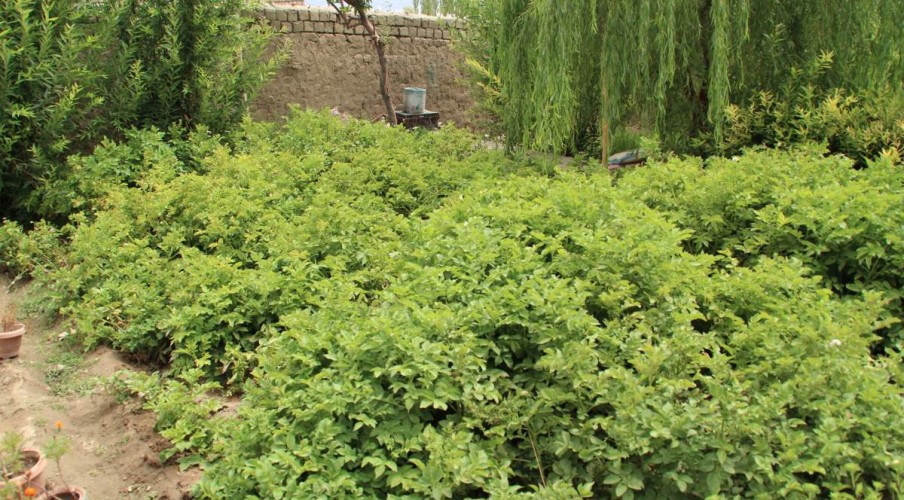
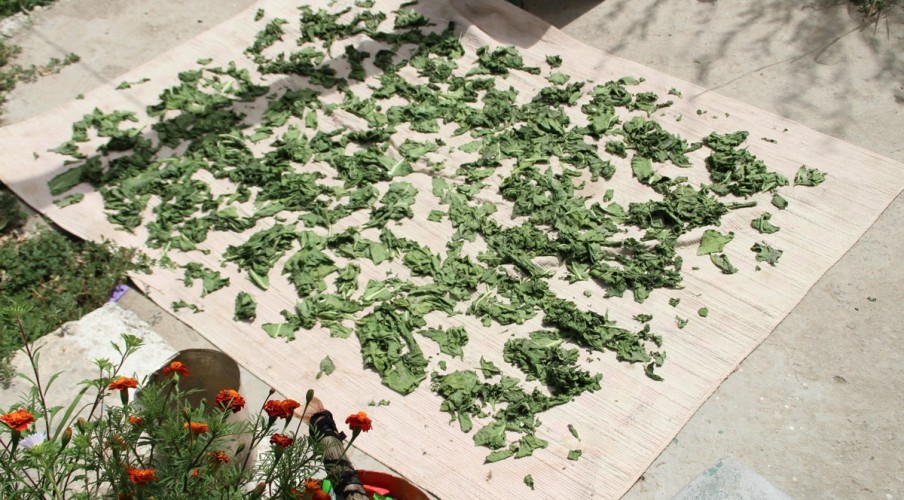
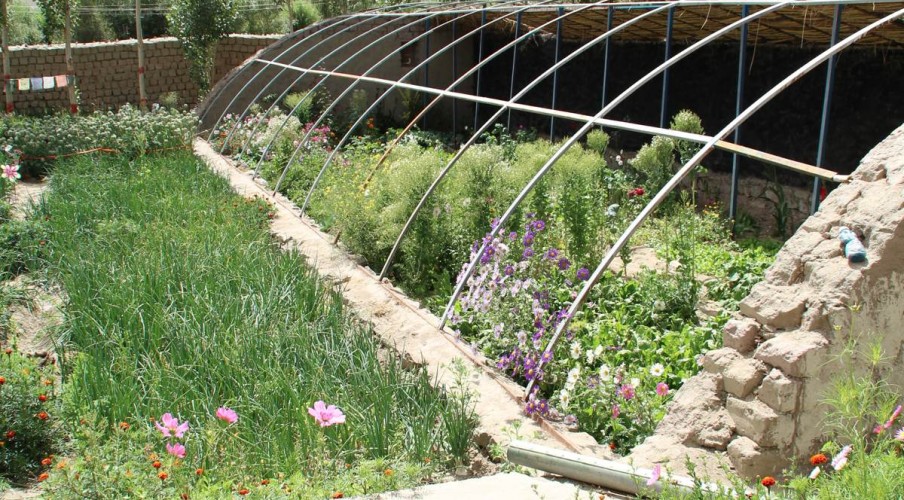
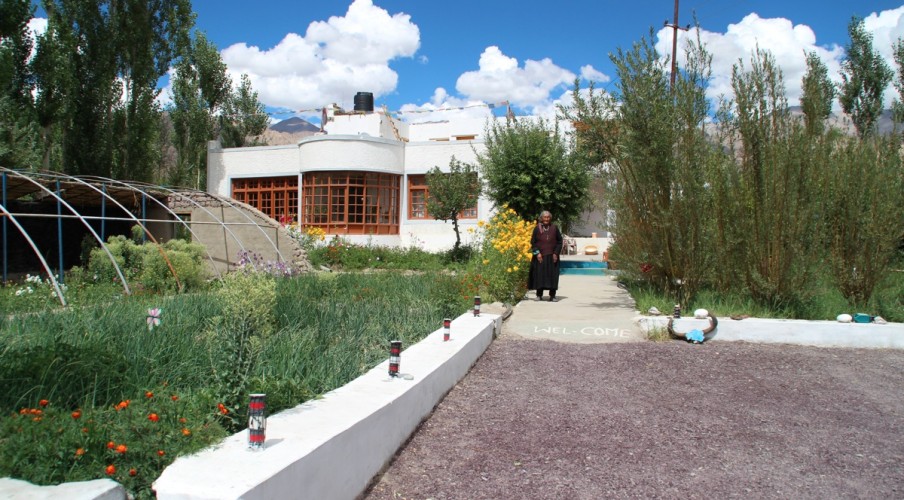
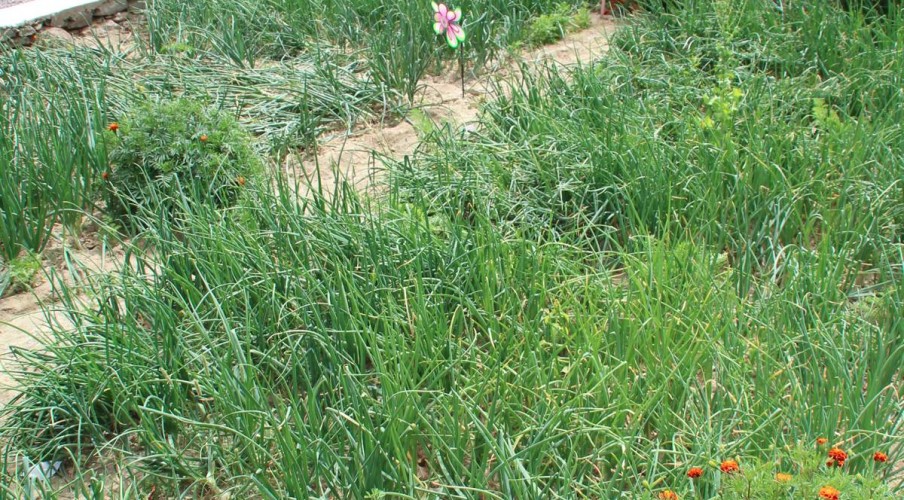
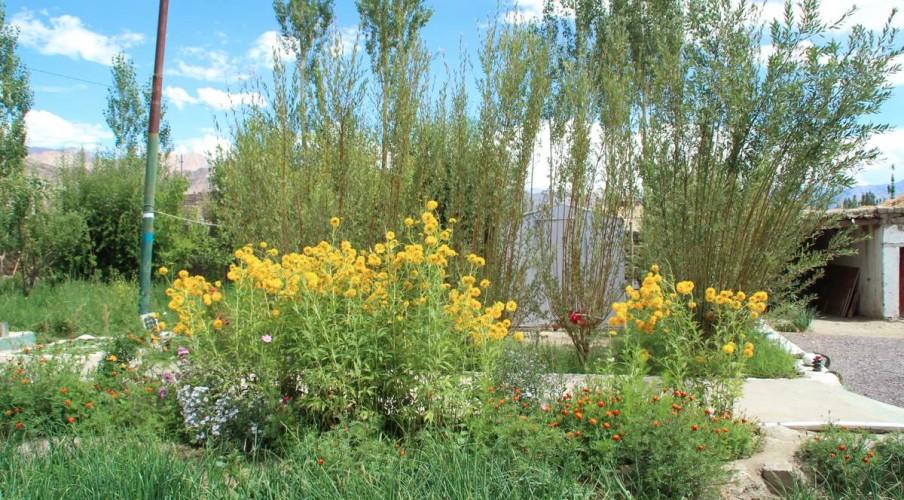
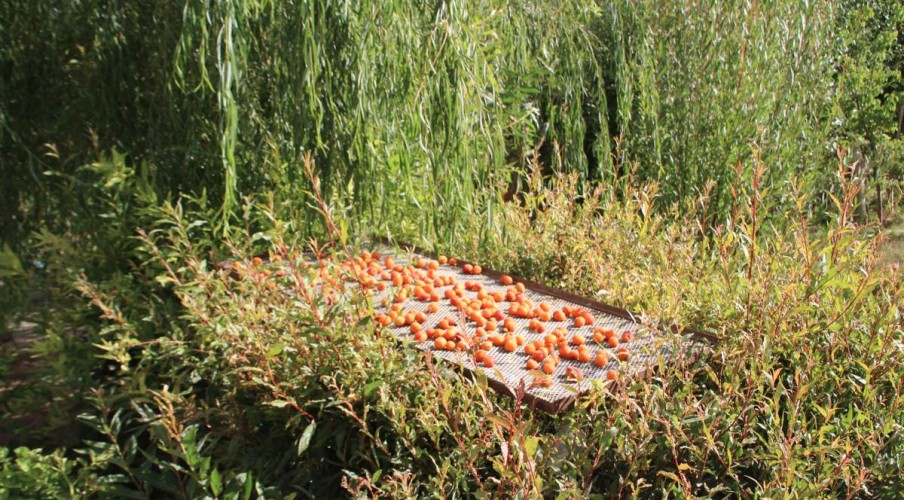
Like most local families, Phuntsog and Yangdol maintain a large kitchen garden and ours is at least 250 sqm and has healthy plantings of peas, potatoes, cabbages, cauliflower, onions, silverbeet, coriander and a lot more.  There are apple trees and apricots.  Apricots are a staple here and thrive in the climate.  If only we could grow them this large in Perth, we would all have one in the backyard for shade.  The families keep no chickens (at the Dalai Lama’s behest) though they will eat eggs.  At least in summer, there is no shortage of fresh vegetables, and they dry what they can for the winter, but they do have problems maintaining a balanced diet in the long snowbound winter.  As a result they do eat some meat: a goat or sheep will be slaughtered to ensure everyone stays healthy.  We have had three meat dishes since arrival, and all of us have rejoiced a little!  What barbarians we are – the planet does need to be vegetarian to survive!

Nilsa walks down daily to her aunty and uncles, where they collect the fresh milk.  Aunty milks the cow, and Mei is hoping to try soon.  Yangdol boils the milk, makes curd, butter and milky chai.  We do crave fresh Australia butter!

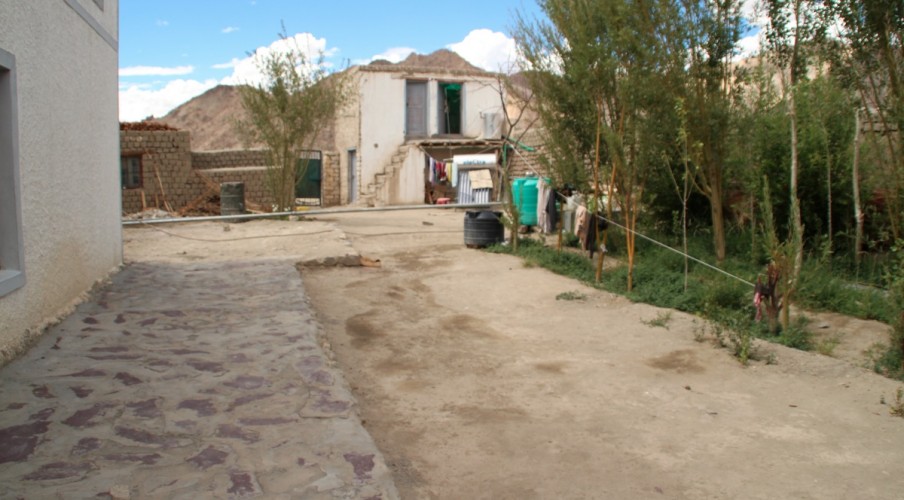
Our water comes from a bore and through an intricate system of channels that are opened and closed from one day to the next to distribute water across the yard.  We have a solar unit for hot water, a tank of drinking water that we then put through a filter system, and a tank of water for washing.  All of this is retrieved with a bucket.  There is a running tap in the kitchen and in the bathroom.  We are use to regular ‘ bucket runs’ all day and night.  No shower! Just a hot bucket shower … it’s been over a month since a bath or regular shower.  We wash our clothes out next to the bore.  Water is a precious commodity here, although the melt from the mountains allows many families to irrigate their gardens and homes, it doesn’t last all summer – our local stream has been dry for a fortnight.

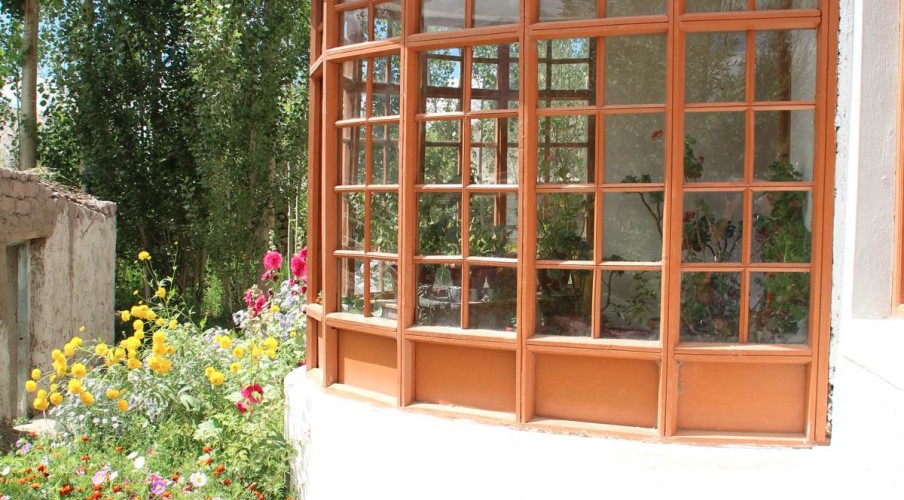
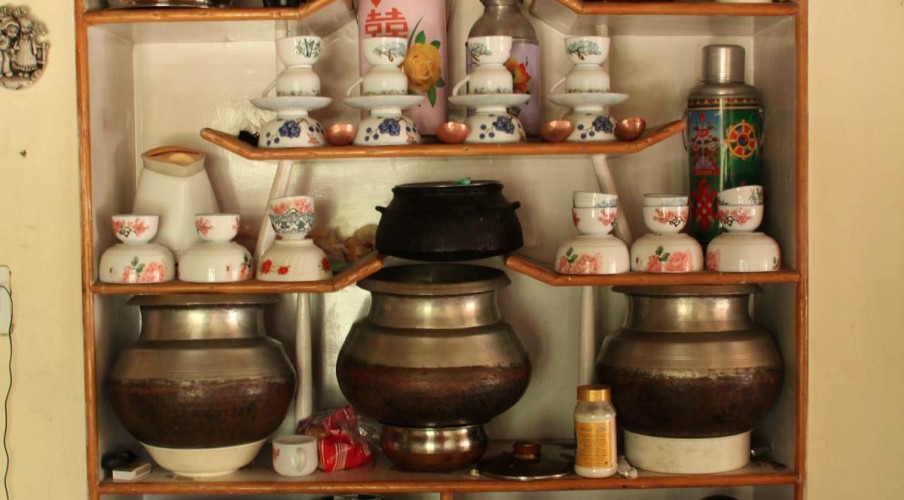
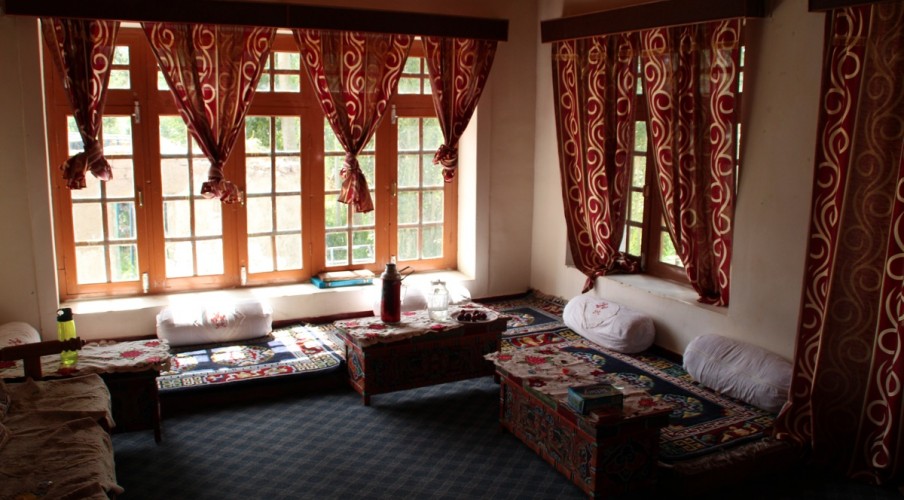
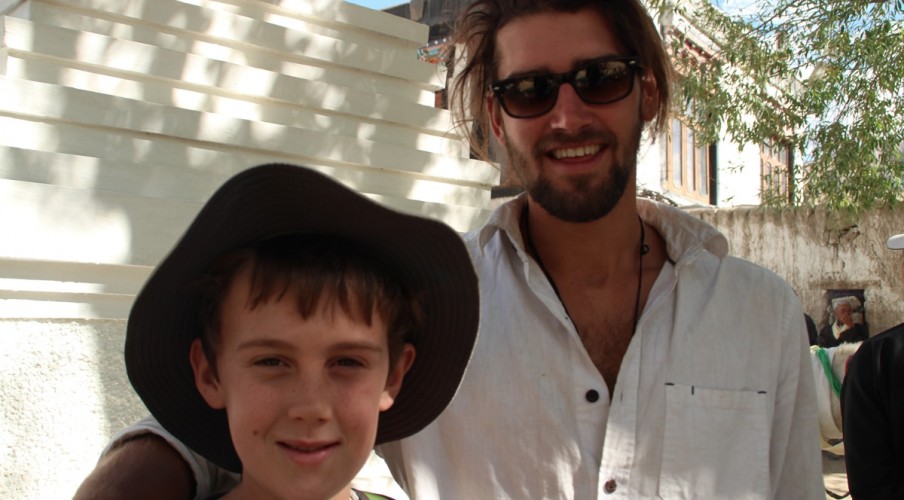
Most nights, Yangdol and her family sit on the stoop outside the front door and cut and prepare vegetables for dinner.  Mei loves helping and Xavier is regularly conscripted to help shell peas and ends up loving it too.   To eat, we sit in front of low carved and brightly painted tables on the slightly raised and carpeted floor in front of broad windows.  This is very much the ‘traditional’ Ladakhi family/dining room.  When the time is right, a cloth is ceremoniously spread out on the carpeted floor and the food is brought in from the adjacent kitchen and spread out on it and we serve ourselves.  There are firm taboos around feet and Grandma lets us know when some one has transgressed at any time.  Simon, the bearded young man in some of the photos, is the visiting landscape architect at Druk Padma, and is regularly guilty of stepping on the cloth!  He is building a greenhouse to propagate plants and to green the school site and buildings.  Xavier and Simon have become great mates – Xavier loves a trip on the back of his motorbike.

Our cuisine is quite simple: often pasta or rice base with vegetables from the garden: sparked up a little with Indian spices.  Sometimes Tibetan MoMo’s (steamed dumplings), occasionally trad Ladakhi consisting of doughy barley pasta (shaped into ears) in a delicious thick sauce – once with a delicious mutton sauce.  Last night is was rice, a fabulous Brinjal (eggplant) curry and, low and behold, a lamb and potato curry.  Meiduo gobbled down the meat.  This morning a short term guest cooked superb puri’s (breads) and delicious potato subje.

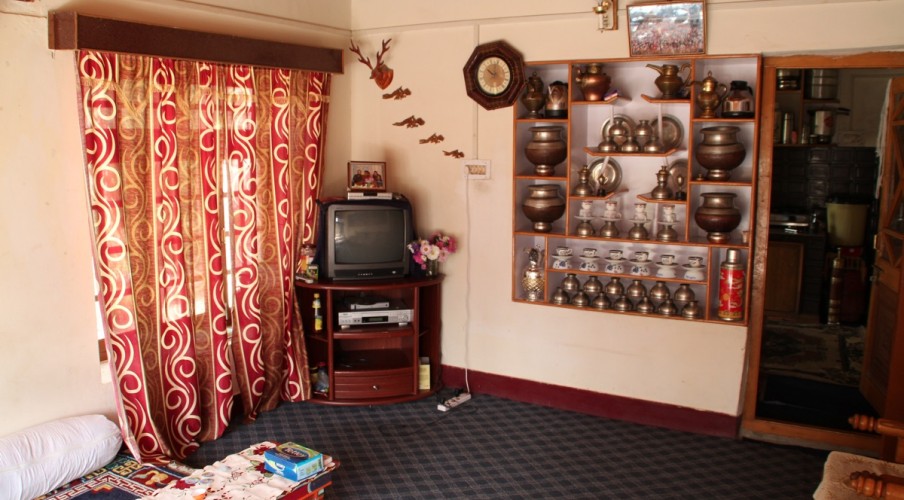
As the ‘guests’ we are very much ‘served’, and so we are always fighting to clear the dishes or to do some domestic labour.  Dinner is generally accompanied by awful Hindi soaps on the TV – Yangdol and Nilsa are addicted … we are amused, and generally beat an early retreat to bed.

We generally get power from 7.30PM until 11PM, and have learned to daisy chain all our electronic devices (too many) to get maximum charge.  Sometimes it fails completely and small solar charged lights are mobilised.   Gas bottles fuel the twin burner camp style burners – there are no ovens. Most mornings Yangdol or Grandma cook Ladakhi flatbread over a fire in an outdoor kitchen area.

Like many Ladakhi families our house has an outside washroom and dry drop toilet, as well as a flushing squat toilet inside.  Chris uses the drop, the rest of us use the inside toilet. Human waste is recycled (every few years) for the garden.

The parents rise early.  They sweep and clean and prepare the food for the family and their guests. We hear Phuntsog praying as he works, in fact, any monotonous labour is generally accompanied by the regular hum of Buddhist chants.  We are yet to hear a grumpy word from anyone, or between adults and children, other than those by the Hill Wilson Tribe.  In Ladakh, any expression of anger is generally frowned upon … so we have had a struggle on that count!  At one time Yangdol had 10 adults staying: she works full time in a medical centre, and is permanently good-humoured, kind and fun to be around.

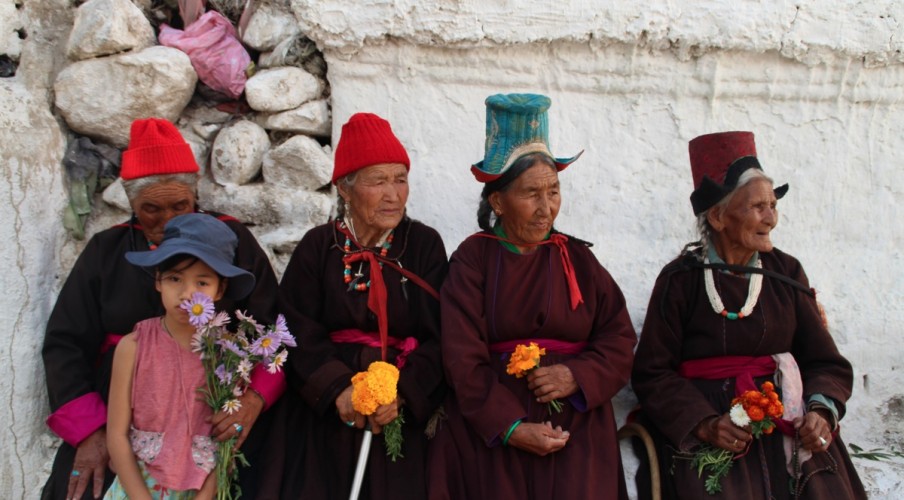
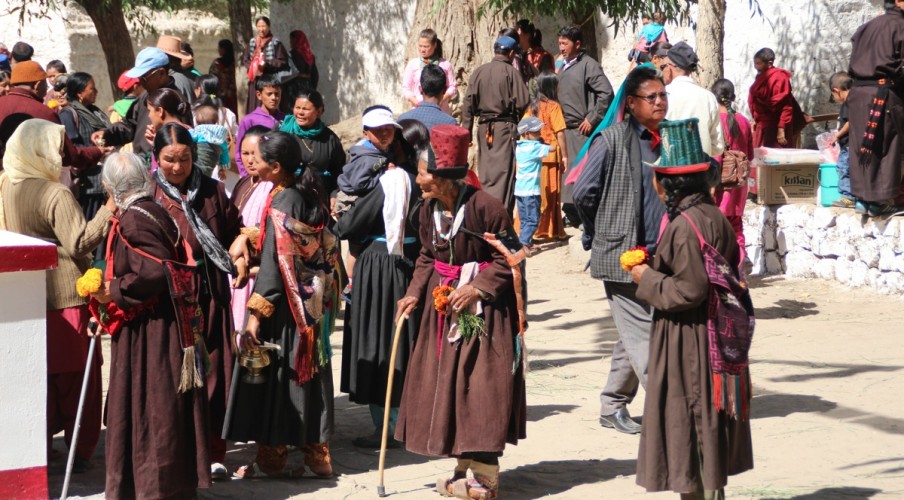
Grandma has quite a few friends who visit.  They are very old ladies and all wear the plum and grey wool Ladakhi dresses, and turquoise and coral jewellery.  Though they are old and grey and their faces are worn from the harsh conditions, they will walk miles to see the Ringpoche or the Dalai Lama, while our kids complain about a kilometre to find a bus.

In almost every sense they are a ‘typical Ladakhi family’ – they are not wealthy at all and must work extremely hard to maintain what is a very modest standard of living.  They have very high aspirations for their one daughter, who they intend to send to Delhi to complete her schooling after Form 10.  It should be said that the guidebooks are utterly correct in describing Ladakhi people as wonderfully generous and welcoming people.  We are regularly amazed by the generosity we receive at odd moments and the sincere desire to ‘care’ for visitors and guests.

The family all love Meiduo – a little too much sometimes.  Yangdol calls her her Ladakhi daughter, and Meiduo can find the attention just a bit overwhelming.  Other times she is in her element.  Mei is always emerging from Nilsa’s room with a new Ladakhi outfit on.  Yangdol and her daughter are always re-doing Mei’s plaits.  Plaiting is an art here.  The girls at the school sport thick black perfect ropes artfully placed high upon the head, or clipped back (required by school rules).   I have studied their plaits and have no idea how they appear to be woven not by hand but by some other more perfect method.  The old women all wear their hair long, and often in two plaits that are then braided together to meet each other, like a skipping rope down their backs.  They wear badges with images of His Holiness the XXII Gyalwang Drukpa (the leader of the Druk (dragon) lineage which generally holds sway across Ladakh) or his Holiness the Dalai Lama.  Buddhism is deep and pervasive: at assembly the children at Druk Padma bow their heads and join their hands in prayer.

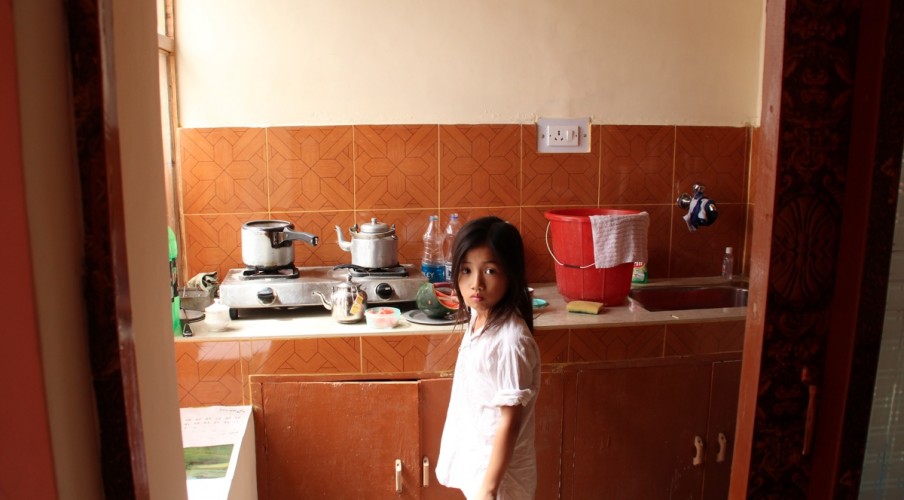
We are lucky enough to have a little kitchen off our room.  It has two gas hobs serviced by a gas bottle outside.  We have no running water, but bucket in our washing and drinking water from outside.  We filter our drinking water.  In winter the family intend to move into this space as it is much easier to heat and maintain.  The family will move in a traditional Ladakhi stove, a slow burner, to keep out the below zero cold.

We do suffer from being about 25 minutes from Leh – the centre of excitement! – but we also enjoy being away from what, at this time of the year, is a rather frenetic place.   We pay about 20 rupee to get in – unless a random car picks us up – which is often.  In town you can do internet and eat most cuisines, from Israeli to Mexican, all done generally well.  Our fave is Chop Sticks, which does good healthy noodles and wok meals.  You will not find a good steak!  Indeed, Tibetan Veg stands supreme, seriously threatening the authentic Ladakhi food culture.  Historically, Ladakh is very much linked to West Tibet – and now there are large refugee camps outside Leh, some that we have visited.   Free Tibet stickers and T Shirts are common.

Anyway, Mei is next to me on the iPad, Xavier has left for School, Josie is negotiating to meet up with some Museum people … and I need to get into town …

[This was written a few weeks ago by Josie and more recently added to by Chris …. but lack of power or internet (generally both) and trips away have delayed actually getting it up on the blog.]
Josie Taught Today

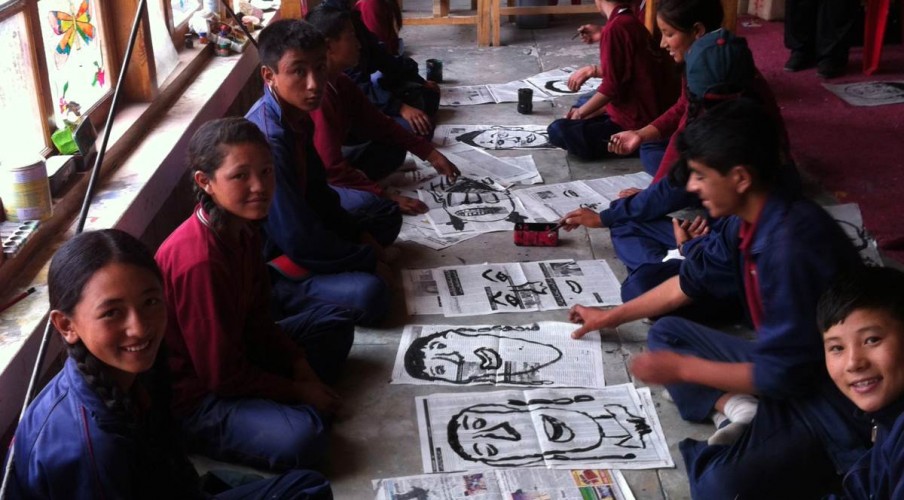
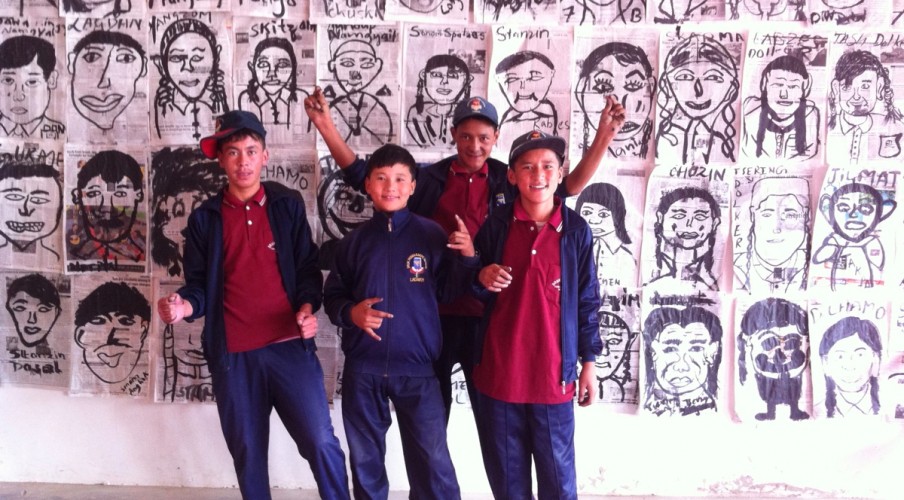
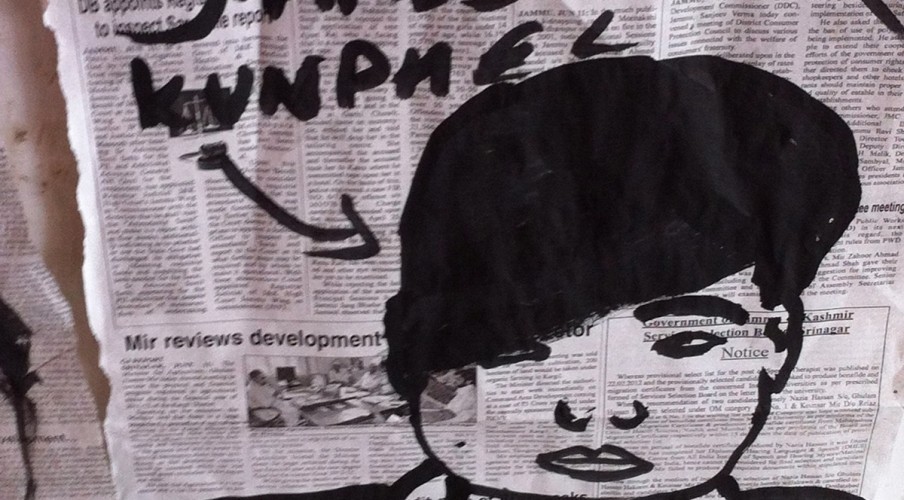
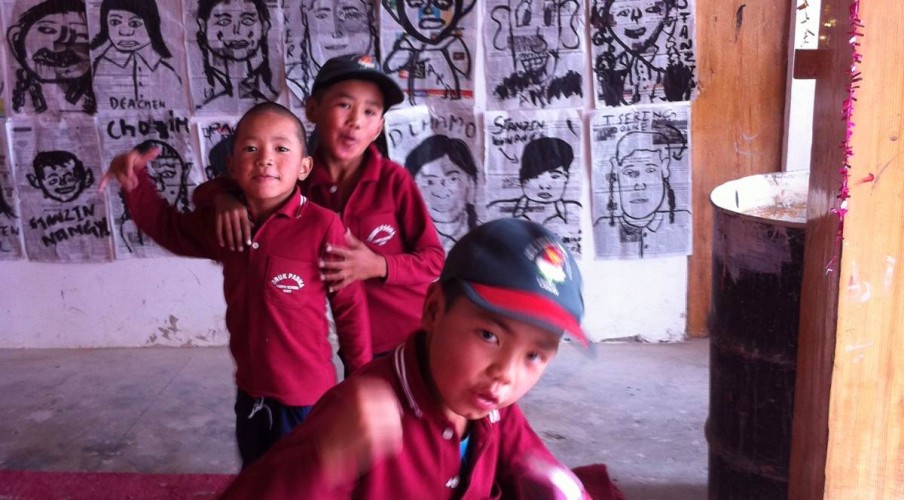
Josie has been doing some art classes with the kids – today she did some quick ink portraits, and they are working on a Joseph Cornell project as well.  On top of that she has kick-started a museum project.  She may be working harder than DP Chill.

Our Oracle

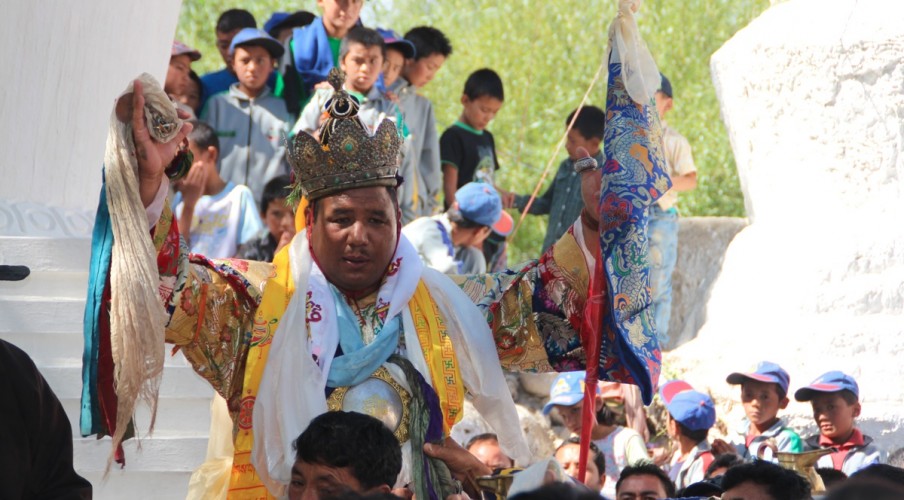
Not long ago we went down the road from our house to see the Oracle, who is the harbinger of the harvest and, therefore, good fortune to the village.

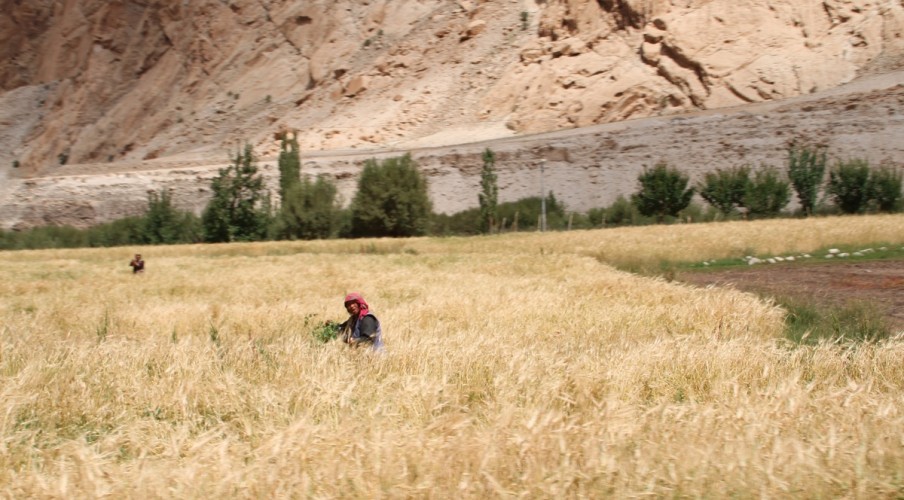
The appearance of the Oracle marks the commencement of the summer harvest, when the golden barley fields that spread out across the valley either side of the Indus will at last be cut by men and women wielding hand scythes.  For weeks we have walked along the irrigation channels running between the fields and next to exquisitely built stone walls, watching the crop ripen.  As it has become more golden and the heads of barley getting heavier in the breeze, the expectation across Shey for the harvest has risen.  There are two types of barley grown, one for the Sampa flour that is the main ingredient of the local cuisine, and one for the Chang, the local beer.  Most families will have fields, often a walk from their house, which they crop every year.

Oracles are very important in Buddhist tradition and within the social order here in Sheh.  Phuntshog tells us that our local Oracle inherited the position from his father, and he from his father, ‘going back to the beginning’.  When he is not required to be ‘the Oracle’ he is just an ordinary guy, like you and me, working in Shey.

The walk down to Shey Gompa takes only a few minutes but is long enough for us to experience the festive atmosphere – it’s a BIG day in the local community and people are streaming in from all along the valley to Sheh Palace and the Gompa, from where the Oracle will appear after his days of meditation.  On the road outside there is even a guy selling fairy floss from a rickety old bicycle wheeled trolley.  We buy some!

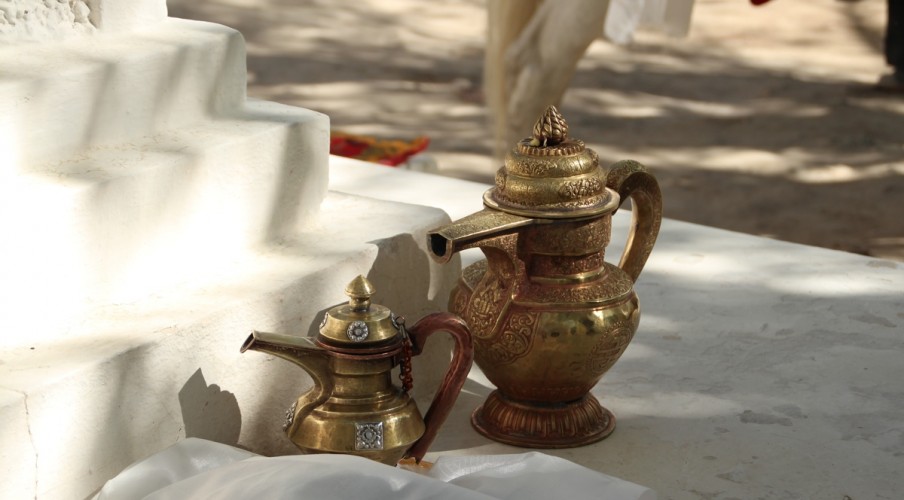
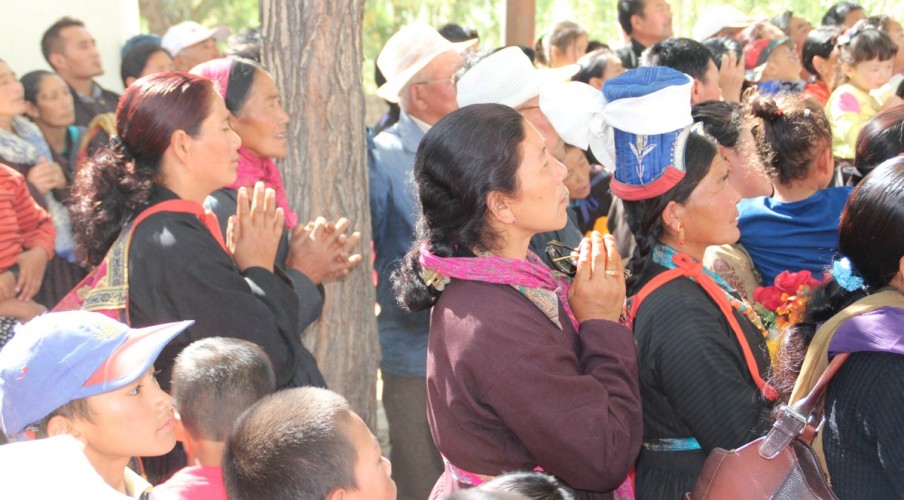
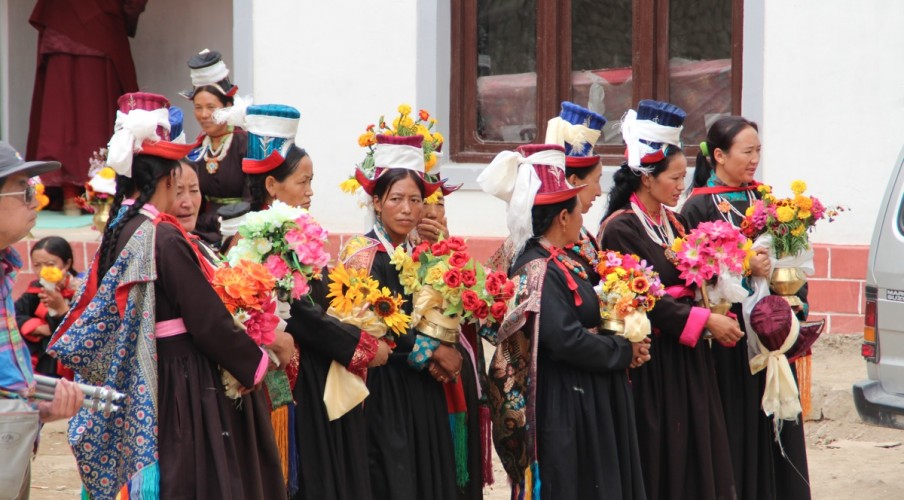
All the local people are dressed in traditional clothes; the women wear their yellow gold and coral earings, and gold and turquoise necklaces, and the men carry family Chatskan, the gold pitchers filled with the local barley-based alcoholic chang, or else gin or whisky, the spouts dabbed with dollups of greasy butter.  These liquid offerings are for the Oracle to imbibe and, as we soon discover, spray across the assembly as he responds to questions in a seeming trance state.  Or perhaps, he has had too much to drink … or both.

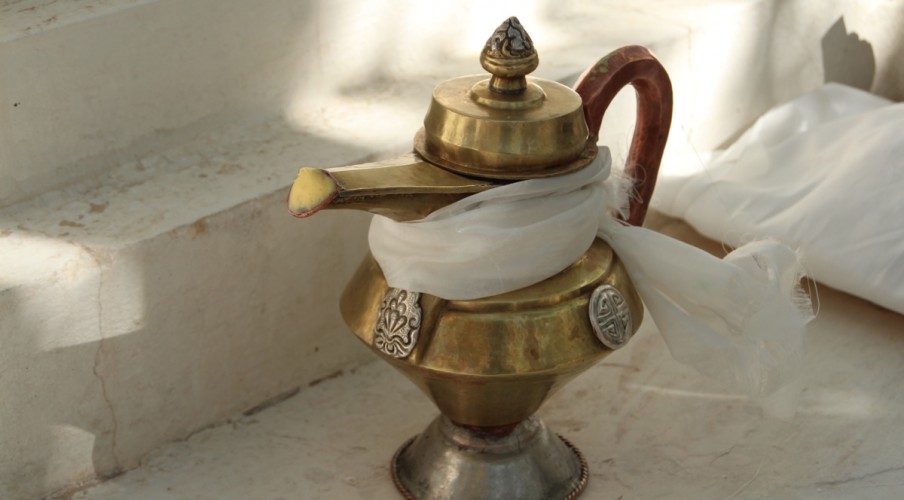
Butter is very important in Buddhist Ladakh.  Butter lamps burn in the Gompas (and are never allowed to extinguish), before the image of Buddha or the Rinpoche.  Butter tea is made by churning the two together in a Goor Goor, and it is then heated and salt is added.  It is offered to visitors and is considered a ritual offering that is hard to refuse, but rather tough for the western palate.

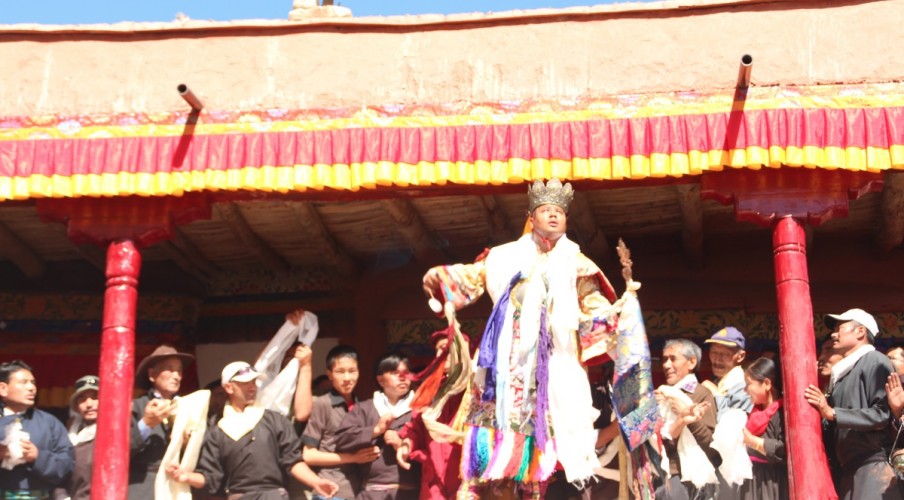
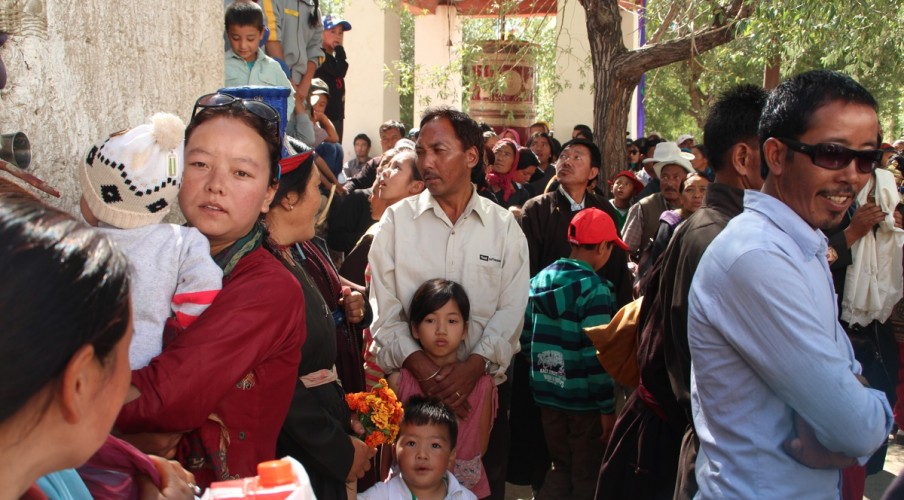
There are several hundred people gathered in a relaxed expectant throng around the Gompa doors, waiting for the Oracle to appear.  The doors on the lower floor are open to the 17th century gold Buddha that stands nearly two stories high, the head rising through a gap in the floor above.  These doors on the lower floor are only open a few times a year, making it possible to stand at the base of the extraordinary golden Buddha and look up through the ceiling to see his head.  In the room robed lamas are praying while some villagers try to get a glimpse of the Oracle through a tiny glass window into his adjacent room.

Standing at the ready in the middle of the crowd outside is the Oracle’s white horse, which will eventually carry him through the local fields.  The horse is festooned with ribbons and bells, and quite transformed from the rather dissolute pony we had noticed hanging around the local daba on the main road for the past week or two.

The Oracle has been locked up in solitary meditation for 15 days in preparation for this moment, so there is a real air of expectation in the crowd, which is packed tightly into a courtyard.  Everyone is looking up to the door of first floor room where he is expected appear, and where men and boys are pressed onto the verandah and into adjacent upstairs rooms.

The women wait in the courtyard, gossiping and laughing.  When the door to the Oracle’s room opens, he does not immediately appear, and there is a surge to the door by the man and boys up on the verandah, and a great deal of yelling and calling out.  Every few minutes, in unison, the crowding men let out a loud cheer and raise their fists.

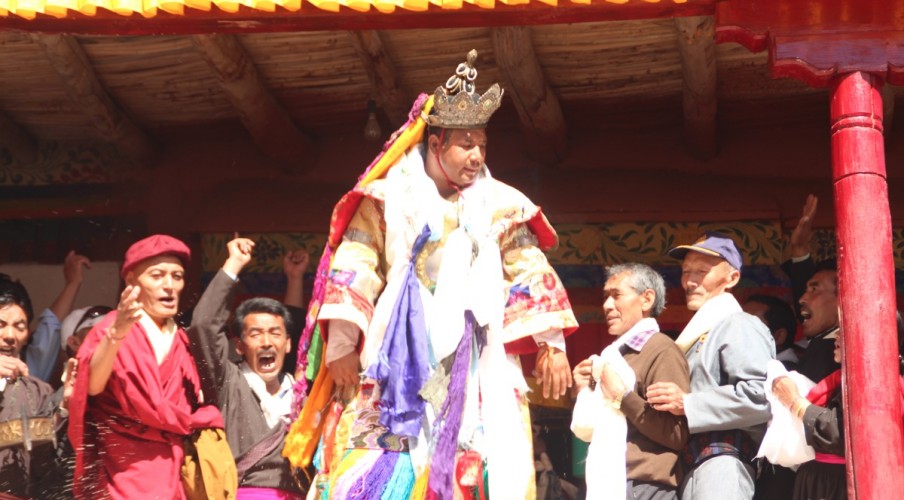
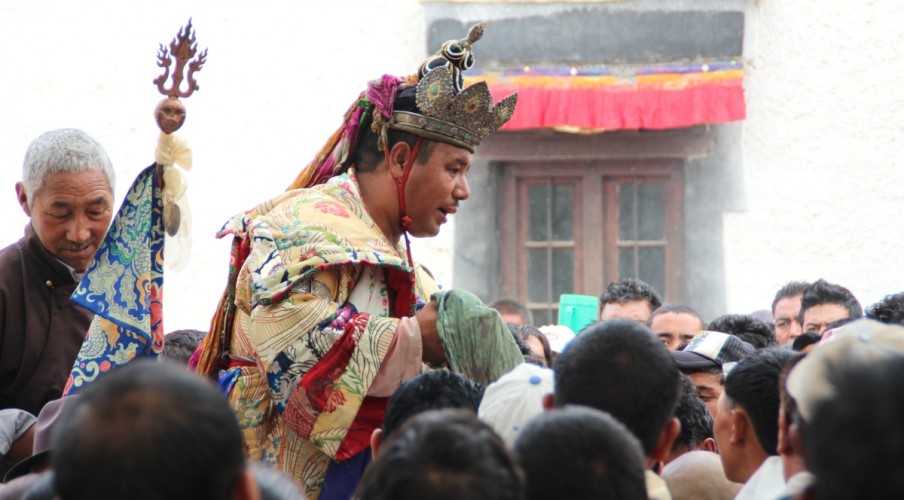
Finally there was a roar from the assembled crowd, and then another, and the Oracle emerged.  I thought him rather Rabelaisein… he was a large man, a cross between a court jester and a high priest.  He called out to the people, who were laughing and smiling.  We all called back.  Urns and bottles were pushed at him.  He would pause, take an offered bottle, and then throw back his head to take a wild swig.  Some of the alcohol made it into his mouth, but a fair amount was sprayed over the crowd, often accompanied by laughter and loud calling out.  The Oracle then dispensed advise to whoever had offered the alcohol.  Later, the remaining spirits would be shared with the crowd, children as well, who would hold out cupped hands and take sips from the now blessed spirits.

For several minutes he paraded up and down the edge of the verandah, often precariously balanced at the edge, making wild gestures, often with a bottle in his had … the booze was going everywhere.  An elderly man acted as his minder, steering him through the crowd, members of which would press forward, lacing silk cloth through his belt and accepting his blessing.

he moved up onto the roof of the building, followed by minders and lamas, where fires were lit and more yelling and calling out could be head – and then to more cheering the crowd made way for the big man as he joined the patient crowd waiting at the front of the building … he moved about accepting bottles of spirits and calling out, or with his head down, as if to keep a confidence, talking  directly to one of the crowd.

Eventually, he was guided totake up his mount and after much carrying on the sweaty and now rather boozy looking Oracle was lifted onto his horse and made his way towards the fields.  He then led the assembled procession through the fields and late into the afternoon we could hear the beating of drums and the cheers as the Oracle made his way around the village, blessing fields of barley and alfalfa, and bestowing goodwill upon the whole community.

The Oracle looked like he had had a fair bit of butter in his day.  Nilsa informed us the night before his appearance that the Oracle was capable of drinking 400 bottles of alcohol in one day – ‘or is it 40?’ she added.  Regardless, he is obviously a man of great powers and revered by the local people.  The most famous Oracles are at Matho and Alchi, and are women.

Our Buddhist friends from Hong Kong who we met in Leh trotted off to see a local Oracle to get some good numbers for the HK lottery, which I suppose is as legitimate a use for an Oracle as any?

Wild Hair Girls Seen at Tingmosgan

You might not have known that in 1864, at Tingmosgan, the former capital of 14th-century lower Ladakh, Ladakh signed treaties with Tibet allowing for formalised trade missions between the two. Tingmosgan sits at the centre of a very large, green Y-shaped valley stretching several kilometres to Ang in the northeast and Tia in the northwest.  It is very beautiful to walk through – barley fields, apple groves, apricot trees.  One afternoon the daughter of our hotel owner guided us a steep path to the gompa and we listened to a lama chant his way through the afternoon’s prayers.  The Hotel Namra is just what you need after a long drive – even a bath! – and the kitchen ‘delivers’ great food.

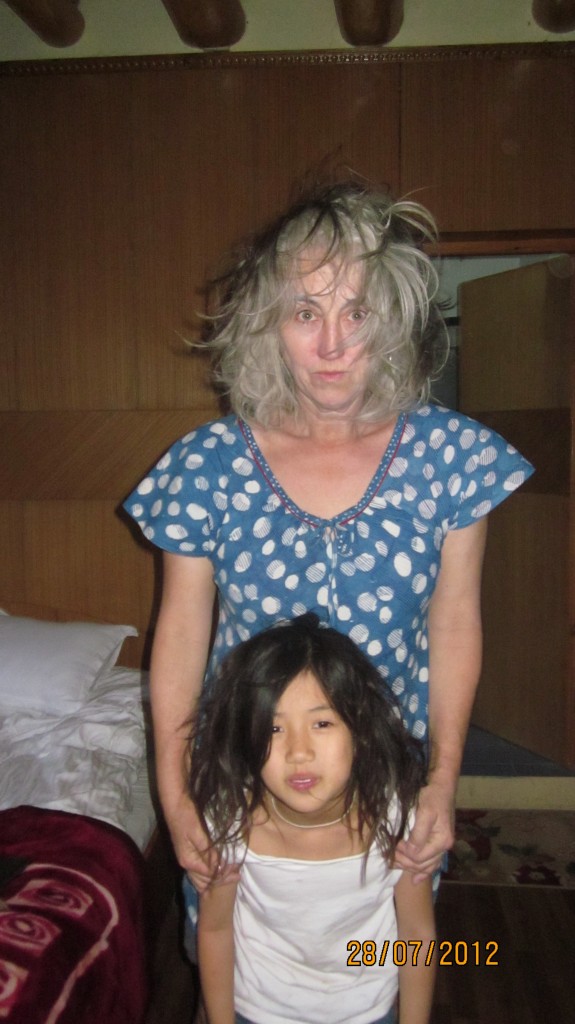
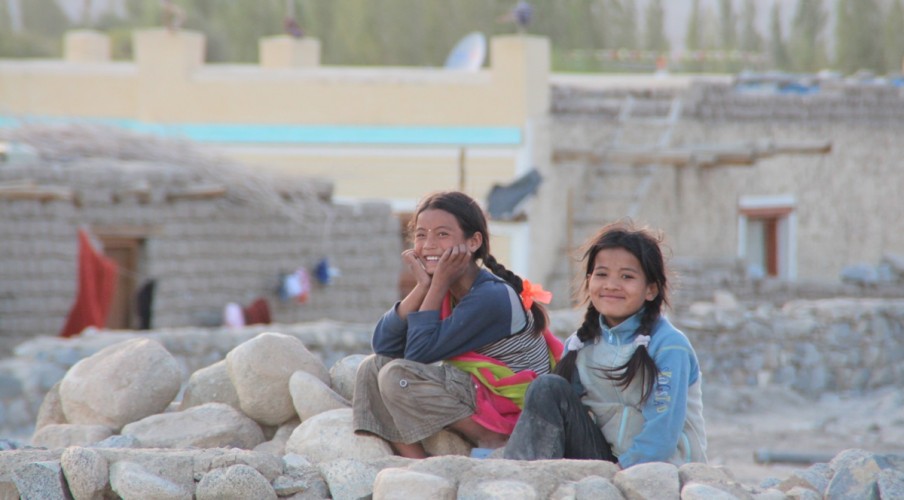
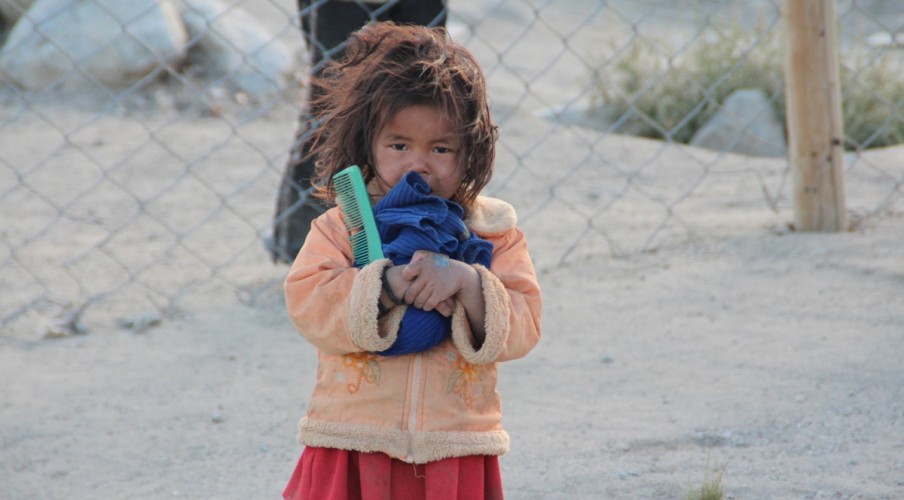
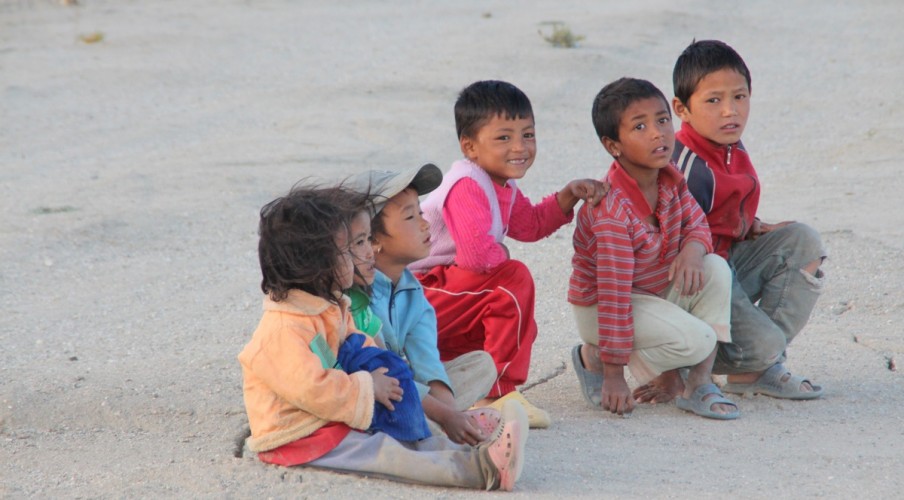
It was also here in Tingmosgan that two wild hair girls were recently observed having fun.


High as a Kite

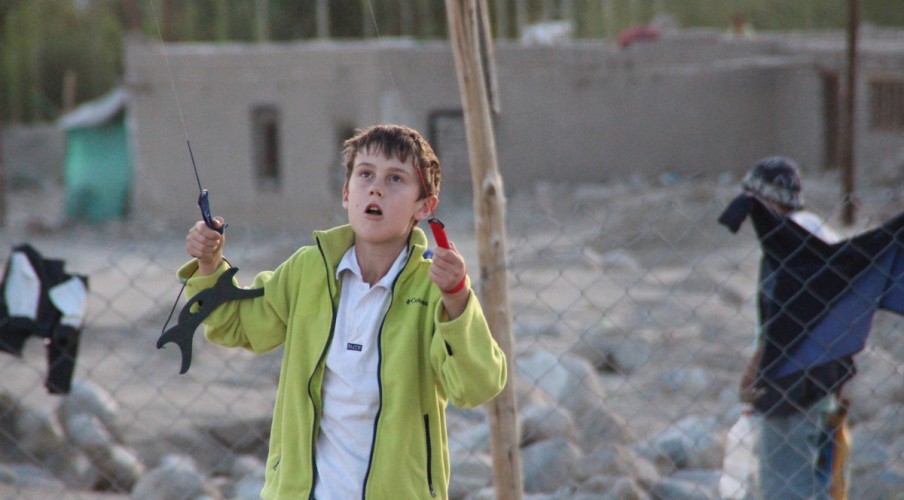
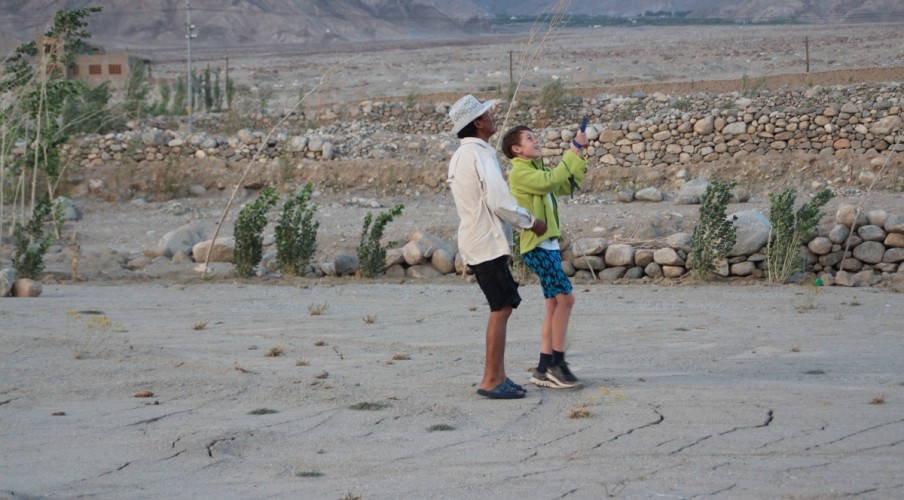
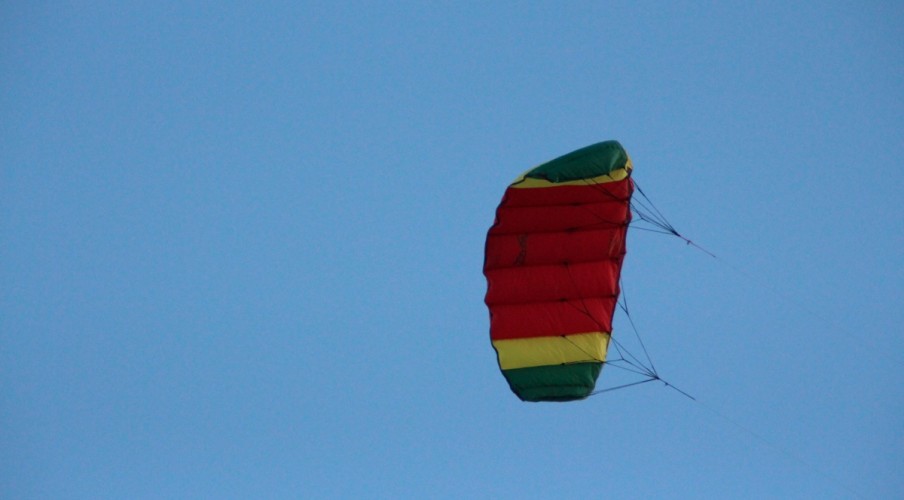
We have been having lots of fun with Xavier’s performance kite at high altitude.

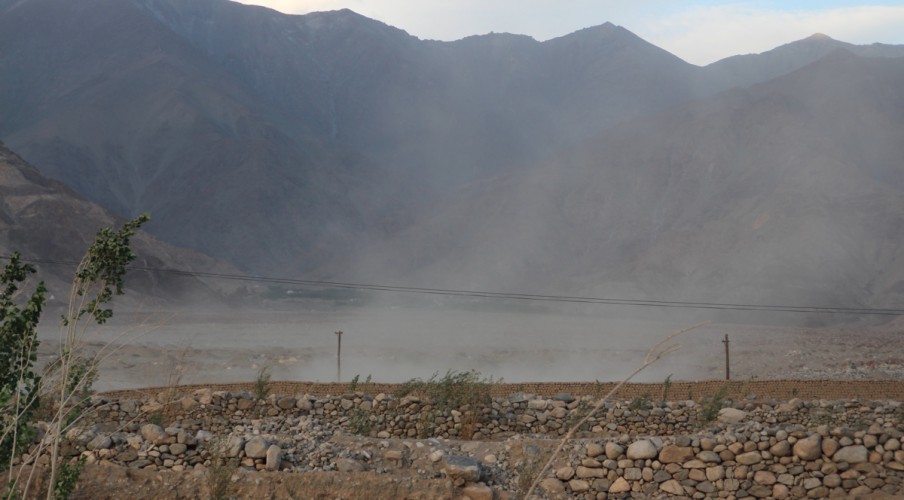
A blustering wind howls down the Leh Valley most afternoons, picking up dust and debris, and forcing us all to cover up and get in doors.  It reminds us, despite the encircling snow capped mountains, that we are living in a cold desert.

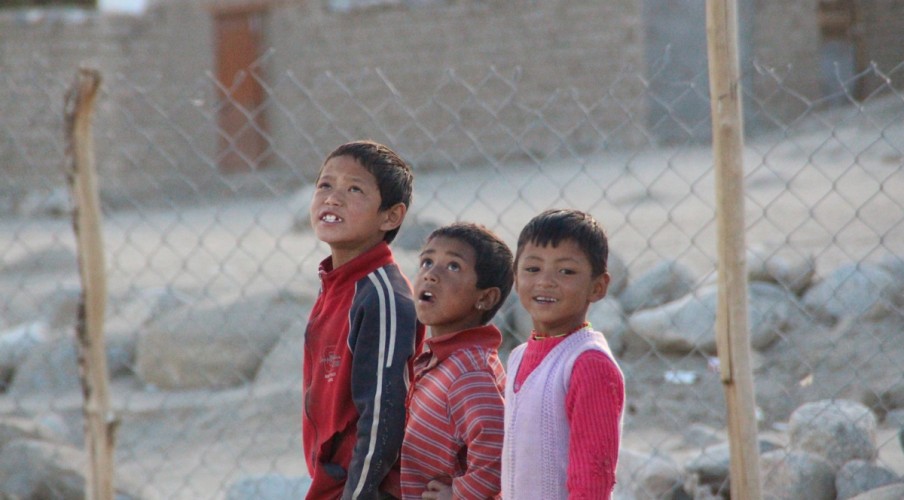
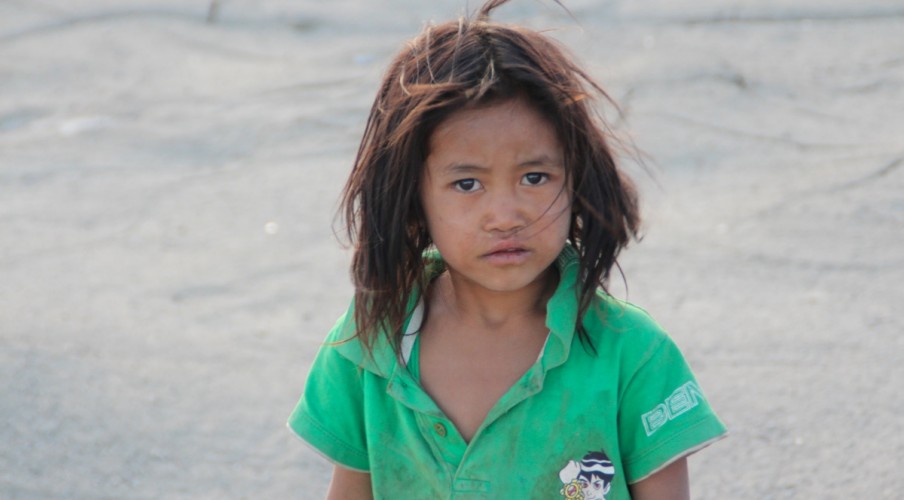
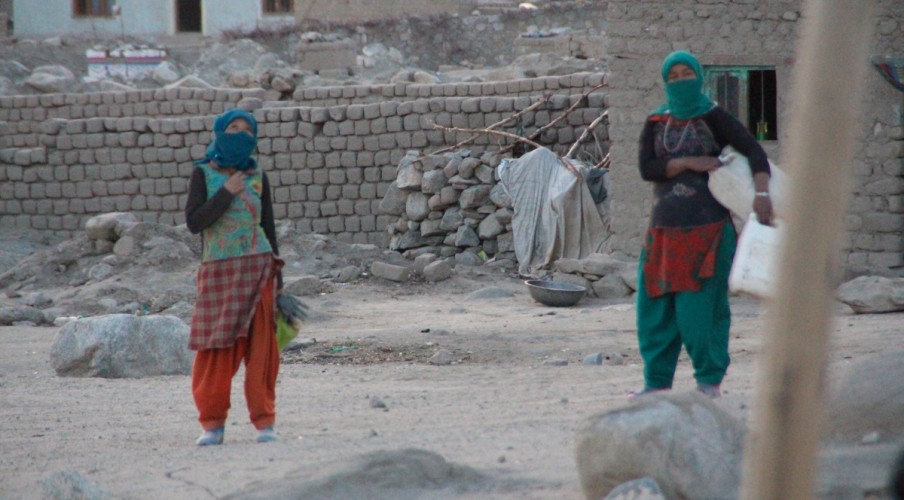
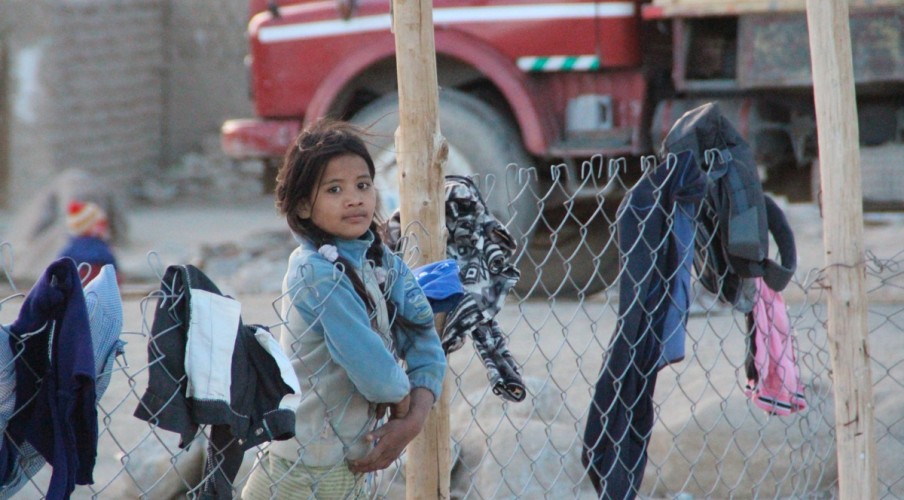
In our ‘backyard’ – the building sites behind us – Xavier has been flying his kite and providing entertainment to some of our less well-to-do neighbours.  While we are living in a comfortable traditional Ladakhi home – a walled ‘compound’, there are a great many families of  ‘summer migrants’ living around us in quite appalling conditions.  No electricity, no running water, their homes rented windowless mud brick bunkers. They come from the Hindu south and provide the labour for the frenzied period of construction that occurs in the short summer. They are the folk wielding sledgehammers – the rock breakers – who work all day cracking granite into rectangular building blocks.  Or they head off, men and women, in the morning to work on roads or building sites.  Not earning much, but more than they would from where they come from in the south.  The children do not go to school, but play in the dirt or the local melt stream (now dry).

Diga La La La La …..

Our Diga La trek was yet another triumph (tongue firmly in my cheek!) of my perfect planning.

It was a long and tough trek that allowed Xavier the opportunity to discover for the very first time, the real meaning of FATIGUE.

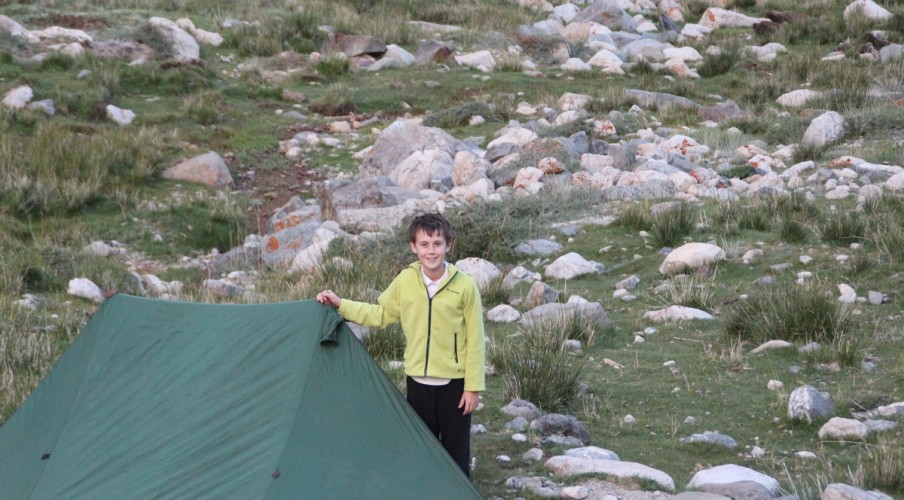
Our first day started a few hours later than planned … our Phuntsog was late with the drop-off, so we started walking at about 4PM and had to put up the tent at around 6.30PM as the sun disappeared from our canyon. The question was – had we climbed enough to make the climb to Diga La a real proposition the next morning? On the way to the drop-off an old man harvesting in the field laughed and said “2hrs to camp, 2hrs to pass” ( in Ladakhi, of course).  Hmmm that didn’t seem right, but I wanted to believe him, which was the main thing.

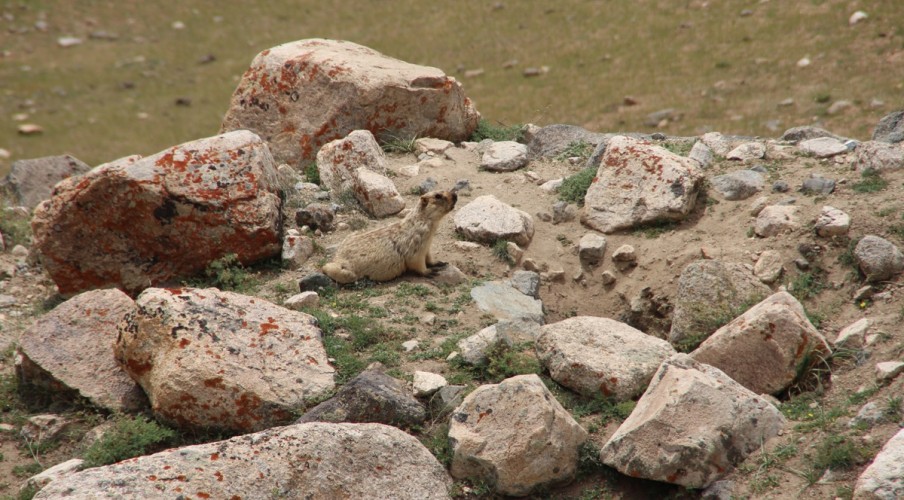
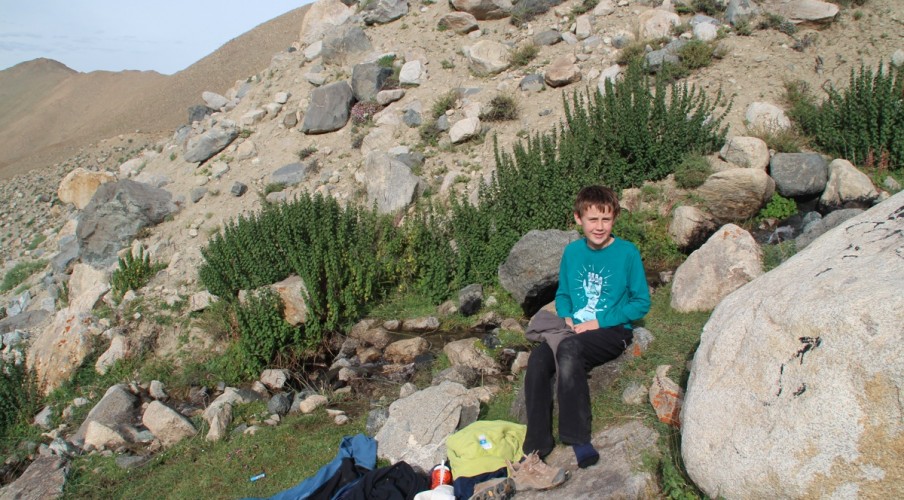
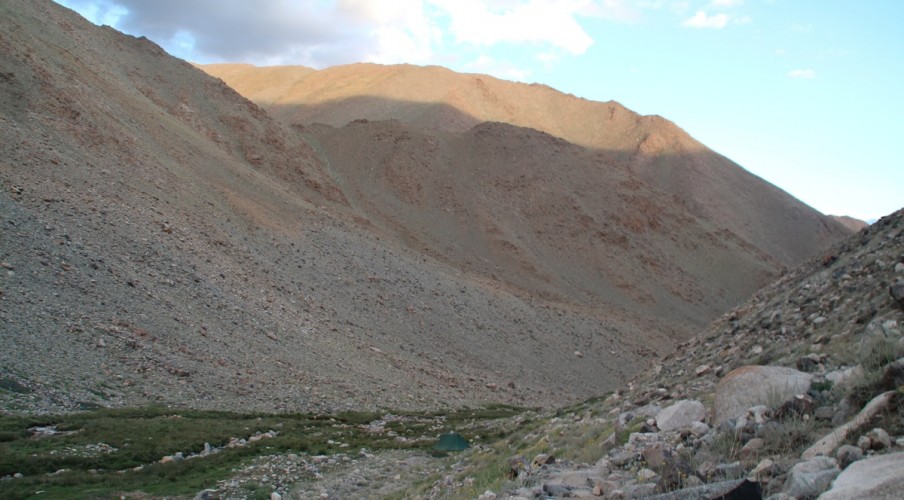
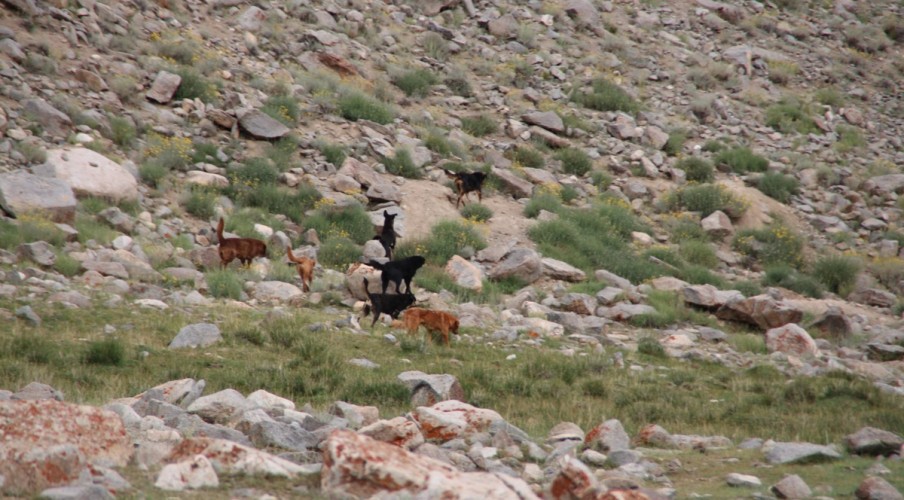
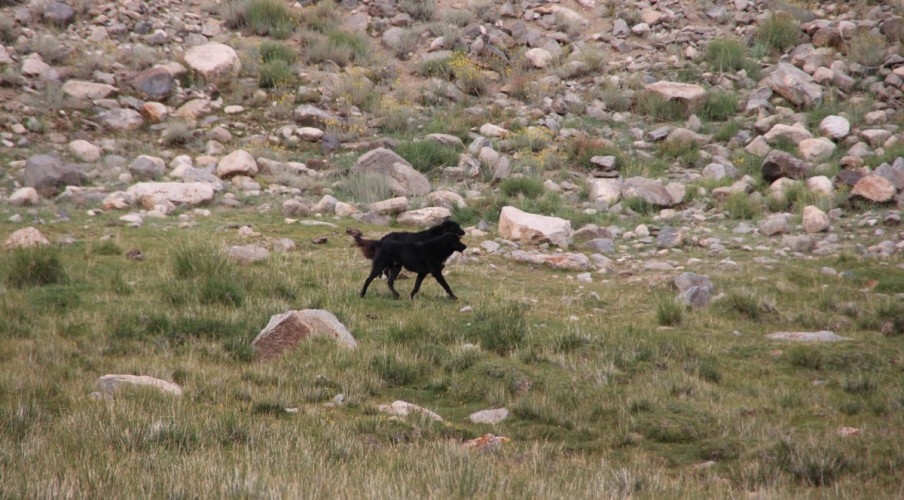
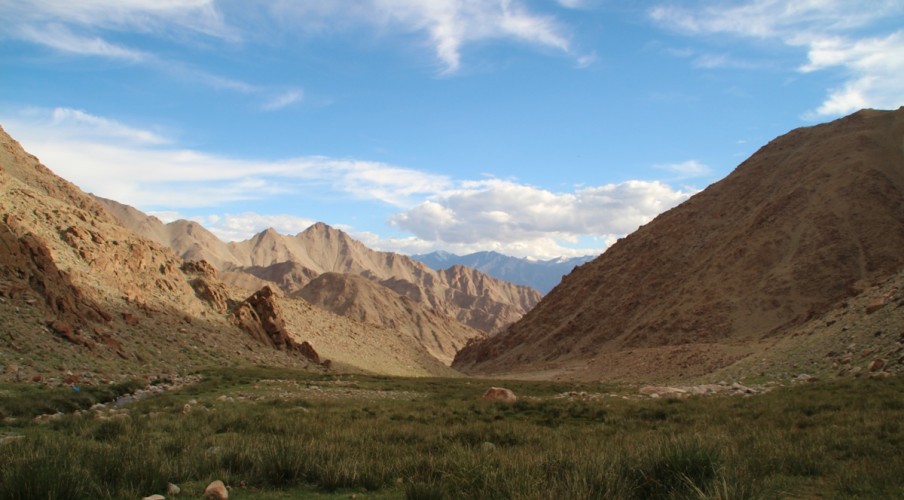
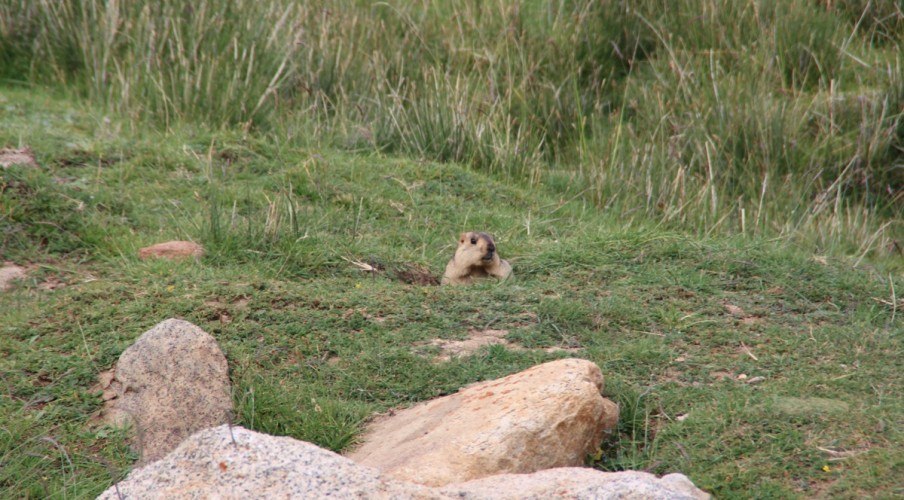
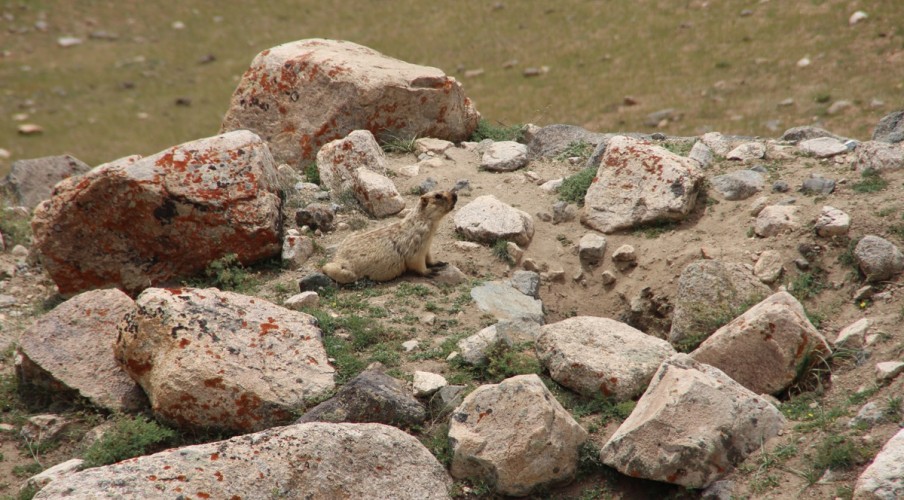
The walk was a cracker with the late afternoon sun and mountain landscape making the perfect setting for the father-son team! A fairly gentle incline up a green valley, with a strong melt stream running down its centre, we felt great and optimistic about our chances. I was carrying under 20kg while Xavier had a mid-size pack. We were comfortable. The valley had a healthy population of Himalayan Marmots that amused us as they scurried between their burrows, their heads popping up to observe us as we walked up the valley. While this could bear and leopard country – the chances of seeing one are negligible to zero –  as they hear you from K’s away and make good their escape. We were a little concerned to see a large pack (well over a dozen) of ‘feral dogs’ – mainly Himalayan mastiff crosses. A black pair led the large group by about 200M – the photos don’t really do justice to their size – they were real monsters. Back in 95 the Mountaineering Institute I attended had a Himalayan Mastiff as a mascot … it was the biggest dog I have ever seen. They behaved like a wild pack, moving in unison, pausing in unison. They were in fact, quite shy of us and made their way down the valley. I have been told they hunt the marmot and anything else they can get hold of … we were glad they weren’t interested in us. In Australia we would shoot them as feral, but in Buddhist Ladakh, that is not really an option.

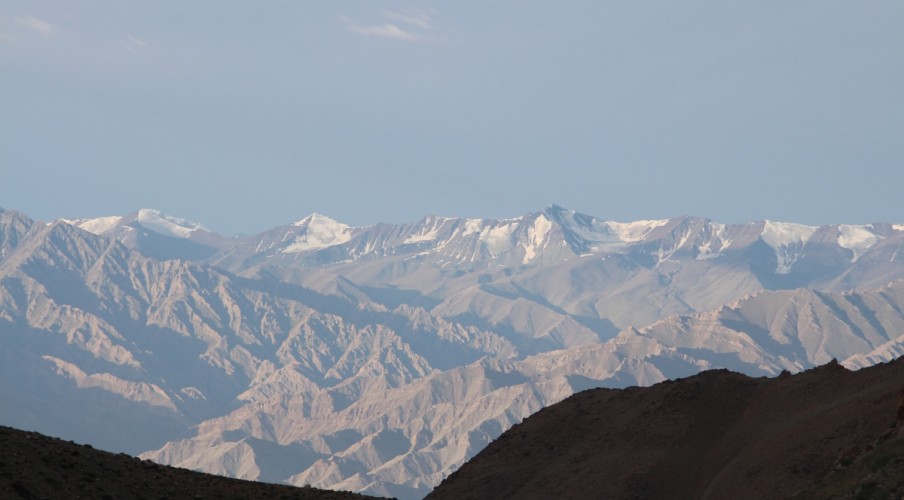
We probably climbed to about 4200M – when 4500M+ would have been much better, and made a brilliant camp next to the stream. As we lost light we cooked and made ready the tent. Xavier had never experienced the ‘Himalayan Sky’ from the vantage of a campsite – and it was truly magnificent. The altitude, the clear air, and the frame provided by 5000M and 6000M peaks … meant that it was a breathtaking vista. We were very content to make our way into the tent as it got quite cold. We played cards, then settled down to an iPod session with our wonderful little BassBurger speaker: Charlie Mingus, Nick Drake, Cat Power, Nick, Bowie, Hendrix, Eminem, Fort Minor, Hilltop Hoods, Jay-Zee … eventually Xavier fell to sleep, but the altitude kept me up to about 3AM, as did the crappy gradient we were camped across: ohhh! the slipping and sliding to the bottom of the tent – how I hate it!

At this point I should put in a plug for some of my equipment suppliers: Scarpa, Wilderness Equipment and MSR stoves. My WE Transverse Ridge tent was purchased in 1985, the pack about 20 years ago, and the MSR XKG petrol blaster crossed the Himalaya in ’95, as did my Scarpa boots. All are still doing the job they were designed for – hell, I love the sound of the XKG in the morning, and the snug feeling as I slip into my Scarpa SL Attak leather boots.

We woke early, and on the basis that our local advisor suggested it was just a 2hr climb to the pass, we thought we would pack our breakfasts and set out in the dawn, hoping to make it by 9AM. My lack of planning and naivety (climb 1000M+, from 4200M to 5400M in a couple of hours???) soon became apparent as the sun rose and the dimensions of the challenge came into view … well no high pass is really in view until you are on it, you just keep on going UP UP and UP.

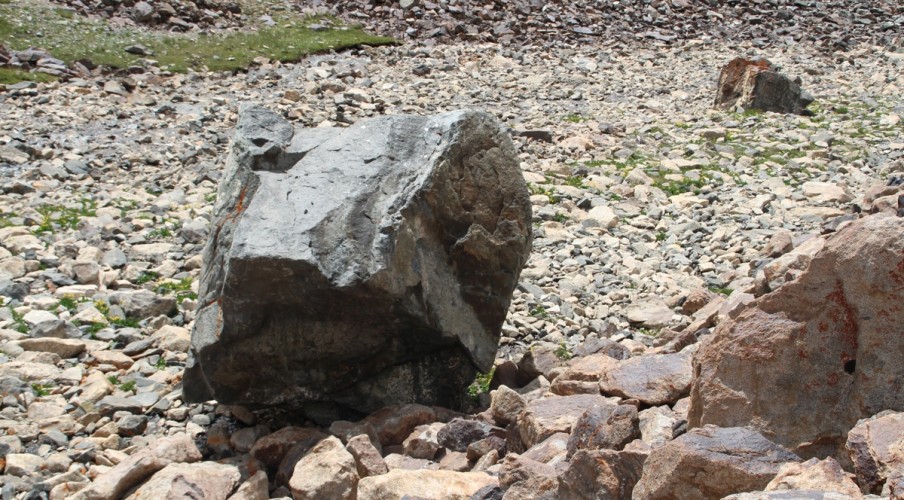
To cut a very looong day into a readable blog it is sufficient to say we climbed (i.e. non-stop) for close to 6hrs, well beyond what I really should have put Xavier through. Our end-point was just below the final very steep climb to the summit/pass where I lost the trail and ended up on a boulder scree of, well, only in Ladakh do you see boulder scree’s of such proportions … well, car size in some instances. I now know you can mainly avoid it by skirting on the upside to the right – but in my depleted and shattered state I had missed the faint snaking line and made a mistake. As we leaned up against a rock cube the size of our old Barina, and quietly assessed the situation, we were reminded of how far and high we had gone by the nearby ice covered ridges and peak and the view back west to the distant Stok ranges, that now seemed well and truly below.

We had a scheduled car pick up over 1500M below us at 3.30PM and feeling quite concerned about: 1 Getting Xavier off the mountain; 2 Josephine’s anxiety when we missed the agreed pick-up, and 3, making it off the mountain myself … we decided to turn down. Climbing for 6hrs and not ‘making it’ is tough, but you do need to make decisions with your head. We would have made the pass, but our return would have been marginal and certainly in the dark and the very cold.

Xavier can be a whiner when he is feeling OK, but when the chips were down he did a magnificent job (particularly if he can talk about the potential purchase of some Dr Dre headphones). His climbing effort was tremendous, but now he was feeling the grip of fatigue, and his low-cut boots were not giving proper ankle support. His ankles were killing him and I was now worried that a slip on the 3 to 4 hour descent would result in an injury. Unlike our trek up Stok the week before, this was basically high Himalayan wilderness – we saw no one on the entire trek … though we did see some yaks feeding and some deserted stone shelters … so we were very much on our own.

The trail was really a rock strewn nightmare for the very depleted dynamic duo, but we survived. We made the tent in 3 hours and after a quick cook-up and pack stuffing session, we set off for Saboo and our recuers … just making it by 4PM and only 30 minutes late. So …. We had walked pretty constantly from 6AM to 4PM, and we felt it. We were very tired. My most dependable guide to the Diga La (well, I didn’t read this section until I got back to Shey) suggests that doing the 5400M Diga La in one day, as we had tried, was harder than many 6000M trekking peaks, and, as the very experienced author wrote, “the hardest trekking day of my life” … this made us feel a little better for our effort.

Next week I’m off to tackle a 6800M monster.

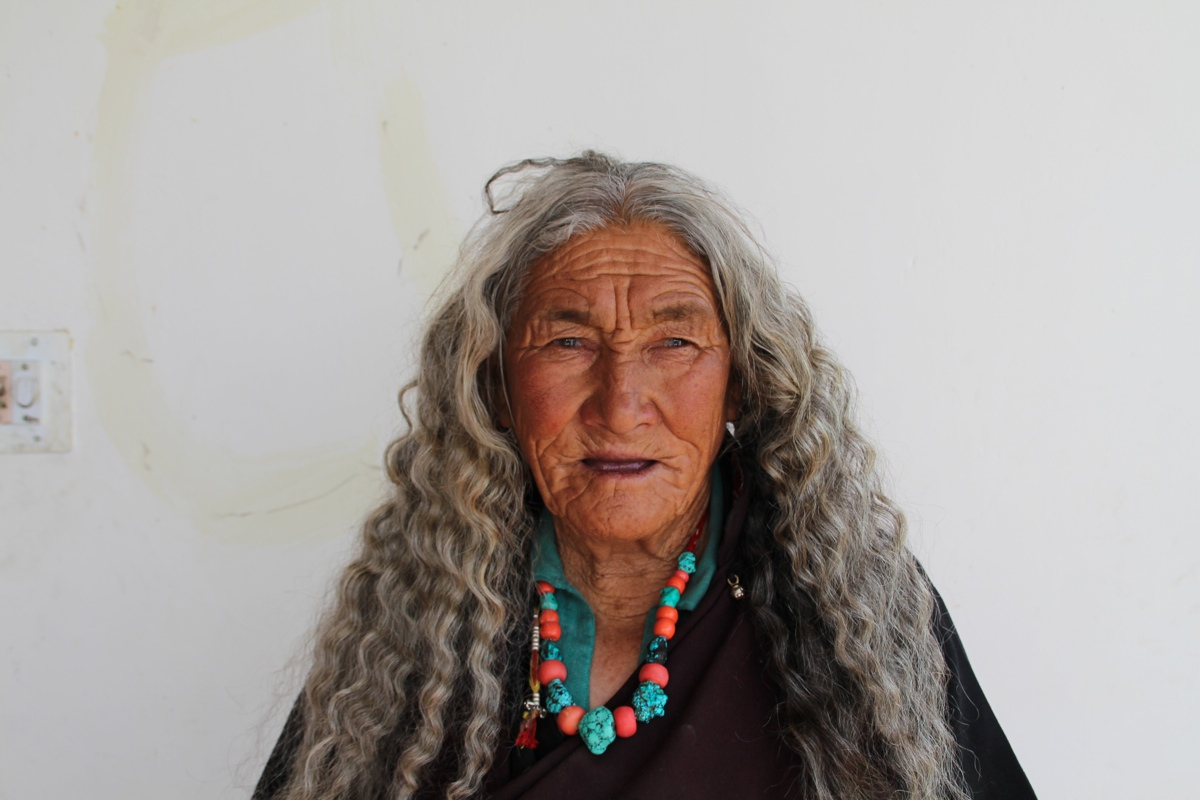
Grandma

This is Yangdol’s mum on the only occasion her hair has not been in two plaits, on the day of a big local wedding.

She was about to get two new plats and get into her best dress.

Grandma is 86 and has 9 children.  She spends her days circumnavigating the garden praying, or visiting her elderly friends.  When her friends visit here, they sit in their plum coloured Ladakhi wool dresses and turquoise and coral necklaces, eating fresh apricots in the shade on the cement slab.

They fall asleep and are like old rocks in the sun.  She is always well humoured and greets us warmly, carrying on conversations with us in Ladakhi, which of course we cannot understand, but which continues regardless.

Nanna Pat would have loved her and relished sitting out and doing some knitting.